Scottish clan
Clan Buchanan
Gaelic name Na Cananaich
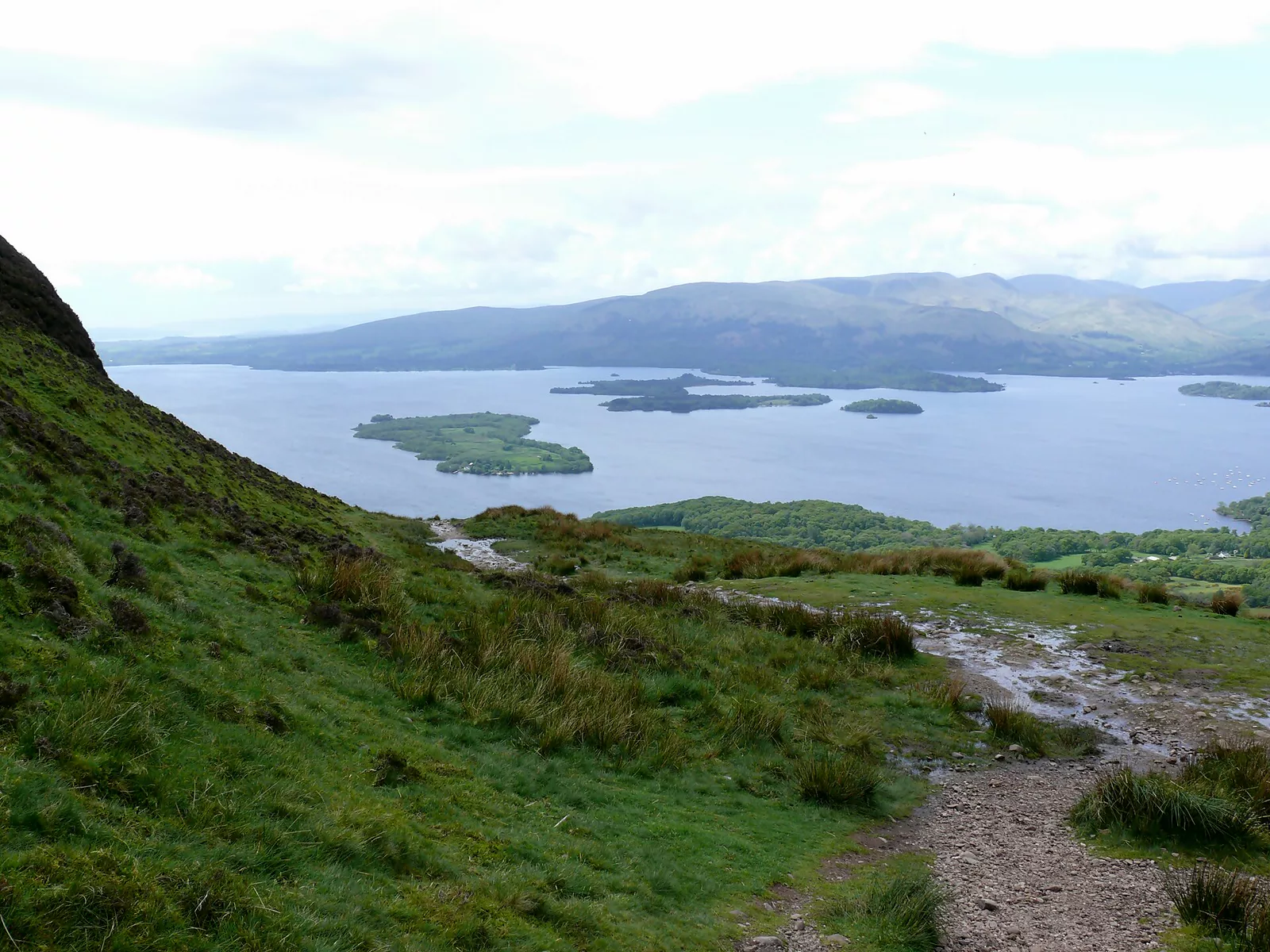
A clan of Stirlingshire and the east shore of Loch Lomond. The first documented Buchanan holding is the island of Clairinch, granted in 1225, and the Irish-king origin story is rejected by the clan society itself. The chiefship lapsed in 1681 and the Lord Lyon confirmed a chief in August 2018. The register treats Buchanan - 1850 as the clan tartan.
- Region
- Stirlingshire, Loch Lomond, Parish of Buchanan
- Historic seat
- Cambusmore
- Motto
- Clarior hinc honos
- Linked tartans
- 1
- Linked surnames
- 1
- Recorded septs
- 12
- Evidence level
- C
Overview
Clan Buchanan is a Stirlingshire clan whose historic ground is the parish of Buchanan on the east shore of Loch Lomond, at the Highland-Lowland boundary. The Clan Buchanan Society says the Lord Lyon confirmed John Michael Baillie-Hamilton Buchanan of that Ilk as Chief of the Name and Arms in August 2018, and that he lives at Cambusmore near Callander, which the society calls the seat of the clan. The motto is "Clarior hinc honos", usually rendered "brighter hence the honour", and the Gaelic name is given as Na Cananaich.
The society says the 2018 confirmation was the first in more than 340 years. Counting from the last chief's death in 1681 gives 337, so the figure is approximate.
The society names these cadet branches: Leny, Arnprior, Spittal, Auchmar, Achleshie, Ardenconnel, Carbeth, Powis and Ibert.
Origins
The traditional origin is an Ulster king, Anselan O Kyan, said to have reached Argyll in 1016 and been rewarded with Buchanan lands. The clan society itself rejects this. Its history page quotes a clan officer saying it is not accurate, and another society page says YDNA testing has disproved descent from an Irish prince, leaving the origin unknown.
The documented start is a charter. In 1225 Malduin, Earl of Lennox, granted the island of Clairinch in Loch Lomond to Absalon, also called Anselan, for a yearly rent of a pound of wax. Alexander II confirmed it in 1231 with fishing rights in the loch. The island became known as the heart of the clan, and its Gaelic name Clar Innis is the clan's war cry.
The name Buchanan is territorial, from the lands and parish, though the society notes that early chiefs bore the form MacAuselan, after Anselan. Wikipedia gives two suggested Gaelic sources for the place name, "son of the canon" and "house of the canon", and neither is settled.
Development
The society's timeline credits the Buchanans with helping Robert the Bruce in 1306, and says Sir Alexander Buchanan killed the Duke of Clarence at Baugé in 1421. It records the death of the chief's son Patrick at Flodden in 1513 and the clan's presence at Pinkie in 1547. These are the society's statements and were not checked against contemporary records.
The decline came in the seventeenth century. Sir George Buchanan commanded Stirlingshire royalist forces in 1650 and 1651 and was captured at Inverkeithing. The last chief of the main line, John Buchanan, ran into debt and, according to the society, sold Highland lands to the Marquess of Montrose around 1680 and lost the Barony of Buchanan. Clairinch passed to Montrose in 1681. The society says it is unclear precisely what services were involved or what the eviction of the estate meant, and Wikipedia gives 1681 as the year the last direct chief died without male heirs.
Clairinch returned to Buchanan hands in 1934, when William George Buchanan bought it, and it passed to the Buchanan Society, a charity, around 1939 and 1940 with the condition that it be kept as a sanctuary. The society names the cadet branches of Leny, Arnprior, Spittal, Auchmar, Achleshie, Ardenconnel, Carbeth, Powis and Ibert.
The Clan Buchanan Society says the Lord Lyon confirmed John Michael Baillie-Hamilton Buchanan of that Ilk as Chief of the Name and Arms of Buchanan in August 2018, the first chief since 1681, and that the chief is based at Cambusmore Estate near Callander.
Tartans
The Scottish Register of Tartans treats Buchanan - 1850 as the clan tartan. The record says the pattern originated with Wilsons of Bannockburn and that W. and A. Smith printed it in The Clan and Family Tartans of Scotland (1850) with mid-blue replacing the original light blue, calling it universally considered the genuine Buchanan tartan. It adds that Archibald Buchanan of Catrinebank, Ayrshire, wore it, and that the chief authorised it as the clan tartan in 2022.
The register also holds a Buchanan - 1842 entry taken from the Vestiarium Scoticum, a work whose claimed sources were never produced, so that pattern has no early documentary support. The society's dress guide refers to Modern, Ancient and Weathered, and Hunting versions, and calls the Modern the primary recommendation. Those names were not matched to individual register records here, so the page does not describe how they differ.
Septs
The society publishes a table of more than 50 surnames in sept groups, headed by names such as Leny, Watson, Gilbert, Gibson, Harper, MacAslan, MacColman, MacKinlay, Yule and Richardson. The groups listed here follow that table. The society also says accepting a family as a sept is the chief's prerogative and that its list keeps changing.
The MacAslan group has the clearest link, because its names are forms of the early chiefs' own name. The others are marked uncertain: nineteenth-century clan societies linked many surnames to clans in lists that were sometimes loosely founded, and the Standing Council of Scottish Chiefs says there is no central sept register. A name on the list shows what the society accepts, not how any family descends.
Check before repeating
Misconceptions
The Irish king of 1016 belongs to traditional accounts of the clan, and the clan society rejects it.
The 1842 Buchanan entry should not be read as an older sett. The register says it came from the Vestiarium Scoticum, and it does not carry the chief's authorisation recorded for the 1850 sett.
The 2018 confirmation is not the return of a clan after 337 years. What lapsed in 1681 was a confirmed chief of the Name and Arms, not the surname or the cadet branches the society names.
Who can wear
The Standing Council of Scottish Chiefs says there are no strict rules on who may wear a tartan and that wearing a clan tartan signals allegiance to the chief. The Clan Buchanan Society's dress guide is addressed to Buchanan clan members and does not, in the text read, restrict anyone else from wearing the tartan.
Not established
What the record does not show
The origin of the first Buchanan lairds is not established. Dates before the 1225 charter come from tradition. The Lyon Court record of the 2018 confirmation was not seen. How the society's Modern, Ancient and Hunting names map to register entries was not checked, and the details of how the barony was lost in the 1680s are unclear even in the society's account.
Surnames and septs
The surname page for Buchanan is at /surnames/buchanan/. The link between surname and clan is rated probable there: Buchanan is a territorial name from the lands on the east shore of Loch Lomond, and the Standing Council counts holders of the chief's surname as members, which is a rule of membership and not proof of descent. A place name can be taken by unrelated people living on the land, so a Buchanan is not shown to descend from the chiefs. The society's table of more than 50 other surnames is dealt with under septs above, and the MacAslan group is the best supported of them; the others are uncertain.
Historical notes
The Clan Buchanan Society says the Lord Lyon confirmed John Michael Baillie-Hamilton Buchanan of that Ilk as Chief of the Name and Arms of Buchanan in August 2018, the first chief since 1681, and that the chief is based at Cambusmore Estate near Callander. The Lyon Court record itself was not seen.
Evidence level C. Sources: [1]
The society says Malduin, Earl of Lennox, granted the island of Clairinch in Loch Lomond in 1225 to Absalon, also called Anselan, for a yearly rent of a pound of wax, and that Alexander II confirmed the charter in 1231 and added fishing rights in the loch.
Evidence level C. Sources: [2]
The society's history rejects the traditional story of an Ulster king, Anselan O Kyan, arriving in Argyll in 1016, quoting a clan officer as saying it is not accurate. A separate society page says YDNA testing has disproved descent from an Irish prince, so the origin may be unknown.
The society lists among the clan's medieval and early modern events aid to Robert the Bruce in 1306, the killing of the Duke of Clarence at Baugé in 1421 by Sir Alexander Buchanan, the death of the chief's son Patrick at Flodden in 1513, and service at Pinkie in 1547.
Evidence level C. Sources: [3]
The society says the last chief of the main line, John Buchanan, sold Highland lands to the Marquess of Montrose around 1680 and lost the Barony of Buchanan through debt, and that Clairinch passed to Montrose in 1681. It admits that the exact services and the process of eviction are unclear.
The society says William George Buchanan bought Clairinch back in 1934 and left it to the Buchanan Society, which has held it since 1939 or 1940 as a wildlife sanctuary.
Evidence level C. Sources: [2]
The society names these cadet branches: Leny, Arnprior, Spittal, Auchmar, Achleshie, Ardenconnel, Carbeth, Powis and Ibert.
Evidence level B. Sources: [5]
Wikipedia reports that the last direct chief died in 1681 without male heirs and that Buchanan of Auchmar's Historical and Genealogical Essay of 1733 is among the early accounts of the family.
Evidence level D. Sources: [6]
Tartans linked to Buchanan
A clan and a tartan are linked by a sourced claim, not by the name alone. Open a tartan to see the evidence for the link.
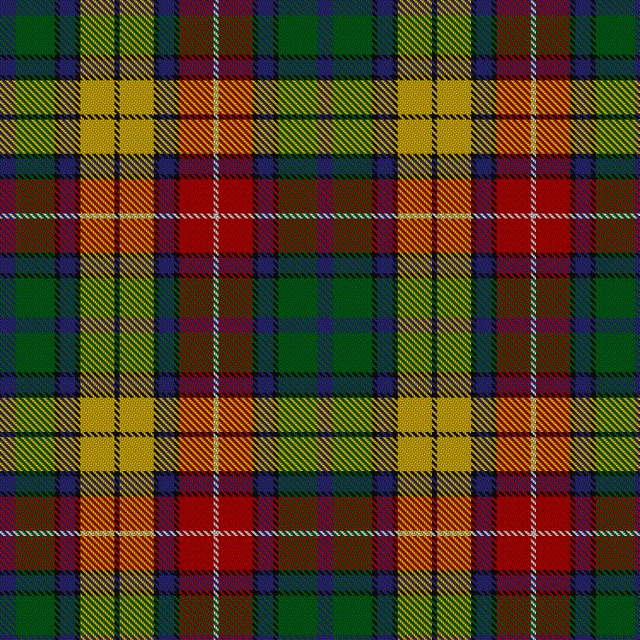

Image: Scottish Register of Tartans, rendered from the registered threadcount. Crown copyright, National Records of Scotland.
Septs and associated names
Sept lists differ between clan societies and older sources. Each name below carries the confidence this site can support.
- MacAslan (Cousland, MacAuselan, MacAuslan, MacCasland)
- Leny (Lennie, Lenny)
- Watson (Watt, MacWattie, Waters)
- Gilbert (Gilbertson, MacGilbert, Gibbon)
- Gibson (Gibbons, MacGibbon)
- Harper (MacChruiter, MacWhirter)
- MacColman (Colman, Murchie, Rusk, Dove)
- MacKinlay (Finlayson, McKinley)
- MacMaurice (Morris, Morrice)
- Richardson
- Spittel (Spittal, Spittle)
- Yule (Yuill, Yuille)
- Probable
- Supported by a credible source, not independently confirmed.
- Uncertain
- Reported, but the sources are weak or disagree.
Surnames linked to this clan
A surname's link to a clan is a claim about history, not a statement about any person's ancestry.
- Probable
- Supported by a credible source, not independently confirmed.
Guides that mention this
Sources
- Our chief
- The Island of Clairinch
- History of The Clan Buchanan, part 1
- The MacAslan sept
- What are septs? (Clan Buchanan Society)
- Clan Buchanan
- Names of the Clan Buchanan
- Who is a member of a Clan?
- Tartan: who may wear it (Standing Council of Scottish Chiefs)
- Buchanan Highland Wear and Dress Code Guide
- Scottish Register of Tartans: Buchanan - 1850
- Scottish Register of Tartans: Buchanan - 1842
- Clan articles (Mackenzie, Buchanan, Donald, Wallace, Campbell, Fraser of Lovat, Stewart, Gordon, Douglas)