Clan tartan

Buchanan

The Scottish Register of Tartans lists Buchanan - 1850 as the clan tartan: a Wilsons of Bannockburn design, printed by W. and A. Smith in 1850 and authorised by the chief in 2022. The chief also recognised the different Vestiarium sett of 1842 that year.

  • Clan/Family
  • No restriction recorded
  • Evidence level A
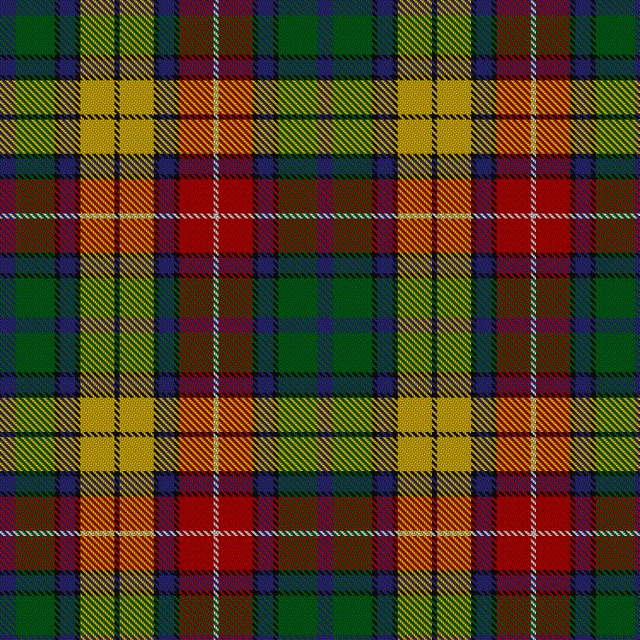
The Buchanan sett as rendered by the Scottish Register of Tartans from the registered threadcount.
Image: Scottish Register of Tartans, rendered from the registered threadcount. Crown copyright, National Records of Scotland.Image source: the record this swatch comes from. Licence: Crown copyright, National Records of Scotland (Scottish Register of Tartans). Re-use beyond fair dealing needs NRS permission.
Type
Clan tartan
Classification
Clan/Family
Earliest known date
1850
Registered
Not recorded
Associated clan
Buchanan
Who can wear it
No restriction recorded
Evidence level
A

Also known as

  • Buchanan - 1850
  • Buchanan Clan

Overview

The Buchanan tartan the register treats as the clan sett is Buchanan - 1850 (STA reference 151). It came from Wilsons of Bannockburn, and W. and A. Smith's 1850 book printed it as the genuine Buchanan tartan. The present chief authorised it as the clan tartan in 2022.

The register also holds Buchanan - 1842, an entirely different sett from the Vestiarium Scoticum. The chief recognised that one in 2022 as well, so the clan now has two documented patterns with two very different origins.

The register says the Buchanan - 1850 sett originated with Wilsons of Bannockburn, and that W. and A. Smith's The Clan and Family Tartans of Scotland (1850) printed it with mid-blue instead of the original light blue and called it "universally considered the genuine Buchanan Tartan".

From the historical notes. Evidence level A. Sources: [1]

Pattern

The Clan Buchanan Society describes the sett as asymmetric, which is unusual among clan tartans. This record's colour list is blue and green with black, red, yellow and white, and the hex values are approximate. The society says the Ancient shade uses softer, natural-type dyes and that weathered and muted shades also exist.

The Buchanan Society lists the original dyes as elder, broom and alum for blue, iris leaf for green, alder bark for black, crab apple for yellow, rock lichen for red and natural white wool. That is the society's description, and the dyers' records behind it were not seen.

No threadcount is given here. The register shows threadcounts only to logged-in users, and the counts in secondary databases differ between Buchanan records.

Origins

The register credits Wilsons of Bannockburn as designer, dated 1850. Date here is the date of the printed record, not proof of when the weave first appeared. It says the Smiths of Mauchline printed it that year with mid-blue instead of the original light blue.

The Smiths said the pattern "seems to be universally considered the genuine Buchanan Tartan". That is a mid-19th-century opinion about a commercial pattern, not evidence of use by the clan in earlier centuries.

The Clan Buchanan Society says the Lord Lyon confirmed John Michael Baillie-Hamilton Buchanan of that Ilk as Chief of the Name and Arms of Buchanan in August 2018, the first chief since 1681.

From the historical notes. Evidence level C. Sources: [3]

Development

Buchanan - 1842 comes from the Vestiarium Scoticum, published by the Sobieski Stuart brothers and said to be copied from a 16th-century manuscript. The register says that claim was later proven fraudulent. The tartan has nonetheless had a life of its own, and the register records the chief's 2022 recognition of it.

The 1850 sett has since appeared in Modern, Ancient and weathered colourings, and Hunting and Dress versions exist. The clan society lists these as accepted.

Name and variants

The register names the main record Buchanan - 1850. Other names in circulation include Buchanan Modern, Buchanan Ancient, Buchanan Hunting and Buchanan Dress. The clan society separates two official tartans (Buchanan and Buchanan of Leny) from six accepted ones, and says it does not endorse a number of other tartans sold under the Buchanan name.

The Buchanan Society, a separate body, speaks of Weathered, Hunting, Ancient and Modern shades. The two societies do not use identical lists, so the label on a cloth does not settle its status.

Clan relationship

The Clan Buchanan Society says the Lord Lyon confirmed John Michael Baillie-Hamilton Buchanan of that Ilk as chief in August 2018, the first since 1681. The register ties both 1850 and 1842 setts to that chief's 2022 authorisation, which is a current statement, not a historical one.

The clan society says sept membership is the chief's prerogative. Sept lists were largely compiled by 19th-century societies and are contested, so a surname on such a list is not by itself evidence of a right to this tartan.

Check before repeating

Misconceptions

A single historic Buchanan tartan is often assumed. The record shows at least two clan setts with unrelated origins, plus hunting and dress versions, and the oldest documented source is an 1850 commercial printing.

What the record does not show: any pre-19th-century evidence for a Buchanan tartan, a registered threadcount we could read, or a published ruling on which surnames belong with it.

Modern uses

The clan society says the Buchanan Modern is the version for someone declaring allegiance to the clan, and that Ancient, weathered and muted palettes are acceptable if the sett and colours are followed.

Earlier records

The register's date of 1850 is the date of a printed book, and a longer trail exists. A Scottish Tartans Authority note on Buchanan describes a cloak of about 1800 to 1810 in the collection of National Museums Scotland, in hard tartan made by William Wilson and Son of Bannockburn. In that piece the pattern is already asymmetric, the red, green and yellow blocks are close to equal in size, and the blue is Wilsons' light blue, not the mid to dark blue common now. The cloth also contains a weaving error in the light blue.

The same note says that small asymmetric checks of this kind were among Wilsons' fancy patterns, often identified by number, with some named later after a place, person or event. It says the pattern was known as Buchanan by 1831, because Logan's 1831 book includes it, and that Wilsons were calling a variation of it Buchanan by 1838. It calls the pattern unusual among clan tartans for being asymmetric and for its amount of yellow, which it says was uncommon before the Sobieski Stuart designs of the 1840s.

This page read the note through a search extract, not the full PDF, and has not seen the cloak, so these dates are level C pointers to be checked against the museum record. Two things follow if they hold. The light blue on the cloak matches what the register says the Smiths replaced with mid-blue in 1850, which supports the register's account of that change. And the name Buchanan was in use for the pattern by 1831, nineteen years before the register's date. None of the sources read says who gave the pattern the name or whether the family had adopted it before the Smiths printed it.

The hunting version has a separate documented source. Kinloch Anderson, a kiltmaker, says it comes from the Scott Adie collection, a book of manufacturers' samples dated 1850 and sold at auction about 1960, and that the samples are thought to represent the tartans on sale between 1840 and 1850. That is a commercial, level D statement. It places the hunting colours in the same trade decade as the Smith printing and does not show clan use.
Colours

  • dark blue#2C2C80Approximate
  • green#006818Approximate
  • black#101010Approximate
  • red#C80000Approximate
  • white#F0F0F0Approximate
  • yellow#E8C000Approximate

Approximate hex values estimate the thread colour; they are not specified by a registry.

Dates in the record

The dates this record holds, and the opening sentence of each historical note that names a single year. A year is the one the source gives; it has not been checked independently here.

  1. Earliest known date held in this record.

  2. The register says the Buchanan - 1850 sett originated with Wilsons of Bannockburn, and that W. and A. Smith's The Clan and Family Tartans of Scotland (1850) printed it with mid-blue instead of the original light blue and called it "universally considered the genuine Buchanan Tartan".

    Evidence level A. Sources: [1]

  3. The register entry for Buchanan - 1850 (STA reference 151) says the Smiths noted it was worn by Archibald Buchanan of Catrinebank, Ayrshire, whose father founded one of Scotland's earliest cotton mills using Arkwright's technology.

    Evidence level A. Sources: [1]

Historical notes

  1. The register says the Buchanan - 1850 sett originated with Wilsons of Bannockburn, and that W. and A. Smith's The Clan and Family Tartans of Scotland (1850) printed it with mid-blue instead of the original light blue and called it "universally considered the genuine Buchanan Tartan".

    Evidence level A. Sources: [1]

  2. The register entry for Buchanan - 1850 (STA reference 151) says the Smiths noted it was worn by Archibald Buchanan of Catrinebank, Ayrshire, whose father founded one of Scotland's earliest cotton mills using Arkwright's technology. It also says the original blue was light, and that the Smith printing used mid-blue.

    Evidence level A. Sources: [1]

  3. The register says the chief, John Michael Baillie-Hamilton Buchanan, authorised the 1850 sett as the clan tartan in 2022. The entry for Buchanan - 1842, from the Vestiarium Scoticum of the Sobieski Stuart brothers, says their claim to have copied a 16th-century manuscript was later shown to be fraudulent, yet records that the chief also officially recognised that sett in 2022.

    Evidence level A. Sources: [1][2]

  4. The Clan Buchanan Society says the Lord Lyon confirmed John Michael Baillie-Hamilton Buchanan of that Ilk as Chief of the Name and Arms of Buchanan in August 2018, the first chief since 1681.

    Evidence level C. Sources: [3]

  5. The Clan Buchanan Society describes two official tartans, the asymmetric Buchanan (SRT 151) and a symmetric Buchanan of Leny from a cadet branch, and six accepted ones: Hunting in four palettes, Blue, Dress, Hunting-Ancient, Dress Blue and Dress Red. It says an inauguration tartan made for the new chief in October 2022 is restricted to family use, and that it denies any link to many other tartans sold as Buchanan.

    Evidence level C. Sources: [4]

Wearing

Who can wear it

No restriction recorded

No restriction is recorded for this tartan. Whether it counts as a universal tartan is not established.

Neither the register nor the two Buchanan societies set a rule that only people with the surname may wear it. The Clan Buchanan Society says there are no restrictions on the official or accepted versions and that the Modern is the one to choose if you are declaring allegiance to the clan. The Buchanan Society says many families beyond its chartered members may be entitled to wear it. Neither gives a list of eligible surnames, so ask the clan society if the question matters to you.

The clan society says there are no restrictions on wearing the official or accepted versions, and the Buchanan Society says many families may be entitled to wear it. The inauguration tartan of 2022 is the exception: the clan says it is for family use only.

Where a status is not established, treat it as unknown rather than as permission or prohibition. Clan societies and chiefs may state their own preferences.

Who can wear which tartan?

Fields missing from this record

Associated clan

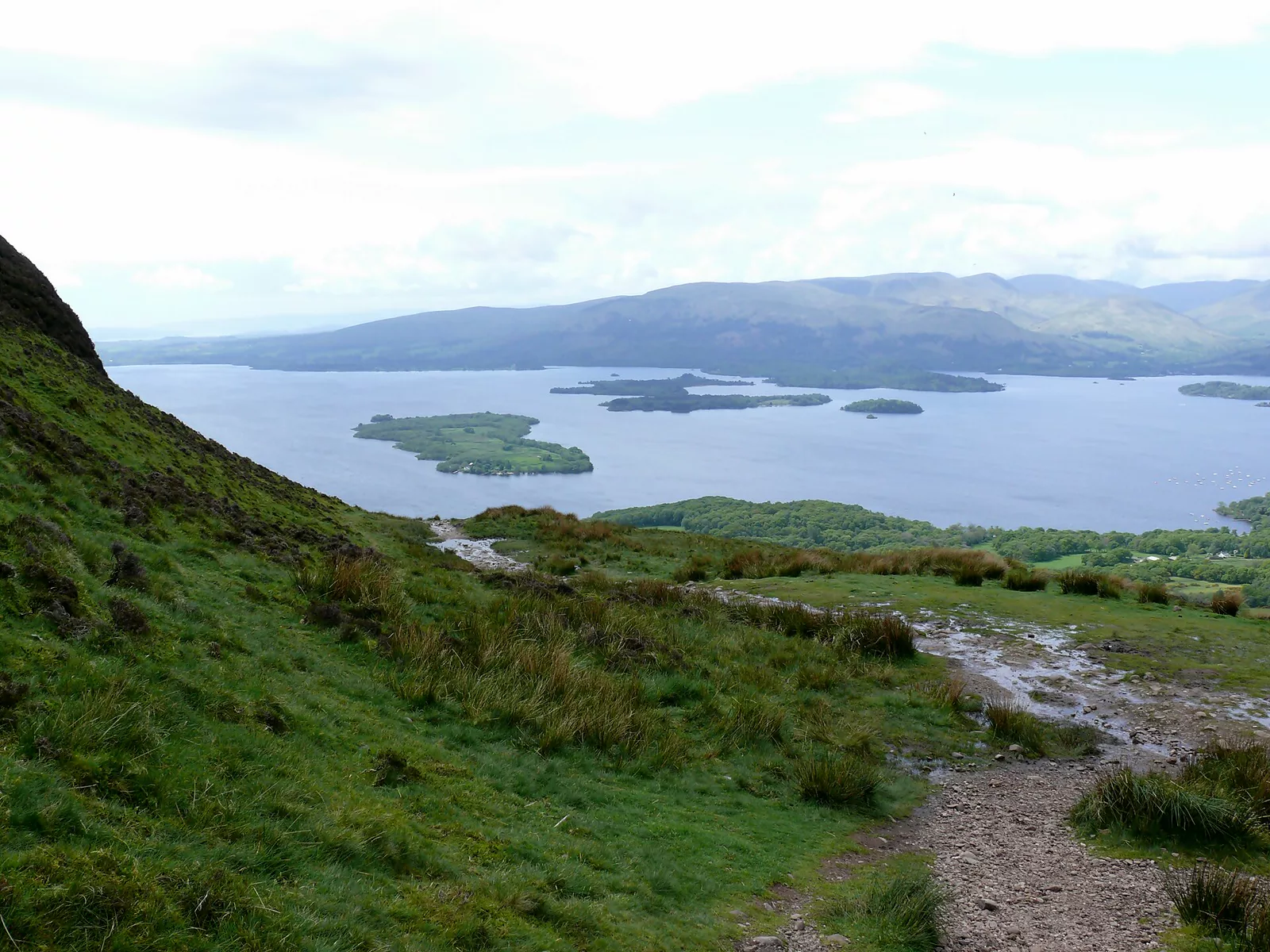
  • Wooded islands in Loch Lomond with hills beyond, seen from a grassy hillside above the east shore.

    Stirlingshire · Loch Lomond · Parish of Buchanan

    Buchanan

    Na Cananaich

    A clan of Stirlingshire and the east shore of Loch Lomond. The first documented Buchanan holding is the island of Clairinch, granted in 1225, and the Irish-king origin story is rejected by the clan society itself. The chiefship lapsed in 1681 and the Lord Lyon confirmed a chief in August 2018. The register treats Buchanan - 1850 as the clan tartan.

    Photo: Ad Meskens, CC BY-SA 3.0

An association between a tartan and a clan is a claim with its own sources. It does not mean every bearer of the clan name has a right to the tartan, or the reverse.

Guides that mention this

Sources

  1. Scottish Register of Tartans: Buchanan - 1850Scottish Register of Tartans (National Records of Scotland) · accessed · evidence level A
  2. Scottish Register of Tartans: Buchanan - 1842Scottish Register of Tartans (National Records of Scotland) · accessed · evidence level A
  3. Our chiefClan Buchanan Society · accessed · evidence level C
  4. Buchanan Tartans (official guide)Clan Buchanan Society · accessed · evidence level C
  5. The TartansThe Buchanan Society · accessed · evidence level C
  6. What are septs? (Clan Buchanan Society)Clan Buchanan Society · accessed · evidence level B
  7. Scottish Tartans Authority: Buchanan tartan note (PDF)Scottish Tartans Authority · accessed · evidence level C
  8. Kinloch Anderson: Buchanan tartanKinloch Anderson · accessed · evidence level D

Sources (8)

Evidence levels run from A (primary or official) to E (unverified). How levels are assigned

  1. Scottish Register of Tartans: Buchanan - 1850 (opens in a new tab)

    Scottish Register of Tartans (National Records of Scotland)

    Registry · accessed

    Evidence level APrimary or official

    Official registry, archive or primary source.

    Cited for

    • The register says the Buchanan - 1850 sett originated with Wilsons of Bannockburn, and that W. and A. Smith's The Clan and Family Tartans…
    • The register entry for Buchanan - 1850 (STA reference 151) says the Smiths noted it was worn by Archibald Buchanan of Catrinebank…
    • The register says the chief, John Michael Baillie-Hamilton Buchanan, authorised the 1850 sett as the clan tartan in 2022. The entry for…
  2. Scottish Register of Tartans: Buchanan - 1842 (opens in a new tab)

    Scottish Register of Tartans (National Records of Scotland)

    Registry · accessed

    Evidence level APrimary or official

    Official registry, archive or primary source.

    Cited for

    • The register says the chief, John Michael Baillie-Hamilton Buchanan, authorised the 1850 sett as the clan tartan in 2022. The entry for…
  3. Our chief (opens in a new tab)

    Clan Buchanan Society

    Clan organisation · accessed

    Evidence level CSpecialist secondary

    Established specialist secondary source.

    Cited for

    • The Clan Buchanan Society says the Lord Lyon confirmed John Michael Baillie-Hamilton Buchanan of that Ilk as Chief of the Name and Arms of…
  4. Buchanan Tartans (official guide) (opens in a new tab)

    Clan Buchanan Society

    Clan organisation · accessed

    Evidence level CSpecialist secondary

    Established specialist secondary source.

    Cited for

    • The Clan Buchanan Society describes two official tartans, the asymmetric Buchanan (SRT 151) and a symmetric Buchanan of Leny from a cadet…
  5. The Tartans (opens in a new tab)

    The Buchanan Society

    Historical society · accessed

    Evidence level CSpecialist secondary

    Established specialist secondary source.

  6. What are septs? (Clan Buchanan Society) (opens in a new tab)

    Clan Buchanan Society

    Clan organisation · accessed

    Evidence level BInstitutional

    Respected museum, institution, historical society or clan organisation.

  7. Scottish Tartans Authority: Buchanan tartan note (PDF) (opens in a new tab)

    Scottish Tartans Authority

    Secondary source · accessed

    Evidence level CSpecialist secondary

    Established specialist secondary source.

  8. Kinloch Anderson: Buchanan tartan (opens in a new tab)

    Kinloch Anderson

    Commercial · accessed

    Evidence level DCommercial

    Commercial source; not used as the basis of a historical claim.