Surname
Wallace surname
Also spelled Wallis, Vallance, Waleis
Wallace is a name for a kind of person, not a place.
- Places
- Ayrshire, Renfrewshire
- Linked clan
- Clan Wallace
- Linked tartan
- Wallace
- Evidence claims
- 31
- Sources
- 24
- Entry status
- Partial
Origin of the name
Wallace is a name for a kind of person, not a place.
It comes from Anglo-Norman Waleis, "Welshman" or "foreigner", which Wikipedia traces to Old Low Franconian walhisk and relates to Old English wealisc. The Welsh surname article gives the same Old English root and lists Walsh, Walshe and Welch as variants. In medieval Scotland the word could mean a Cumbric-speaking Briton of the old kingdom of Strathclyde, or an incomer from Wales or the Welsh Marches. The Clan Wallace Society sets out the same two theories and does not choose between them. Because the label fits so many people, unrelated families in different places could acquire it independently. The best-known record of an early bearer is Richard Walensis. The Clan Wallace Society says he held land near Kilmarnock as a vassal of the High Steward of Scotland before 1160, and Wikipedia's article on the clan makes him a follower of Walter FitzAlan from Oswestry on the Welsh border. A tradition connects him with Riccarton, "Richard's town", near Kilmarnock, but the only source read for that derivation is a Wikipedia article attributing it to a book of 1840. The chief's own account puts a Richard le Waleis in a charter of about 1163. Neither account cites the charter in the pages read, so the date and the identity of the witness rest on the family's statement and not on a document seen here. The next generations are less certain. The society page names Richard's grandson Adam Walays and gives Adam's younger son, Malcolm, the lands of Auchinbothie and Elderslie in Renfrewshire. The society says the Wallaces of Craigie descend from Adam Wallace of Riccarton, and Wikipedia says Craigie Castle passed to John Wallace of Riccarton by marriage about 1371. William Wallace is where the accounts part. The seal on the 1297 letter to Lübeck names his father as Alan Wallace, and an Alan Wallace appears among the Ayrshire crown tenants who submitted to Edward I in 1296. Blind Harry, writing in the 15th century, makes his father Sir Malcolm of Elderslie, and the society page also gives Malcolm of Elderslie. Wikipedia says no contemporary evidence ties William to Elderslie or to Ellerslie near Kilmarnock. Where the two chains of descent meet is therefore not settled by anything read here, and the name Wallace alone establishes no link to him. The surname spread because it was descriptive. In the 2010 US census Wallace ranks 123rd with 197,276 bearers, ahead of Welsh and Wallis. In Scotland the commercial estimate in the Forebears page ranks it 50th, and in Northern Ireland 89th. It is on a list of surnames of Scottish settlers in the Ulster plantation, 1606 to 1641. Wikipedia lists Welsh, Wallis, Vallance, Valles and Wallensis among its variants. Not every Walsh or Welsh is a Wallace, since the Irish Walsh (Breathnach) arose from Welsh speakers who arrived after the Norman invasion of Ireland.
Places associated with the name
- Ayrshire
- Renfrewshire
Clan
A surname and a clan can share a name without every bearer of the name belonging to the clan. This is the link the sources support.
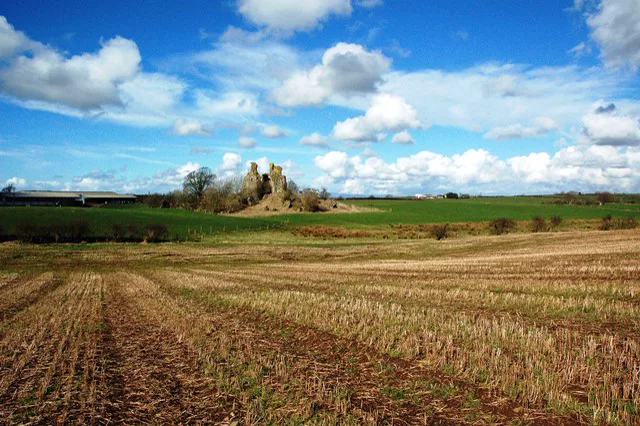
The ruin of Craigie Castle in Ayrshire, which passed to the Wallaces by marriage about 1371 according to the family's account. The photo shows the ruin, not the clan.Photo: Mary and Angus Hogg, CC BY-SA 2.0 (source) Linked clan · Ayrshire, Renfrewshire
Clan Wallace
Probable Supported by a credible source, not independently confirmed.
The clan bears the surname and the chief is recognised by the Lord Lyon. The Standing Council counts holders of the chief's surname as clan members, a membership rule and not a record of descent, and Wikipedia reports that the clan has no septs. The link is probable and not verified for two reasons. The society and Wikipedia both place the family's early lands in Ayrshire and Renfrewshire, so a Wallace from that area has a better case than one from elsewhere, but Waleis named many unrelated people. And the family's own descent claims, Richard Walensis before 1160, the Craigie line from about 1371 and the link to Sir William Wallace, are presented without cited documents in the pages read. Where the Wallaces of Craigie and the line of Elderslie diverged is a question the clan accounts answer differently, so a Wallace descended from the Craigie house cannot be assumed to share the chief's line.

Tartan
Tartans linked to the name, each with the strength of the link. The link is to the name's history, not to any individual's family.
Clan tartan
Wallace
Probable Supported by a credible source, not independently confirmed.
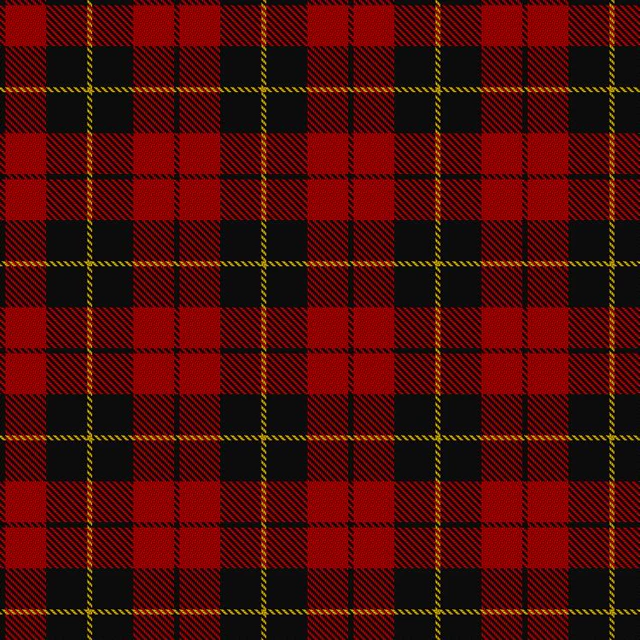
The register lists Wallace (reference 1208) as Clan/Family, dated 1800, with a threadcount recorded in the Lyon Register in 1951. It does not date to Sir William Wallace's time, which is two centuries or more before the Glen Affric fragment, reported as about 500 years old. Many people believe the tartan is the one worn in the film Braveheart. A hobbyist article says many in the film wore what is now called the Wallace Clan tartan, describes it as muted and period-looking, and does not name a designer or say the cloth was newly designed. The register's date of 1800 is far earlier than the film, so the film did not create the Wallace setts, but nothing read ties any tartan to a Wallace of the 1290s. The link to the surname is probable and not verified because the Wallace tartan is the clan's tartan, and the clan accepts surname holders as members by rule.
Image: Scottish Register of Tartans, rendered from the registered threadcount. Crown copyright, National Records of Scotland.
From the evidence
Where the sources disagree
Sentences from the evidence below in which the record says its sources do not agree. Each is quoted as written; follow the claim number for the context.
Evidence
31 claims, numbered in the order the record lists them. Consecutive claims that cite the same source are set together under that source. Each claim carries its own evidence level.
- APrimary or official2 claims
- BInstitutional3 claims
- CSpecialist secondary7 claims
- DCommercial19 claims
Claims 1 to 3
All cite Wallace (surname) [9]
- DCommercial
Wikipedia derives Wallace from Anglo-Norman Waleis ("Welshman"), possibly naming a Cumbric-speaking Briton of Strathclyde or an incomer from Wales or the Welsh Marches. This was not checked against Black's Surnames of Scotland.
Evidence level D. Sources: [9]
- DCommercial
Wikipedia's surname article gives Old Low Franconian Walhisk, "foreigner" or "Celt", as the root behind Waleis, cognate with Old English wealisc, and lists Welsh, Vallance and Valles among the variant forms.
Evidence level D. Sources: [9]
- DCommercial
The same article's full variant list is Welsh, Walla, Wallais, Wallice, Wallang, Wallass, Wallayis, Wallays, Walleis, Wallensis, Walles, Valance, Valensis, Valeyns, Vallace, Vallance and Valles. It does not date them, so a record under one of these spellings must be read in its own period.
Evidence level D. Sources: [9]
Claims 4 to 7
- CSpecialist secondary
The Clan Wallace Society offers two theories of the name. In the first, Waleis was common in England and about 1300 meant simply "Welsh-man", and the family came north from Wales or Shropshire with David I. In the second, they were Britons of Strathclyde driven north in the tenth century. The page does not choose between them.
Evidence level C. Sources: [4]
- DCommercial
Wikipedia's article on Strathclyde says its language was Cumbric, closely related to Old Welsh, and that the kingdom was annexed by the Gaelic-speaking Kingdom of Alba in the 11th century, probably between 1018 and 1054. That is consistent with a Briton of the Clyde valley being called a Welshman, but it does not show that any individual Wallace came from there.
Evidence level D. Sources: [10]
- DCommercial
The Welsh surname article derives Welsh from an Old English adjective meaning "foreigner, stranger, Romano-Briton", and lists Walsh, Walshe and Welch among the variants. Welsh is therefore a sibling word of Wallace, not a spelling of it, although the Wallace article lists Welsh among Wallace variants.
- DCommercial
Wikipedia says Walsh is a Middle English variant of Welsh that first named Welsh speakers who came to Ireland after the Norman invasion of the 1100s, and that the Irish form is Breathnach. A Walsh in Ireland is a separate case from a Wallace in Ayrshire.
Evidence level D. Sources: [12]
Wikipedia says Wallis is a variant spelling of Wallace.
Claims 8 to 9
All cite Frequently Occurring Surnames from the 2010 Census [14]
- APrimary or official
- APrimary or official
The US Census Bureau's 2010 file lists Wallace at rank 123 with 197,276 bearers, Walsh at 295 with 105,079, Welsh at 1,166 with 30,153, and Vallance at 25,640 with 962. Wallace is far the commonest of the group in the United States.
Evidence level A. Sources: [14]
Claims 10 to 13
- DCommercial
Forebears estimates about 378,119 Wallaces worldwide, with 253,642 in the United States, 30,362 in England, 24,240 in Australia, 17,179 in Canada and 12,109 in Scotland. It ranks the name 50th in Scotland, 89th in Northern Ireland and 214th in England. The page read gives no method, and its US figure differs from the census count above, so treat it as a rough guide to the Scotland and Ulster concentration only.
Evidence level D. Sources: [15]
- DCommercial
Wikipedia's list of Scottish settlers in the Ulster plantation, 1606 to 1641, includes Wallace under W, with no commentary and no named bearer. It supports the presence of the surname among those settlers and does not show where they came from in Scotland.
Evidence level D. Sources: [16]
- CSpecialist secondary
The Clan Wallace Society says Richard Walensis of Riccarton held land near Kilmarnock as a vassal of the High Steward of Scotland sometime before 1160. This is the family's own account, and the page cites no charter.
Evidence level C. Sources: [4]
- DCommercial
A magazine profile of the present chief gives the family's recorded forebear as Richard le Waleis, in a charter of about 1163, with Sir William Wallace as his great-great-great-grandson. It presents this as the family's account and cites no document.
Evidence level D. Sources: [17]
Claims 14 to 17
- DCommercial
Wikipedia's article on the clan describes Richard Wallace as a follower of Walter FitzAlan from Oswestry on the Welsh border, who came north seeking better fortune and received estates in Kyle in Ayrshire. This agrees with the society page on a Kyle holding but gives a different background for the name.
Evidence level D. Sources: [3]
- DCommercial
The generation count differs between the two clan accounts. The society page makes Adam Walays a grandson of Richard and Malcolm of Elderslie Adam's younger son, which would make William, if Malcolm's son, Richard's great-great-grandson, one generation fewer than the chief's profile says. That is arithmetic on the stated relationships, not a finding from a record.
- DCommercial
Wikipedia's article on Riccarton says the name is a corruption of "Richard's town", traditionally said to refer to Richard Wallace, the uncle of Sir William Wallace, and cites Wilson and Chambers's The Land of Burns (1840). An uncle of William would belong to the 13th century, about a century after the Richard dated before 1160, so the Riccarton tradition and the clan's dating cannot describe the same man.
Evidence level D. Sources: [18]
- DCommercial
Wikipedia says William Wallace's 1297 seal names his father as Alan Wallace, whereas the 15th-century poet Blind Harry names a Sir Malcolm of Elderslie in Renfrewshire. It adds that there is no contemporary evidence linking him to Elderslie or to Ellerslie near Kilmarnock, and that he was born about 1270.
Evidence level D. Sources: [19]
The US Census Bureau's 2010 file lists Wallace at rank 123 with 197,276 bearers, Walsh at 295 with 105,079, Welsh at 1,166 with 30,153, and Vallance at 25,640 with 962.
Claims 18 to 20
- CSpecialist secondary
East Ayrshire Council's heritage page quotes the seal on the Lubeck letter, sent by Wallace and Andrew Murray after Stirling Bridge in 1297, as describing him as "William, son of Alan Wallace", and says an Alan Wallace is among the Crown tenants of Ayrshire who submitted to Edward I. It says the Wallaces held the Barony of Riccarton, and that there is no concrete evidence for his birthplace.
Evidence level C. Sources: [20]
- DCommercial
Wikipedia explains that the Ragman Rolls record homage and fealty to Edward I, in a first set of 1291 to 1292 and a second of 1296 gathered during his progress through Scotland and at the parliament of Berwick. A name on the rolls shows a person in 1296, not a family tree.
Evidence level D. Sources: [21]
- CSpecialist secondary
East Ayrshire Council's page says the ancestors of both William Wallace and Robert Bruce came to Britain from France with William the Conqueror in 1066. The page cites no record, it does not match the Welsh-border or Strathclyde origins in the other accounts, and a 1066 arrival is not supported by any dated record read here.
Evidence level C. Sources: [20]
Claims 21 to 22
All cite Clan Wallace [3]
- DCommercial
The Clan Wallace Society says Adam Walays had two sons, the elder inheriting the Ayrshire estates and the younger, Malcolm, receiving Auchinbothie and Elderslie in Renfrewshire. Wikipedia's article on the clan says Malcolm's allegiance is recorded in the 1296 Ragman Rolls and that he and his son Andrew were later executed. It adds that William's seal names Alan Wallace as father.
- DCommercial
Wikipedia says Craigie Castle in Ayrshire passed to John Wallace of Riccarton by marriage about 1371 and was the Ayrshire Wallaces' chief residence until 1588, when they moved to Newton Castle in Ayr. It says John Wallace fought at Sark in 1448, while the clan article gives October 1449 for Sir John Wallace of Craigie, so the date of Sark is given differently on the two pages.
Claims 23 to 26
- DCommercial
The Craigie Castle article says Sir Hugh Wallace was made a baronet by Charles II in 1669 and that the estate was sold in 1783. The list of Wallace baronetcies dates the Craigie creation 1670, ending when the fourth baronet died in 1770, and says all five Wallace baronetcies are extinct. A researcher should expect a one-year difference between sources.
- CSpecialist secondary
The Clan Wallace Society says the representation of the Craigie house passed to the Wallaces of Cairnhill, who had lived in Jamaica for several generations, and then to Busbie and Cloncaird in Ayrshire through marriage. Treat this as the society's account of chief-line succession, not a pedigree checked against deeds.
Evidence level C. Sources: [4]
- CSpecialist secondary
The Clan Wallace Society says the Chief of Clan Wallace is recognised by the Court of the Lord Lyon and that the society is the only organisation the chief acknowledges.
Evidence level C. Sources: [1]
- BInstitutional
The Standing Council of Scottish Chiefs says everyone who shares the chief's surname is deemed a clan member, but that this is a presumption and the chief decides which claims to accept.
Evidence level B. Sources: [2]
Claim 27
- DCommercial
A hobbyist article on tartans made for films says many in Braveheart wore what is now called the Wallace Clan tartan, muted and simple, and names no designer. The Scottish Register of Tartans dates Wallace to 1800, and Smithsonian Magazine reports the Glen Affric fragment as about 500 years old, so nothing read traces a Wallace tartan to the 1290s.
Claims 28 to 29
All cite Family history guide [23]
- BInstitutional
ScotlandsPeople's guide says Old Parish Registers run from 1553 but are incomplete, statutory registration of births, deaths and marriages began on 1 January 1855, census returns cover 1841 to 1921, valuation rolls run from 1855 to 1940, and wills and testaments cover 1513 to 1925. It warns that spelling varies and handwriting is difficult from the 18th century onward.
Evidence level B. Sources: [23]
- BInstitutional
To research a Wallace line, work back from the 1921 and 1841 censuses and statutory records to 1855, then into the Old Parish Registers, and use valuation rolls to place a family on a named farm or property between census years. Search under Wallis, Wallice and Vallance as well, since the surname varied before spelling settled.
Claims 30 to 31
- CSpecialist secondary
George F. Black's The Surnames of Scotland is on the Internet Archive as a lending copy. Its Wallace entry could not be read in this pass, so none of the claims above come from it and its dated early forms should be checked before this page is called verified.
Evidence level C. Sources: [24]
- DCommercial
The surname proves only that a distant ancestor was called Waleis or Wallace. It does not prove descent from Richard Walensis, the Craigie or Elderslie lines, Sir William Wallace or the chief, and it does not show an ancestor lived in Ayrshire or Renfrewshire, since Wikipedia says the variant Wallis has both English and Scottish origins.
What this page does not say
Sources
- Clan Wallace Society
- Who is a member of a Clan?
- Clan Wallace
- Clan Wallace Society: clan history
- Craigie Castle
- Scottish Register of Tartans: Wallace
- Tartans Made for the Movies
- A 500-year-old Scottish tartan fabric was found in a Highland bog
- Wallace (surname)
- Kingdom of Strathclyde
- Welsh (surname)
- Walsh (surname)
- Wallis (surname)
- Frequently Occurring Surnames from the 2010 Census
- Wallace surname distribution
- Scottish names in Ulster
- Andrew Wallace: the man who would be chief
- Riccarton, East Ayrshire
- William Wallace
- Sir William Wallace
- Ragman Rolls
- Wallace baronets
- Family history guide
- The surnames of Scotland: their origin, meaning, and history (George F. Black)