
Scottish clan
Clan Wallace
Gaelic name Uallas
A clan of Ayrshire and Renfrewshire with a chief recognised by the Lord Lyon and a society chartered in Texas in 1966. The family seat at Craigie Castle passed to the Wallaces by marriage about 1371. The family's link to Sir William Wallace is a descent claim from family sources, and no tartan can be tied to him: the register dates the Wallace tartan to 1800.
- Region
- Ayrshire, Renfrewshire
- Historic seat
- Craigie
- Motto
- Pro libertate
- Linked tartans
- 1
- Linked surnames
- 1
- Evidence level
- C
Overview
Clan Wallace is a Scottish clan of Ayrshire and Renfrewshire whose chief is recognised by the Court of the Lord Lyon. According to the Clan Wallace Society, which was founded and chartered in Texas in 1966, it is the only organisation the chief acknowledges. Wikipedia names Andrew Robert Wallace, who succeeded his father Ian in 2016, as the present chief. The motto is "Pro libertate", "for liberty", and the Gaelic name is given as Uallas.
Sir William Wallace, who led resistance to English rule in the 1290s, is linked to the family by tradition and by the family's own account. That is a claim about kinship. No source read here shows that he was a clan chief, and the clan as an institution with a chief and a tartan belongs to a later period.
The Clan Wallace Society says it is the only organisation the Chief of Clan Wallace acknowledges, that the chief is recognised by the Court of the Lord Lyon, and that the society was founded and chartered in Texas in 1966.
Origins
The name is Anglo-Norman Waleis, meaning Welshman or foreigner, and it may have described a Cumbric speaker of Strathclyde or an incomer from Wales or the Marches. Because it describes a kind of person, not a single place, bearers of the name need not share one ancestor.
Accounts of the chiefly family begin with a Richard. Wikipedia calls him Richard Wallace, a follower of Walter FitzAlan who settled in Ayrshire, and says the Elderslie Wallaces descend from a younger son of his grandson Adam. A British Heritage profile of the present chief gives the name Richard le Waleis and a charter of about 1163, and counts Sir William Wallace as his great-great-great-grandson. The profile gives this as the family's account and does not cite the charter, and the two accounts do not give the same date for Richard.
What the contemporary record gives for Sir William Wallace is thinner than the family accounts. Wikipedia says the first fixed document is his letter to the city of Lübeck of 11 October 1297, which bears his seal naming his father as Alan Wallace. Nothing else confirms which Alan, apart from a possible 1296 Ragman Rolls entry for an Alan Wallace holding from the Crown in Ayrshire. The name Sir Malcolm of Elderslie comes from Blind Harry's poem of the fifteenth century, which is also where the Renfrewshire birthplace comes from, and Wikipedia records that some historians prefer Ellerslie near Kilmarnock, though no Wallace is recorded holding it in the mid-thirteenth century. The documented family holdings, as vassals of the High Steward, were at Riccarton, Tarbolton, Auchincruive and Stenton. In short, the descent from Richard le Waleis rests on a family tradition and on Blind Harry, and a seal naming Alan sits against a poem naming Malcolm.
Development
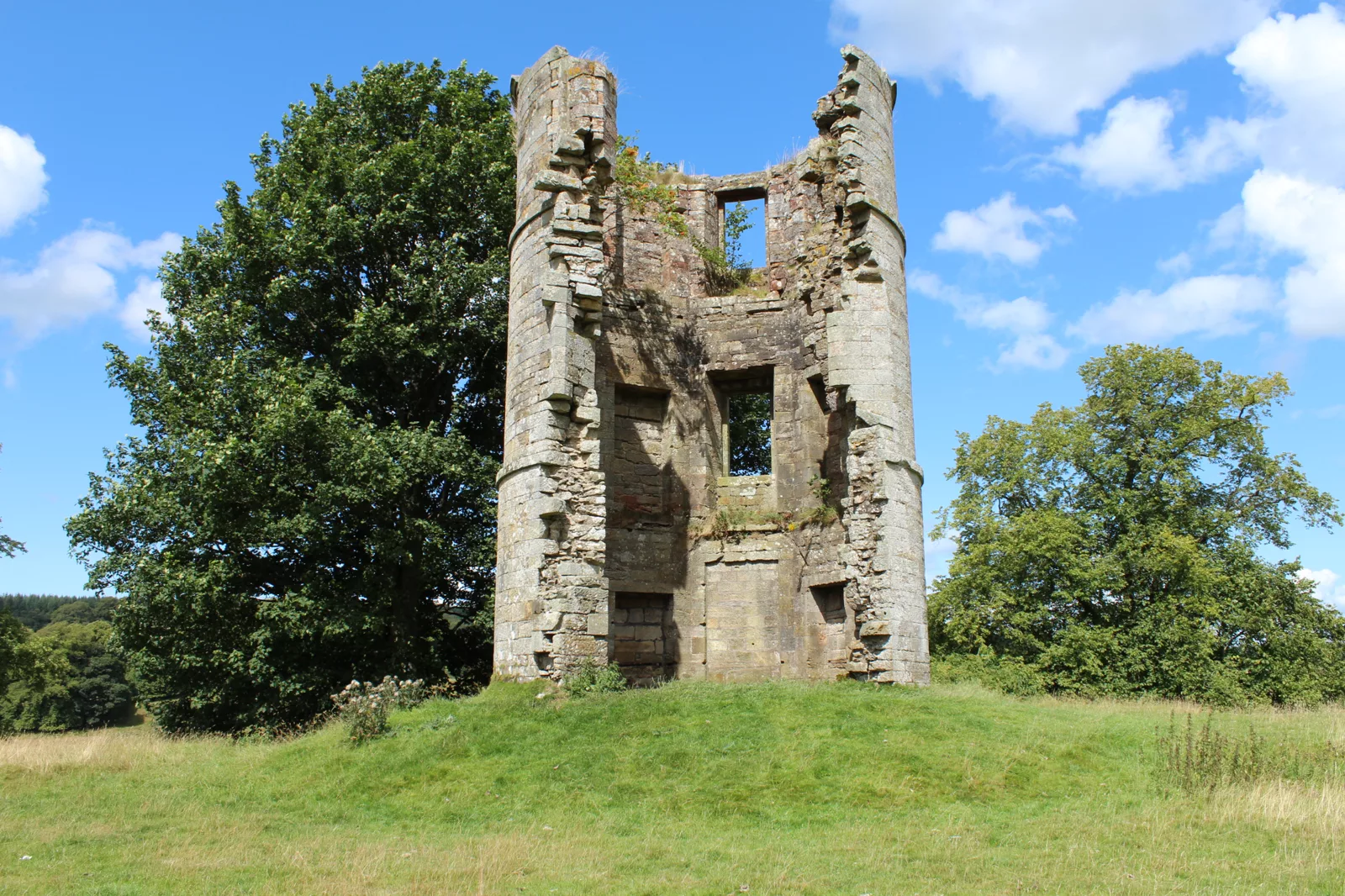
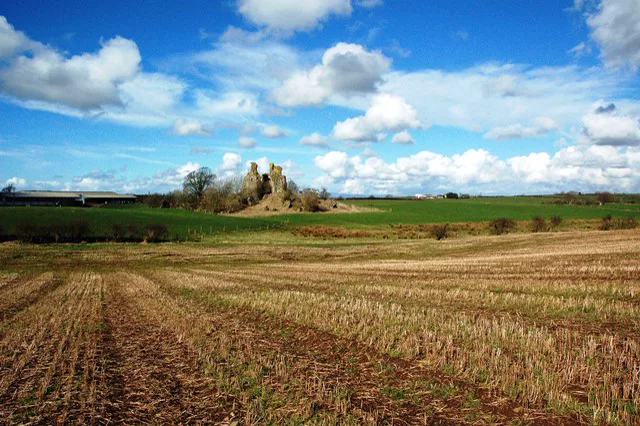
The family's historic seat is Craigie Castle, near Kilmarnock in Ayrshire. Wikipedia says it was built for the Lindsay family, came to John Wallace of Riccarton through marriage about 1371 because the last Lindsay heir was a daughter, and remained the chief residence until the family moved to Newton Castle in Ayr in 1588. After that the castle fell into ruin. Frances Dunlop of Dunlop, a descendant of the patriot, believed he was born at Craigie, but that is a belief and not a documented fact.
Of Sir William Wallace's own career, the article lists the victory at Stirling Bridge in 1297, defeat at Falkirk in 1298 and execution in London in 1305. Those dates concern him, not a clan structure.
A magazine profile of the present chief says the Wallaces took on Highland dress and the idea of a clan chiefly after George IV's visit to Edinburgh in 1822. That is one writer's statement and was not tested here.
The dates of his end are firmer than his birth. Wikipedia gives his capture at Robroyston, near Glasgow, on 5 August 1305 and his execution at Smithfield in London on 23 August 1305, after a Guardianship held in 1297 and 1298. None of these says anything about a clan structure. The distance between the documented life and the later chiefly family explains why the clan's story depends on a descent claim.
Tartans
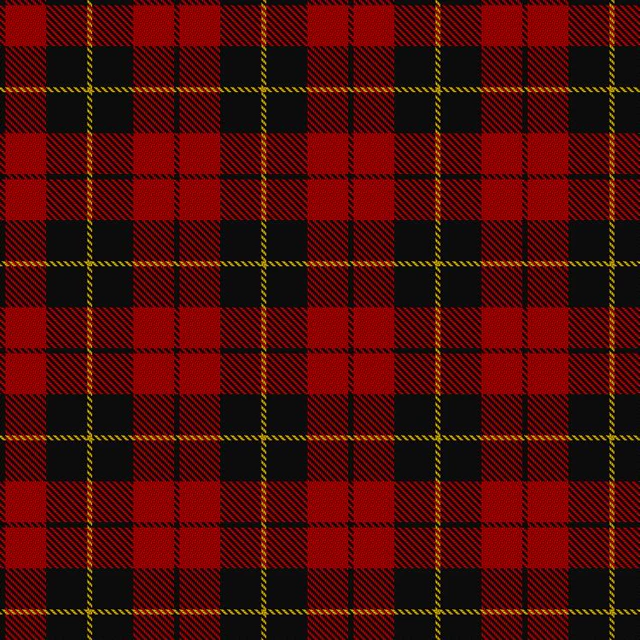
The register lists the Wallace tartan as reference 1208, classed Clan/Family and dated 1800, with no designer recorded. Its note says a threadcount was recorded by William A. Wallace in the Public Register of All Arms and Bearings in Scotland on 6 December 1951. The pattern is in the register as it stood before 2009, so it keeps its older reference numbers.
No tartan can be tied to Sir William Wallace. The oldest known Scottish tartan fragment, found at Glen Affric, is radiocarbon dated to roughly 1500 to 1655, more than 190 years after he died. A secondary database, Tartan Dictionary, dates its Wallace record 1842 instead of 1800, and the difference is not resolved here. Wikipedia mentions red, green and blue Wallace tartans in modern, ancient and weathered colourings, but those were not checked against the register.
Septs
No sept list is recorded for Clan Wallace. Wikipedia reports that the clan has no septs, but that is a secondary summary, and the society page read does not state a sept policy. The Standing Council of Scottish Chiefs says there is no central register of septs and that each chief decides which surnames the clan accepts. Branch names such as Wallace of Craigie describe family lines of the surname, not septs.
Check before repeating
Misconceptions
William Wallace is commonly pictured in a tartan kilt. No tartan from his time is known, and the register dates the clan tartan to 1800.
The Wallace surname is not a record of descent from him or from the chiefs. The name is an occupational or ethnic label of a kind that could arise in several places.
Craigie is the historic seat, not necessarily the chief's home today. Wikipedia says the family left in 1588 for Newton Castle, Ayr.
Who can wear
The Standing Council of Scottish Chiefs says there are no strict rules on who may wear a tartan and that wearing a clan tartan signals allegiance to the chief. The Clan Wallace Society page read does not state a narrower rule.
Not established
What the record does not show
The relationship between Sir William Wallace and the chiefly line is the family's claim and is not documented in the sources read. The date of Richard le Waleis, and which of the two accounts of his arrival is right, are not established. The society page does not say where the chief lives now, and the Lyon Court record of the chiefship was not seen. Who designed the Wallace tartan and why it was dated 1800 are not recorded. The question of whether his father was Alan, as the seal reads, or Malcolm of Elderslie, as Blind Harry has it, is unresolved in the sources used, as is the link between the Riccarton line that held Craigie and his own family.
Surnames and septs
The Wallace surname page is at /surnames/wallace/. The link to the clan is rated probable: the clan bears the name and the Standing Council counts holders of the chief's surname as members, but the name is Anglo-Norman Waleis, "Welshman" or "foreigner", a label that could be given to unrelated people in several places. Wikipedia reports that the clan has no septs, so no other surnames are listed here, and a person named Wallace is not shown to descend from the chiefs, from Richard le Waleis or from Sir William Wallace.
Historical notes
The Clan Wallace Society says it is the only organisation the Chief of Clan Wallace acknowledges, that the chief is recognised by the Court of the Lord Lyon, and that the society was founded and chartered in Texas in 1966.
Evidence level C. Sources: [1]
Wikipedia reports that Andrew Robert Wallace succeeded his father, Ian Francis Wallace, as chief in 2016, and that the clan uses the Gaelic name Uallas and the motto Pro libertate.
Evidence level D. Sources: [2]
Wikipedia reports that Craigie Castle in Ayrshire was built for the Lindsays, passed to John Wallace of Riccarton through marriage about 1371, and was the family's chief residence until a move to Newton Castle in Ayr in 1588, after which it fell into ruin.
Evidence level D. Sources: [3]
A magazine profile of the present chief, written before his succession, says the family's recorded forebear is Richard le Waleis, who appears in a charter of about 1163, and that Sir William Wallace was his great-great-great-grandson. The profile gives this as the family's account and does not cite the documents.
Evidence level D. Sources: [4]
Wikipedia's article on the clan names Richard Wallace, a follower of Walter FitzAlan, as an early settler in Ayrshire, and says the Wallaces of Elderslie in Renfrewshire descend from a younger son of his grandson Adam. It does not give a date that matches the profile's charter of about 1163.
Evidence level D. Sources: [2]
Wikipedia reports that Wallace won the battle of Stirling Bridge in 1297, was defeated at Falkirk in 1298 and was executed in London in 1305.
Evidence level D. Sources: [2]
Wikipedia says Wallace's own seal, on a letter to Lübeck dated 11 October 1297, names his father as Alan Wallace, and that nothing else confirms who that Alan was beyond a possible entry for an Alan Wallace as a crown tenant in Ayrshire in the 1296 Ragman Rolls.
Evidence level D. Sources: [5]
Wikipedia says the fifteenth-century poem by Blind Harry names a Sir Malcolm of Elderslie as his father and so places his birth in Renfrewshire, that some historians prefer Ellerslie near Kilmarnock, and that there is no record of Wallaces holding Ellerslie in the mid-thirteenth century.
Evidence level D. Sources: [5]
Wikipedia lists early Wallace holdings at Riccarton, Tarbolton, Auchincruive in Kyle and Stenton in East Lothian, as vassals of the High Steward, and dates his capture at Robroyston to 5 August 1305 and his execution at Smithfield to 23 August 1305.
Evidence level D. Sources: [5]
Dates named in the notes
Each line is the opening sentence of a historical note above that names a single year. The year is the one the source gives; it has not been checked independently here.
A magazine profile of the present chief, written before his succession, says the family's recorded forebear is Richard le Waleis, who appears in a charter of about 1163, and that Sir William Wallace was his great-great-great-grandson.
Evidence level D. Sources: [4]
Wikipedia lists early Wallace holdings at Riccarton, Tarbolton, Auchincruive in Kyle and Stenton in East Lothian, as vassals of the High Steward, and dates his capture at Robroyston to 5 August 1305 and his execution at Smithfield to 23 August 1305.
Evidence level D. Sources: [5]
The Clan Wallace Society says it is the only organisation the Chief of Clan Wallace acknowledges, that the chief is recognised by the Court of the Lord Lyon, and that the society was founded and chartered in Texas in 1966.
Evidence level C. Sources: [1]
Wikipedia reports that Andrew Robert Wallace succeeded his father, Ian Francis Wallace, as chief in 2016, and that the clan uses the Gaelic name Uallas and the motto Pro libertate.
Evidence level D. Sources: [2]
Tartans linked to Wallace
A clan and a tartan are linked by a sourced claim, not by the name alone. Open a tartan to see the evidence for the link.
Image: Scottish Register of Tartans, rendered from the registered threadcount. Crown copyright, National Records of Scotland.
Surnames linked to this clan
A surname's link to a clan is a claim about history, not a statement about any person's ancestry.
- Probable
- Supported by a credible source, not independently confirmed.
Fields missing from this record
Guides that mention this
Sources
- Clan Wallace Society
- Clan Wallace
- Craigie Castle
- Andrew Wallace: the man who would be chief
- William Wallace
- Who is a member of a Clan?
- Tartan: who may wear it (Standing Council of Scottish Chiefs)
- Scottish Register of Tartans: Wallace
- Wallace (clan)
- A 500-year-old Scottish tartan fabric was found in a Highland bog
- Wallace (surname)
- Clan articles (Mackenzie, Buchanan, Donald, Wallace, Campbell, Fraser of Lovat, Stewart, Gordon, Douglas)
Lowlands and Borders
Other clans recorded in the same area
Chosen only because their records name regions in the same part of Scotland. It is not a claim of kinship or alliance.
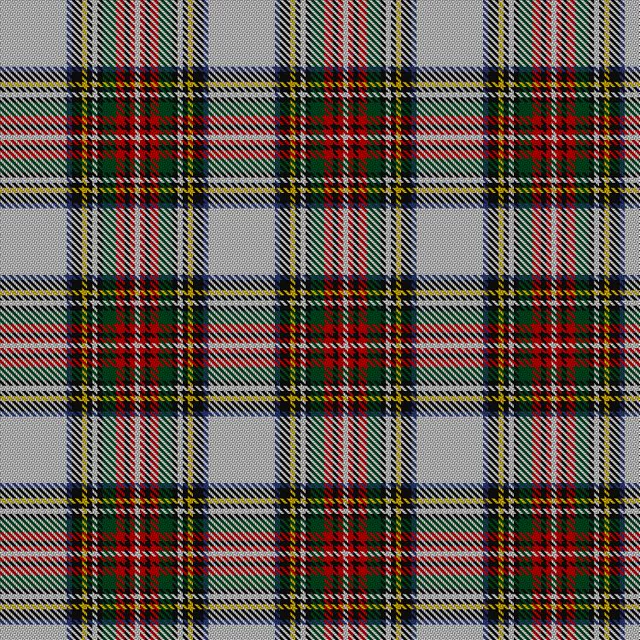
No photograph is held for this record. Shown: register swatches of its linked tartans.