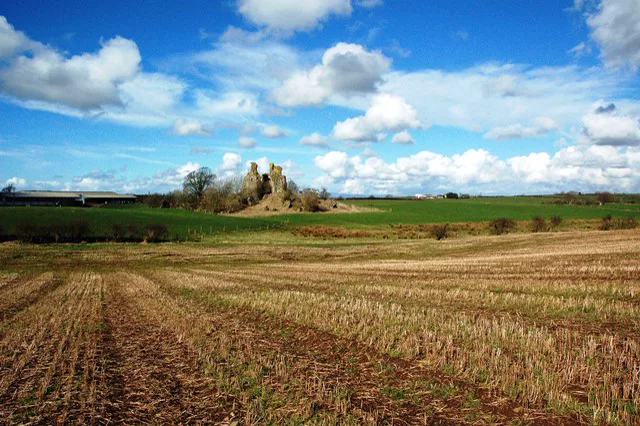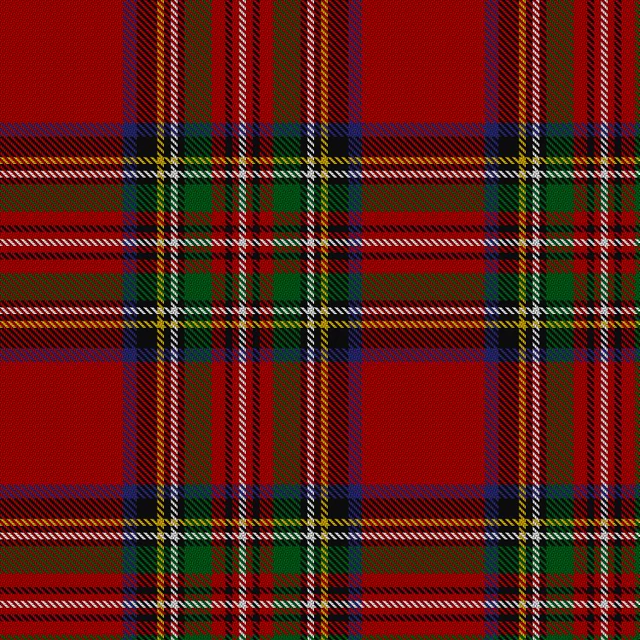
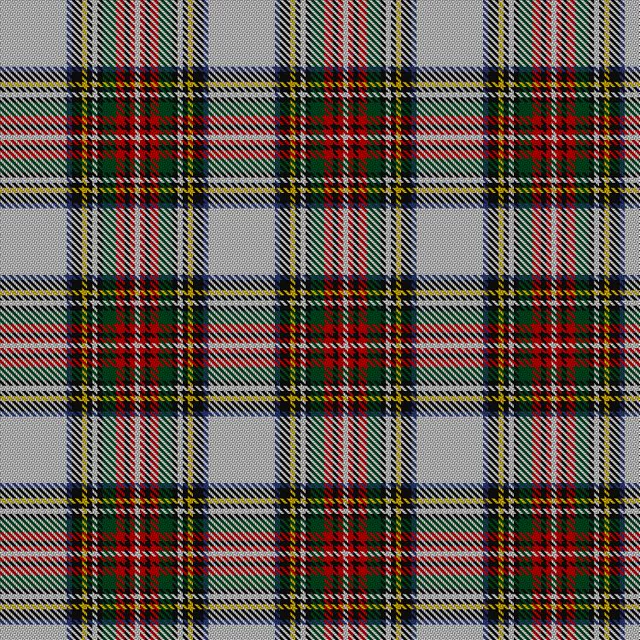
No photograph is held for this record. Shown: register swatches of its linked tartans.
Scottish clan
Gaelic name Dùbhghlas
A Lowland family named for Douglasdale in Lanarkshire, which produced the Black Douglas Earls of Douglas, ended in 1455, and the Red Douglas Earls of Angus, who outlasted them. Secondary sources say the name has no chief recognised by the Lord Lyon, so the register's accepted Douglas tartan, a Wilsons of Bannockburn sett of 1819, rests on custom rather than on a chief's approval.
The name Douglas comes from a place: Douglasdale in Lanarkshire, where the family first appears in twelfth-century charters. The family then split into two famous lines. The Black Douglases, Earls of Douglas, held the Earldom of Douglas until their fall in 1455. The Red Douglases, Earls of Angus, outlasted them and in time became Marquesses and then Dukes of Douglas.
That history is political and aristocratic, which is why this page sticks to what the sources say. A Douglas surname is common and does not by itself show descent from the Earls, and Douglas is a name for which secondary sources report no chief recognised by the Lord Lyon. The tartan question follows from that: the register treats a Wilsons of Bannockburn sett of 1819 as the accepted Douglas tartan, but no chief ever approved it.
The register says the tartan called Douglas, Black is often linked to the historical Black Douglas, but that the historical Black Douglas is unconnected with it.
The 1911 Britannica entry derives the name from the Gaelic dubh glas, usually glossed as dark water or dark stream, and places the family's home in Douglasdale. The first Douglas of note it names is William de Douglas, who appears on charters between 1175 and 1213. Wikipedia gives 1179 as the date he witnessed a charter of the Bishop of Glasgow, which fits that range but has not been checked against the charter itself.
Where William came from is not settled. Britannica suggests a possible connection with Freskin of Murray, and the University of Strathclyde's genetic genealogy page raises the same Freskin idea while calling it fairly speculative. Treat the earliest generations as uncertain.
Sir William of Douglas, called le hardi, who died in 1298, joined Wallace's rising in 1297 after earlier service to John Baliol and Edward I. His son Sir James, known as the Good (1286 to 1330), fought under Robert Bruce, and Britannica says English households gave him the name Black Douglas after his border raids. Wikipedia adds that he died at Teba in 1330 carrying Bruce's heart, a story this site has not traced to a primary source.
The Earls of Douglas, the Black line, were destroyed within a few years. Wikipedia reports the Black Dinner of 1440. Britannica records that James II killed the 8th Earl at Stirling Castle in 1452 and that the 9th Earl's rebellion collapsed in 1455 when the Red Douglases and others deserted him, after which his lands were forfeited. The Red line, which held the Earldom of Angus, survived. Britannica says the Douglas title was restored in 1633 when William, 11th Earl of Angus, became Marquess of Douglas, and that the 3rd Marquess became Duke of Douglas in 1703. That dukedom ended with the Duke's death without children in 1761, and the Douglas line passed by female descent to the Earls of Home.
The Black and Red Douglases are often described as one family. The University of Strathclyde's DNA page reports that tested descendants of the two lines have different Y-chromosome haplogroups, which would mean they are not descended in the male line from a single man. That is one project's finding and its dating is described as ongoing, so it is a caution about assuming a single descent rather than a settled verdict.
The Scottish Register of Tartans records the accepted Douglas tartan as a Wilsons of Bannockburn design that first appears in their 1819 catalogue, was called Douglas Hunting by 1880 in Clans Originaux, and had its threads checked against D.C. Stewart's 1950 book.
The Scottish Register of Tartans lists Douglas as the accepted Douglas clan or family tartan. It was made by Wilsons of Bannockburn, first appears in their 1819 catalogue as item 184, was called Douglas Hunting by 1880 in Clans Originaux, and had its thread specifications checked against D.C. Stewart's 1950 book. Registry notes establish those documentary facts, not any medieval Douglas dress.
Douglas, Grey is a different case. The register dates it to 1842 and to the Sobieski Stewarts' Vestiarium Scoticum, and says that book added spurious documentation to the subject. A tartan whose only early appearance is in that book has no independent earlier record behind it.
A third name, Douglas, Black, is dated by the register to about 1920 and traced to the Inverness Museum through Ross-Craven research. The register states that the historical Black Douglas has no connection with it. It is a modern pattern that picked up a historical name, and it is not recorded here as one of this clan's tartans.
Not established
The sources read for this page do not establish a recognised chief, a sourced list of septs, or the later history of Douglas Castle. Wikipedia prints a long list of allied families, including Hamilton, Home, Maxwell and Kirkpatrick, but no named society or authority behind that list was checked, and sept lists differ between organisations, so none is recorded here. The register's Douglas record keeps its threadcounts behind a login, and they were not read.
None of this shows that a person named Douglas descends from the Earls, or that the surname implies one tartan. Those links would each need their own evidence.
Check before repeating
The tartan called Douglas, Black does not come from the historical Black Douglases. The Scottish Register of Tartans says the historical Black Douglas had no connection with it.
Black Douglas and Red Douglas are not simply two branches of one male line on the evidence of one genetic genealogy project, though its dating is still being refined.
The Douglas surname page is at /surnames/douglas/. It rates the link to the clan probable, but describes it as a naming link and not proof of descent: the name is territorial, from Douglasdale in Lanarkshire, and secondary sources report no recognised chief of the name. The page also reports that tested Black and Red Douglas lines carry different Y-chromosome haplogroups, so even the great Douglas lines do not share one male-line ancestor on that evidence. No sept list is recorded here.
Secondary sources give William of Douglas, about 1179, as the first recorded Douglas, name Douglas Castle in Lanarkshire as the historic seat, and say the clan has no chief recognised by the Lord Lyon. None of this was checked against a primary source.
Evidence level D. Sources: [1]
The register says the tartan called Douglas, Black is often linked to the historical Black Douglas, but that the historical Black Douglas is unconnected with it.
Evidence level A. Sources: [2]
The 1911 Britannica entry derives the name from the Gaelic dubh glas, dark water, with Douglasdale in Lanarkshire as the family's home. Its first member of note is William de Douglas, who appears in charters between 1175 and 1213.
Evidence level C. Sources: [3]
The same entry says Sir William of Douglas, called le hardi, who died in 1298, joined Wallace's rising in 1297 after serving Baliol and Edward I, and that Sir James Douglas (1286 to 1330) won the name Black Douglas in English households through his border raids under Robert Bruce.
Evidence level C. Sources: [3]
Britannica says James II killed William, 8th Earl of Douglas, at Stirling Castle in 1452, and that the 9th Earl's rebellion failed in 1455 when the Red Douglases and others went over to the king, after which the Black Douglas lands were forfeited.
Evidence level C. Sources: [3]
Britannica records the Douglas title restored in 1633 when William, 11th Earl of Angus, became Marquess of Douglas, and the 3rd Marquess made Duke of Douglas in 1703. The dukedom ended with his death without children in 1761, and the Douglas line then continued through the Earls of Home by female descent.
Evidence level C. Sources: [3]
A University of Strathclyde genetic genealogy page reports that tested descendants of the Black Douglases and of the Red Douglases carry different Y-chromosome haplogroups (R1a and R1b), so the two lines do not share one male-line ancestor. The page calls its wider dating work ongoing and a possible link to Freskin speculative.
Evidence level B. Sources: [4]
Wikipedia reports the Black Dinner of 1440, in which the young 6th Earl of Douglas and his brother were beheaded after a mock trial, and says no chief of Douglas is recognised by the Lord Lyon because the Duke of Hamilton, the senior Douglas title-holder, bears the surname Douglas-Hamilton. Neither point was checked against a primary or printed source.
Evidence level D. Sources: [5]
The Scottish Register of Tartans records the accepted Douglas tartan as a Wilsons of Bannockburn design that first appears in their 1819 catalogue, was called Douglas Hunting by 1880 in Clans Originaux, and had its threads checked against D.C. Stewart's 1950 book.
Evidence level A. Sources: [6]
The register dates Douglas, Grey to 1842 and to the Sobieski Stewarts' Vestiarium Scoticum, a work it says added spurious documentation to the subject of tartan.
Evidence level A. Sources: [7]
Each line is the opening sentence of a historical note above that names a single year. The year is the one the source gives; it has not been checked independently here.
Secondary sources give William of Douglas, about 1179, as the first recorded Douglas, name Douglas Castle in Lanarkshire as the historic seat, and say the clan has no chief recognised by the Lord Lyon.
Evidence level D. Sources: [1]
Wikipedia reports the Black Dinner of 1440, in which the young 6th Earl of Douglas and his brother were beheaded after a mock trial, and says no chief of Douglas is recognised by the Lord Lyon because the Duke of Hamilton, the senior Douglas title-holder, bears the surname Douglas-Hamilton.
Evidence level D. Sources: [5]
The register dates Douglas, Grey to 1842 and to the Sobieski Stewarts' Vestiarium Scoticum, a work it says added spurious documentation to the subject of tartan.
Evidence level A. Sources: [7]
The 1911 Britannica entry derives the name from the Gaelic dubh glas, dark water, with Douglasdale in Lanarkshire as the family's home.
Evidence level C. Sources: [3]
A clan and a tartan are linked by a sourced claim, not by the name alone. Open a tartan to see the evidence for the link.
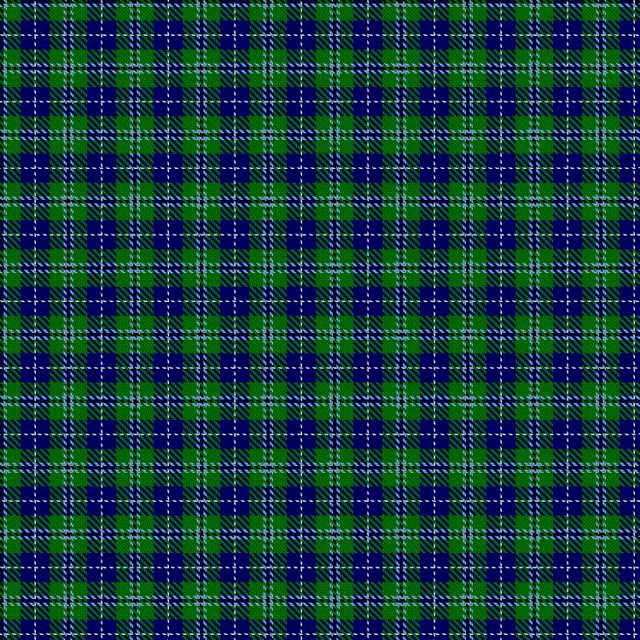 Clan tartanDouglasEarliest known record The Scottish Register of Tartans lists the accepted Douglas tartan as a Wilsons of Bannockburn sett of 1819 in green, blue and black with light blue and white lines. It was called Douglas Hunting by 1880. "Black Douglas" is a later design.
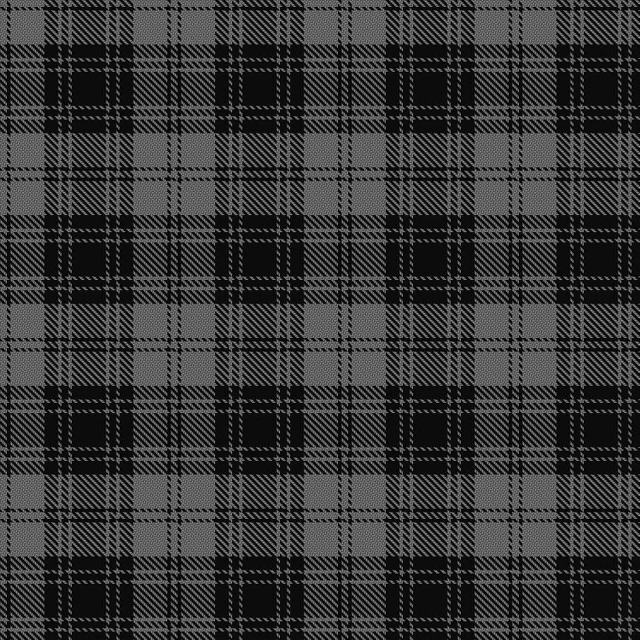 Clan tartanDouglas, GreyEarliest known record A black and grey Douglas tartan that the Scottish Register of Tartans dates to 1842 and attributes to the Sobieski Stewarts' Vestiarium Scoticum, a work that the register says added spurious documentation.
Image: Scottish Register of Tartans, rendered from the registered threadcount. Crown copyright, National Records of Scotland.
A surname's link to a clan is a claim about history, not a statement about any person's ancestry.
Lowlands and Borders
Chosen only because their records name regions in the same part of Scotland. It is not a claim of kinship or alliance.
No photograph is held for this record. Shown: register swatches of its linked tartans.