Scottish clan
Clan Fraser
A Highland clan of Beauly and the Aird west of Inverness, whose chiefs hold the title Lord Lovat. The Fraser name is French in origin, and the clan society treats the Aberdeenshire Frasers of Philorth, the senior Lowland line, as a separate family. The Fraser company was one of the independent Highland companies of 1725, and the register dates the Fraser of Lovat tartan only to 1893.
- Region
- Beauly, Aird, Strathglass, Stratherrick
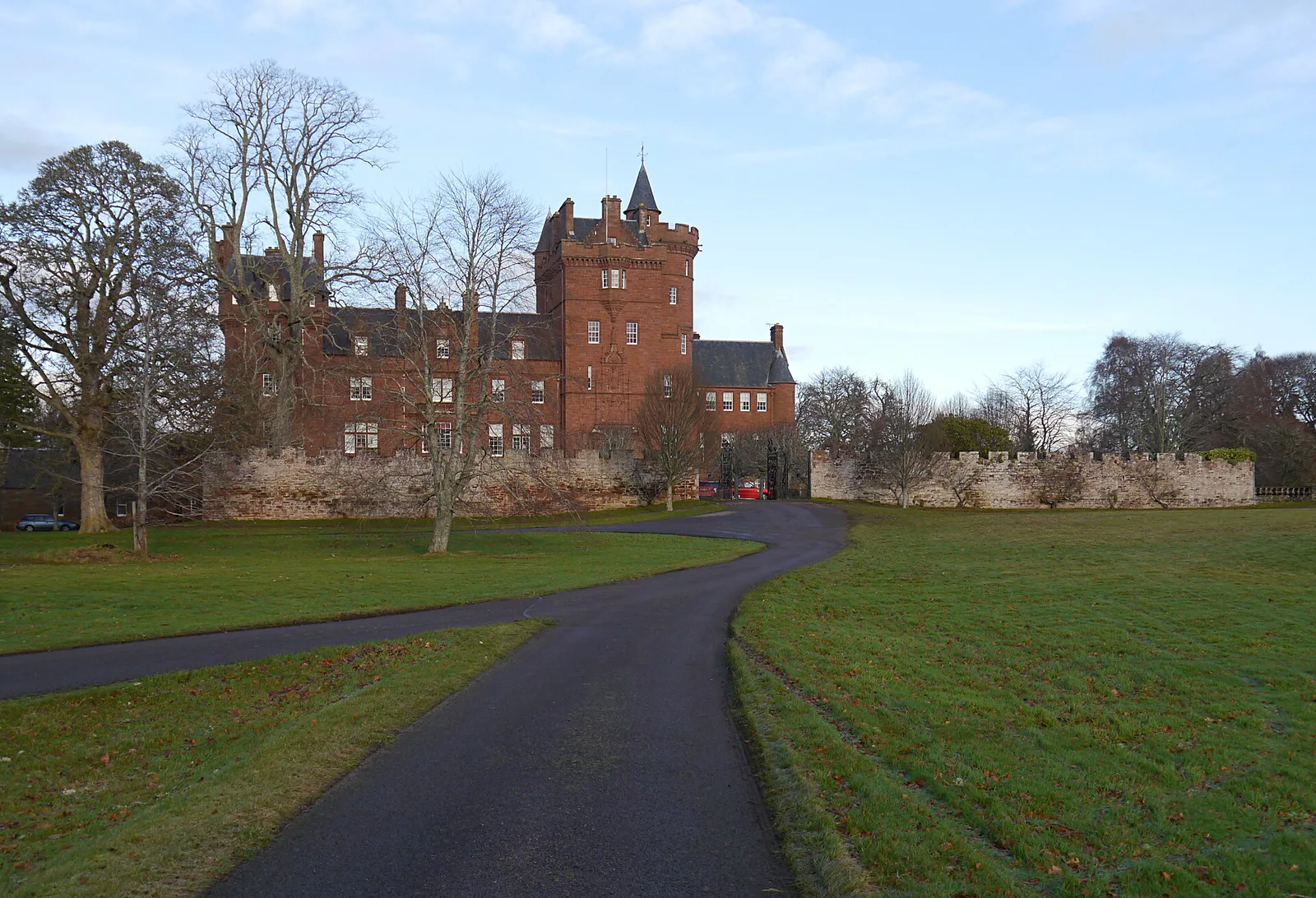
- Historic seat
- Beaufort Castle
- Motto
- Je suis prest
- Linked tartans
- 1
- Linked surnames
- 1
- Evidence level
- C
Overview
Clan Fraser of Lovat is a Highland clan whose country lay around Beauly, about ten miles west of Inverness, in the district called the Aird. The Fraser name itself is not Gaelic. The clan society says it is of French origin, and the first written record it gives is a Simon Fraser holding land in East Lothian in 1160. The Highland clan grew out of a Lowland family that moved north.
That history has a second Fraser branch in it. The Frasers of Philorth in Aberdeenshire, the Lords Saltoun, are described by the society as the senior line by descent but a Lowland family outside the Highland clan. A person named Fraser may therefore belong to either family, to neither, or to a different one altogether.
The register records Fraser of Lovat as dated 1893, taken from D.W. Stewart's Old and Rare Scottish Tartans, with a sample in the Scottish Tartans Society's Scarlett Collection.
Origins
The Clan Fraser Society dates the earliest written record of the name to 1160, when Simon Fraser held lands at Keith in East Lothian and gave a church to Kelso Abbey. Over the next two centuries the family moved north through Tweeddale and settled in several counties, so that by the fourteenth century there were two groups of northern Frasers, one in Aberdeenshire and one in Inverness-shire.
The society names Sir Simon Fraser, executed in 1306 after supporting Wallace and Bruce, as a common ancestor of the Highland and Lowland lines, though not a chief of either in the later sense. The Inverness-shire Frasers, it says, built their position around the Beauly estuary by marriage and diplomacy rather than conquest, taking lands in Strathfarrar, Strathglass and Stratherrick. Traditional Fraser country, in the society's account, reached from the west end of Loch Monar to Inverness and along the south side of Loch Ness to Fort Augustus.
Development
The society dates the peerage title Lord Lovat to around 1460, and says Beaufort Castle, then called Castle Dounie, passed to the family only in 1511. Before that the seat was Lovat Keep, whose exact site the society says is unknown, though it is thought to lie across the river from the later sites. Wikipedia reports a Fraser victory over Clan Donald at Mamsha in 1429, a date this site has not traced to a printed history. The society records the Battle of the Shirts in 1544, in which the 3rd Lord Lovat died.
The Black Watch Museum names Simon, Lord Lovat, among the commanders of the independent Highland companies authorised by the warrant of 1725. He is the same Simon Fraser, 11th Lord Lovat, whom the society says was executed for treason in London in 1747 after the Jacobite rising. The society says Castle Dounie was razed after Culloden in 1746 and that about 250 Frasers died in the battle under the Master of Lovat. Wikipedia says the estates were forfeited and recovered in 1774.
The present Beaufort Castle, a Victorian sandstone building, replaced Castle Dounie. In the twentieth century the society records chiefs of the family in the Lovat Scouts, at Gallipoli in 1915 and in commando service in 1944. It names the current chief as Simon Fraser, born in 1977, who took over the Lovat estates' management in 2018. Ordinal numbering of recent Lords Lovat differs between sources and is not given here.
The Black Watch Museum records Simon, Lord Lovat, among the commanders named for the independent Highland companies authorised by the warrant of 1725.
Tartan relationships
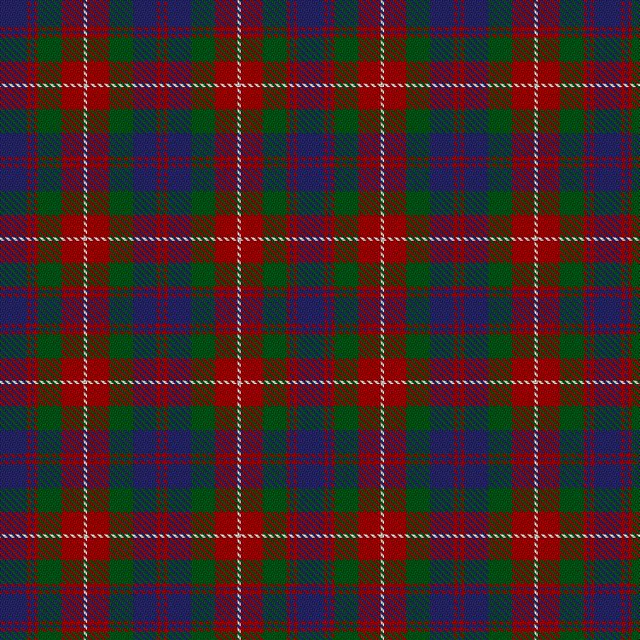
The Scottish Register of Tartans lists Fraser of Lovat as a clan or family tartan dated 1893, taken from D.W. Stewart's Old and Rare Scottish Tartans, with a sample in the Scottish Tartans Society's Scarlett Collection. The Smith Art Gallery and Museum in Stirling holds a Wilson of Bannockburn Fraser piece from the early nineteenth century. The museum record gives no threadcount, so it cannot be compared with the 1893 sett.
The clan society notes that the Sobieski Stewarts, whose 1842 Vestiarium Scoticum the register says added spurious documentation to the subject of tartan, worked on Eilean Aigas, an island on Fraser land. That is a local connection to the book, not evidence about any Fraser sett. No source read for this page ties Lord Lovat to the choice of the Black Watch tartan, and this site makes no such claim.
Not established
What the record does not show
The sources used here do not give a sourced sept list, the site of Lovat Keep, or the origin of Fraser as a surname beyond a French source. The clan society pages read do not give a threadcount, and the register keeps Fraser of Lovat's threadcount behind a login that was not read. Dates for events before 1500 come from the society or from Wikipedia and have not been checked against Scottish charters or a printed clan history. This page also does not decide whether the Frasers of Lovat and Philorth share a documented descent, only that the society says they share a common ancestor.
Check before repeating
Misconceptions
Fraser is not one clan. The Highland Frasers of Lovat and the Lowland Frasers of Philorth, who include the Lords Saltoun, are separate families by the society's account, though it names a common ancestor.
Surnames and septs
The Fraser surname page is at /surnames/fraser/. The link to the clan is rated probable, with a split that matters: the society says only the Frasers of Lovat belong to the Highland clan, and the Frasers of Philorth in Aberdeenshire, now Lords Saltoun, share an ancestor but are a separate Lowland family. A person named Fraser may belong to either or to neither, so the surname alone does not select the Lovat tartan. No sept list is recorded here.
Historical notes
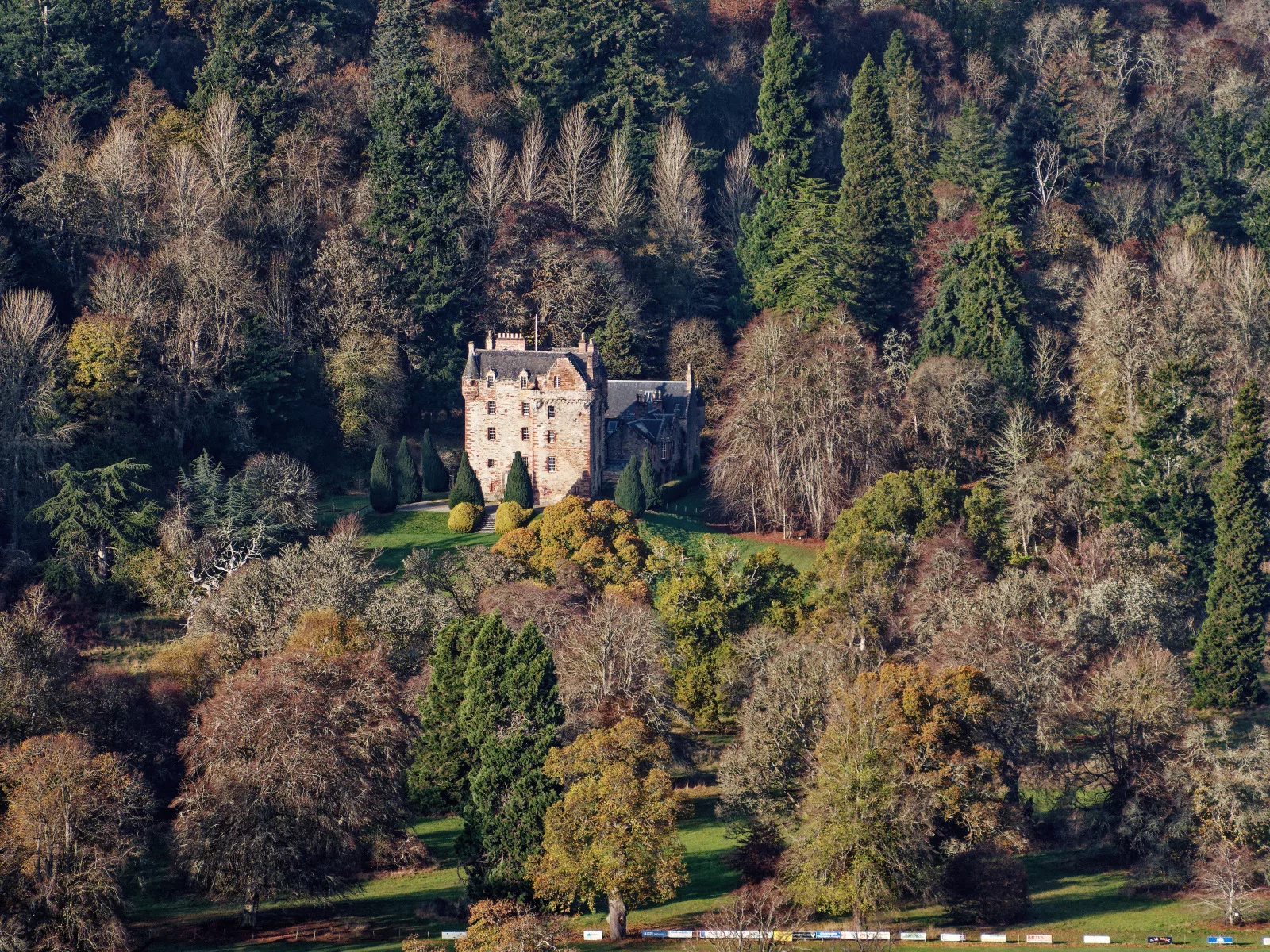
The Clan Fraser Society says Beaufort Castle, near Beauly, is the historic seat, a Victorian castle replacing Castle Dounie, and that the Aberdeenshire Frasers of Philorth are a separate Lowland family.
Evidence level C. Sources: [1]
The Black Watch Museum records Simon, Lord Lovat, among the commanders named for the independent Highland companies authorised by the warrant of 1725.
Evidence level B. Sources: [2]
The Clan Fraser Society says the Fraser name is French in origin and that the earliest written record is of 1160, when Simon Fraser held lands at Keith in East Lothian and gave a church to Kelso Abbey.
Evidence level C. Sources: [3]
The society says the family moved north from the Borders through Tweeddale in the twelfth and thirteenth centuries, and that the Inverness-shire Frasers built their position around the Beauly estuary by marriage and diplomacy, taking lands in Strathfarrar, Strathglass and Stratherrick.
Evidence level C. Sources: [3]
The society dates the grant of the title Lord Lovat to the chief to around 1460, and says Beaufort Castle, then called Castle Dounie, did not come into the family until 1511.
Evidence level C. Sources: [3]
The society names Sir Simon Fraser, executed in 1306, as a supporter of Wallace and Bruce and a common ancestor of the Highland and Lowland Fraser lines, though not strictly a chief. It calls the Frasers of Philorth, the Lords Saltoun, the senior line but a Lowland family that never belonged to the Gaelic, Highland clan.
Evidence level C. Sources: [4]
The society says Simon Fraser, 11th Lord Lovat, was executed for treason in London in 1747, and the clan history page says Castle Dounie was razed after Culloden in 1746 and about 250 Frasers were killed at the battle under the Master of Lovat. Wikipedia adds that the estates were forfeited and recovered by the executed lord's son in 1774, a date not found in a clan-society source.
The society records Simon Fraser (1871 to 1933) commanding the Lovat Scouts in the Boer War and leading the Highland Mounted Brigade at Gallipoli in 1915, and Simon Fraser (1911 to 1995) as a commando officer at the D-Day landings.
Evidence level C. Sources: [4]
The register records Fraser of Lovat as dated 1893, taken from D.W. Stewart's Old and Rare Scottish Tartans, with a sample in the Scottish Tartans Society's Scarlett Collection.
Evidence level A. Sources: [6]
Dates named in the notes
Each line is the opening sentence of a historical note above that names a single year. The year is the one the source gives; it has not been checked independently here.
The Clan Fraser Society says the Fraser name is French in origin and that the earliest written record is of 1160, when Simon Fraser held lands at Keith in East Lothian and gave a church to Kelso Abbey.
Evidence level C. Sources: [3]
The society names Sir Simon Fraser, executed in 1306, as a supporter of Wallace and Bruce and a common ancestor of the Highland and Lowland Fraser lines, though not strictly a chief.
Evidence level C. Sources: [4]
The Black Watch Museum records Simon, Lord Lovat, among the commanders named for the independent Highland companies authorised by the warrant of 1725.
Evidence level B. Sources: [2]
The register records Fraser of Lovat as dated 1893, taken from D.W. Stewart's Old and Rare Scottish Tartans, with a sample in the Scottish Tartans Society's Scarlett Collection.
Evidence level A. Sources: [6]
Tartans linked to Fraser
A clan and a tartan are linked by a sourced claim, not by the name alone. Open a tartan to see the evidence for the link.
Image: Scottish Register of Tartans, rendered from the registered threadcount. Crown copyright, National Records of Scotland.
Surnames linked to this clan
A surname's link to a clan is a claim about history, not a statement about any person's ancestry.
- Probable
- Supported by a credible source, not independently confirmed.
Fields missing from this record
Sources
- Clan Fraser: history
- Am Freiceadan Dubh: the Independent Highland Companies 1725-1740
- Early Frasers (timeline introduction)
- Clan chiefs (Clan Fraser Society)
- Clan Fraser of Lovat
- Scottish Register of Tartans: Fraser of Lovat
- Fraser Tartan, Wilson of Bannockburn (object 05962.50)
- Scottish Register of Tartans: Douglas, Grey (Vestiarium Scoticum)
- Clan articles (Mackenzie, Buchanan, Donald, Wallace, Campbell, Fraser of Lovat, Stewart, Gordon, Douglas)
Highlands
Other clans recorded in the same area
Chosen only because their records name regions in the same part of Scotland. It is not a claim of kinship or alliance.