Scottish clan
Clan Campbell
Gaelic name Caimbeul
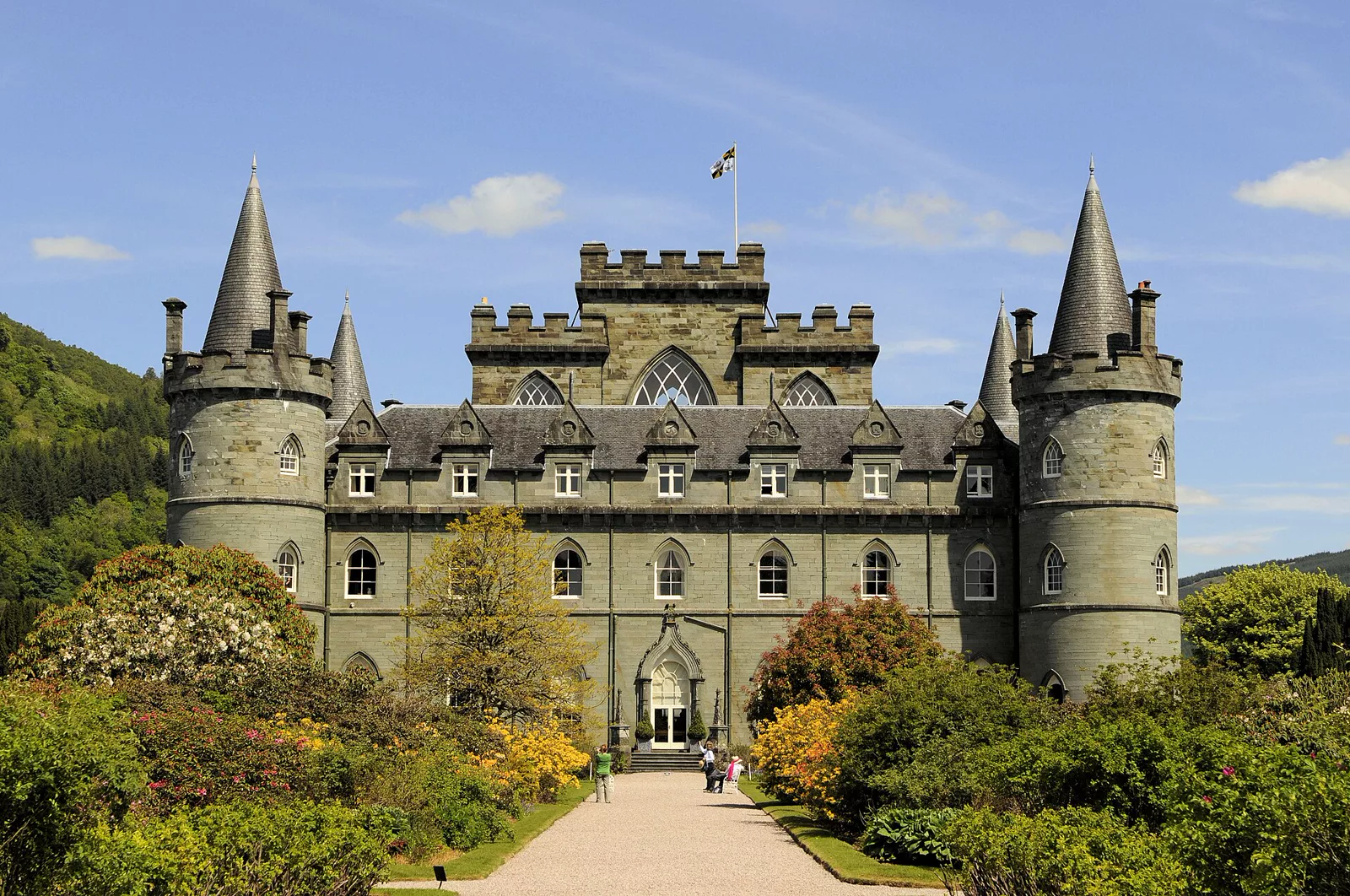
A clan of Argyll whose chief is the Duke of Argyll, with the principal seat at Inveraray Castle on Loch Fyne. The chief's Gaelic style is Mac Cailein Mòr, from Cailean Mòr (Colin the Great), killed in the 1290s. The Campbell tartan is the Black Watch sett in lighter shades, but the Black Watch sett itself is shared with other clans and its origin is not credited to the Campbells.
- Region
- Argyll
- Historic seat
- Inveraray Castle
- Motto
- Ne obliviscaris
- Linked tartans
- 2
- Linked surnames
- 1
- Evidence level
- C
Overview
Clan Campbell's chief is the Duke of Argyll, who holds the Gaelic style Mac Cailein Mòr, "son of Colin the Great". The principal seat is Inveraray Castle on Loch Fyne. The chiefly line were Earls of Argyll from 1457 and Dukes from 1701, according to Wikipedia's article on the dukedom.
The clan has several cadet houses that held peerages of their own. The Clan Campbell Society (North America) names Breadalbane, Cawdor and Loudoun alongside the Argyll line. The Campbell tartan is the Black Watch sett, but the clan society and the regimental museum tell different stories about where that sett came from, and the Tartans section below sets out both.
The Scottish Register of Tartans says the Cockburn Collection (1810 to 1815) holds four specimens of the Government tartan, one of them labelled "Campbell Argyll".
Origins
The name began as a nickname. David Sellar's paper, reproduced by the Clan Campbell Society (North America), reads Caimbeul as Gaelic for "twisted mouth" and notes that the p was added only in the later fifteenth century. The same paper rejects the story that the family descends from a Norman knight called de Campo Bello, quoting W. F. Skene that it had no early authority.
The earliest documented Campbell in that account is Gillespic, recorded in 1263. His son Colin witnessed a charter about 1281 and Colin's son Neill a grant in 1282. Skene placed the family's original seat in the district of Lochawe, and a 1369 charter of David II names Duncan M'Duine as a progenitor, which fits the earlier Gaelic name O'Duibhne. The style Mac Cailein Mòr comes from Colin Mòr, who was killed in the 1290s.
What the sources do not settle is the older pedigree before the thirteenth century. Sellar worked from three surviving Gaelic genealogies, and this page does not choose between them.
Development
Wikipedia says the Campbells fought at Bannockburn in 1314, and that Colin Campbell became Earl of Argyll in 1457. Archibald Campbell, 10th Earl, was made first Duke of Argyll on 21 June 1701.
The cadet lines grew in parallel. Historic Environment Scotland describes the Glenorchy Campbells building Kilchurn Castle at the head of Loch Awe in the mid-1400s. Sir John Campbell of Glenorchy, 1st Earl of Breadalbane, made it a garrison in 1689, and the barracks he added is described as the oldest surviving barracks on the British mainland. Cawdor and Loudoun also became earldoms, according to the clan society.
Campbells appear on both sides of the best-known episodes of the period. Wikipedia reports Campbell soldiers under Robert Campbell of Glenlyon at the Glencoe massacre of 1692, and Campbell companies on the government side in 1715 and at Culloden in 1746. The Black Watch Museum records Sir Duncan Campbell of Lochnell and Colin Campbell of Skipness among the commanders of the independent companies raised from 1725. None of this shows that any one person named Campbell took part.
Historic Environment Scotland says Sir Colin Campbell, 1st Lord of Glenorchy, built Kilchurn Castle at the head of Loch Awe in the mid-1400s (a charter of 1449 names the castle), and that in 1689 Sir John Campbell of Glenorchy, 1st Earl of Breadalbane, turned it into a garrison with a barracks for 200 men, used in the risings of 1715 and 1745.
Tartans
The clan society lists four official Campbell tartans: Campbell (also called Ancient Campbell), Campbell of Cawdor, Campbell of Breadalbane and Campbell of Loudoun. The main Campbell tartan is the Black Watch sett in lighter shades. The society says the present Duke of Argyll approves it and that the past seven chiefs disavowed a "Campbell of Argyll" sett, citing Alastair Campbell of Airds's 1985 work on the Campbell tartan.
That is a clan-society account. The Scottish Register of Tartans files Black Watch (Government) as a military tartan dated 1739 and says the design is believed to have originated then, not that it was a Campbell design. The Cockburn Collection of about 1810 to 1815 labelled one specimen of it "Campbell Argyll", with others labelled Grant, Munro and Sutherland. The Black Watch Museum says research points to an origin between Strathspey and Easter Ross, tied to the Munros and Grants. The Black Watch sett and the Campbell tartan are therefore linked, but the sources do not show the clan originated it.
Check before repeating
Misconceptions
The Norman origin for Campbell is a later story with no early authority, according to Sellar and Skene as reproduced by the clan society. The idea that Black Watch is simply the Campbell tartan is also too simple: the sett is shared by several clans and regiments, and the register does not name a designer.
Not established
What the record does not show
No source used here gives a sept list for Clan Campbell, so none is recorded; sept lists differ by organisation and period. The chief's Lyon Court record, the exact blazon of the crest, and the year Cailean Mòr died (secondary sources give 1294 and 1296) were not confirmed. Wikipedia is used for the dated events above and is a pointer, not proof. The Register keeps Campbell threadcounts behind a login, which were not read.
Surnames and septs
The Campbell surname page is at /surnames/campbell/. It rates the link between name and clan probable, with a limit: the earliest documented bearers, from 1263, are the Lochawe family whose chiefs became the Earls and Dukes of Argyll, so the connection holds for that family and not automatically for every person named Campbell. The name began as a Gaelic nickname, Caimbeul, and spread widely through emigration. No sept list is recorded for this clan page, so no other surnames are tied to it here.
Historical notes
The Black Watch Museum records Campbell commanders among those raising the independent Highland companies of 1725 to 1726, and the Clan Campbell Society of North America says three of the six companies were Campbell.
The chief is the Duke of Argyll, styled Mac Cailein Mòr, "son of Colin the Great". Wikipedia's Duke of Argyll article gives Torquhil Ian Campbell, 13th Duke, as chief since 2001 and Inveraray Castle as the family's principal residence. The Lyon Court record was not seen.
Clan Campbell Society (North America), reproducing David Sellar's paper, says Campbell began as a Gaelic nickname meaning "twisted mouth", that the intrusive p is absent before the later fifteenth century, and that the Norman "de Campo Bello" origin has no early authority, in the words of the historian W. F. Skene.
Evidence level C. Sources: [5]
The same page gives Gillespic Campbell, recorded in 1263 in connection with the lands of Menstrie and Sauchie, as the earliest documented Campbell, with his son Colin witnessing a charter about 1281. It cites a charter of David II dated 1369 naming Duncan M'Duine as an ancestor of Archibald Campbell, and says the family's earlier Gaelic name was O'Duibhne.
Evidence level C. Sources: [5]
Wikipedia reports that Cailean Mòr was killed by the MacDougalls in 1296, while other secondary accounts give 1294. Sources differ on the year, so this page says only the 1290s.
Evidence level D. Sources: [4]
Wikipedia's Duke of Argyll article says Colin Campbell was created Earl of Argyll in 1457 and that the dukedom was created on 21 June 1701 by William III and II, with Archibald Campbell, 10th Earl, as first Duke.
Evidence level D. Sources: [3]
Historic Environment Scotland says Sir Colin Campbell, 1st Lord of Glenorchy, built Kilchurn Castle at the head of Loch Awe in the mid-1400s (a charter of 1449 names the castle), and that in 1689 Sir John Campbell of Glenorchy, 1st Earl of Breadalbane, turned it into a garrison with a barracks for 200 men, used in the risings of 1715 and 1745.
Evidence level B. Sources: [6]
The Clan Campbell Society (North America) lists the Argyll, Breadalbane, Cawdor and Loudoun houses as the principal peerage lines, and names Lochnell, Airds and Ardkinglas among other cadet houses. The page gives no creation dates.
Evidence level C. Sources: [7]
The Black Watch Museum names Sir Duncan Campbell of Lochnell (appointed 21 May 1725) and Colin Campbell of Skipness (1726) among the commanders of the independent companies, and says research cited in its article places the tartan's likely origin between Strathspey and Easter Ross, linked to the Munros and Grants.
Evidence level B. Sources: [1]
The Scottish Register of Tartans says the Cockburn Collection (1810 to 1815) holds four specimens of the Government tartan, one of them labelled "Campbell Argyll". It dates Black Watch (Government) to 1739 and says that is when the design is believed to have originated.
Evidence level A. Sources: [8]
Wikipedia reports that Campbell soldiers under Captain Robert Campbell of Glenlyon took part in the Massacre of Glencoe in 1692, and that Campbell companies fought at Culloden in 1746 and supported the government at Sheriffmuir in 1715.
Evidence level D. Sources: [4]
Tartans linked to Campbell
A clan and a tartan are linked by a sourced claim, not by the name alone. Open a tartan to see the evidence for the link.
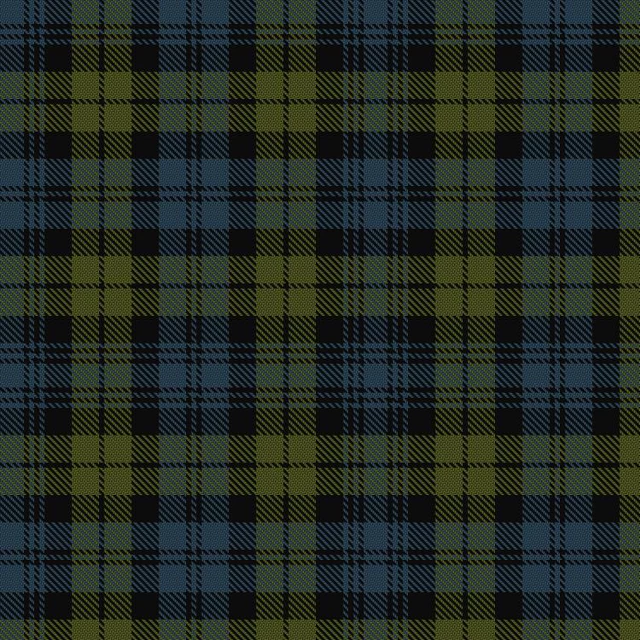 Clan tartanCampbellEarliest known record The Campbell clan tartan is the Black Watch sett in lighter shades. The Scottish Register of Tartans dates it to 1739 and says it became the Campbell tartan in the early 1800s. The Clan Campbell Society of North America says the present Duke of Argyll approves it and that the past seven chiefs disavowed the Campbell of Argyll sett.
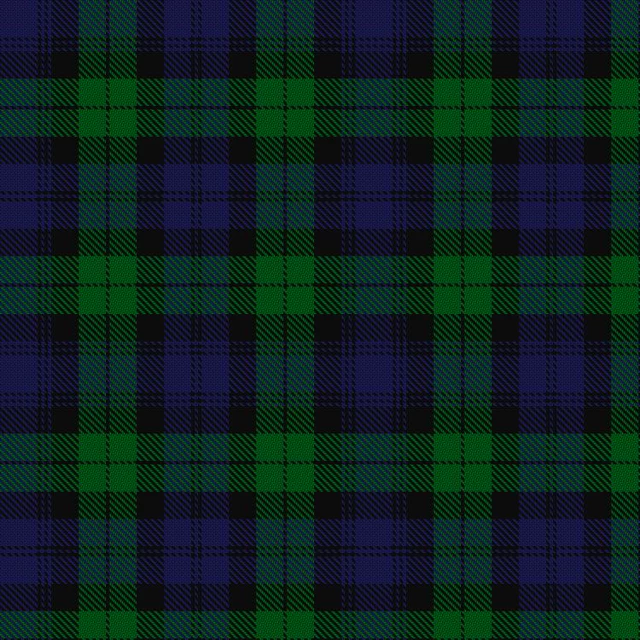 Military tartanBlack WatchNo date recordedThe dark blue, green and black tartan of the 42nd Regiment of Foot, the Black Watch. The Scottish Register of Tartans lists it as Black Watch (Government), a military tartan, and says it is thought to have been designed in 1739.
Image: Scottish Register of Tartans, rendered from the registered threadcount. Crown copyright, National Records of Scotland.
Surnames linked to this clan
A surname's link to a clan is a claim about history, not a statement about any person's ancestry.
- Probable
- Supported by a credible source, not independently confirmed.
Fields missing from this record
Sources
- Am Freiceadan Dubh: the Independent Highland Companies 1725-1740
- Clan Campbell tartan
- Duke of Argyll
- Clan Campbell
- The Origins of the Campbells (after David Sellar)
- Kilchurn Castle: History
- Cadet branches of Clan Campbell
- Scottish Register of Tartans: Black Watch (Government)
- Clan articles (Mackenzie, Buchanan, Donald, Wallace, Campbell, Fraser of Lovat, Stewart, Gordon, Douglas)
Highlands
Other clans recorded in the same area
Chosen only because their records name regions in the same part of Scotland. It is not a claim of kinship or alliance.