Scottish clan
Clan MacDonald
Gaelic name Clann Dòmhnaill
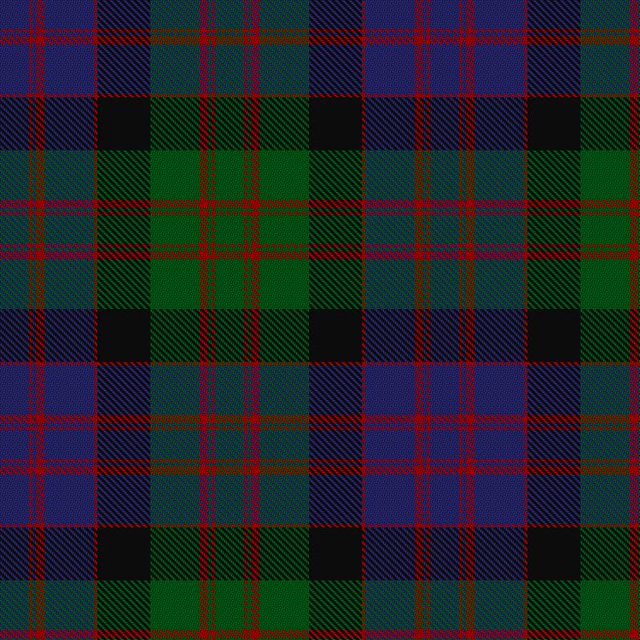
A west Highland and Hebridean clan whose chiefs were Lords of the Isles until the forfeiture of 1493. Clan Donald has several branches, each with its own chief, and in 1947 the Lord Lyon recognised the Lord Macdonald as High Chief of Clan Donald. The Scottish Register of Tartans records at least 27 MacDonald setts across nine branches, so the name does not point to a single tartan.
- Region
- Hebrides, West Highlands
- Historic seat
- Not recorded
- Motto
- Per mare per terras
- Linked tartans
- 1
- Linked surnames
- 1
- Evidence level
- C
Overview
Clan Donald is a family of related branches, not one house. The Lords of the Isles led the clan until the Crown forfeited the lordship in 1493, and the branches that followed held their own lands under separate chiefs: Clanranald, Glengarry, Sleat, Keppoch, Glencoe and others, according to the sources below. In 1947 the Lord Lyon recognised the Lord Macdonald as High Chief, and the High Council of Clan Donald now brings the major branches together.
For the same reason, there is no single MacDonald tartan. The Scottish Register of Tartans counts at least 27 setts across nine branches.
The Scottish Register of Tartans dates the main MacDonald tartan to 1819, quotes the Scottish Tartans Society that it is the oldest recorded version of the clan sett, and says it matches a design in the 1880 Clans Originaux, with a sample in the Scottish Tartans Authority's Scarlett Collection.
Origins
The clan's own account begins with Somerled, who the Clan Donald USA history says defeated the Norse King of Man in 1156. Wikipedia traces the clan's descent from Dòmhnall mac Raghnaill, who died about 1250 and whose father Ragnall was styled King of the Isles. It also reports a 2005 DNA study that found Norse descent in Somerled's male line, which does not fit the older pedigrees running back to Irish kings. That is a secondary report, not a checked finding.
The name itself is a patronymic, "son of Dòmhnall", so it is not unique to this clan. The surname page covers that point.
Development
Wikipedia says Aonghas Mòr's son Aonghus Og supported Robert the Bruce at Bannockburn in 1314, and that Bruce granted the clan the right wing in battle, a tradition not checked here. At Harlaw on 24 July 1411 Donald, 8th Lord of the Isles, fought over his wife's Ross inheritance. The earldom of Ross was lost in 1471 or 1475 depending on the source, and the lordship itself was forfeited in 1493. Finlaggan on Islay is given in secondary sources as the traditional centre of the lordship.
The 1947 recognition of Lord Macdonald restored a single High Chief, whose authority over clan tartans the Register's note says was restored at the same time. In 1972 supporters formed the Clan Donald Lands Trust, which now holds Armadale Castle and estate on Skye.
The fall of the Lordship came in two steps in the clan's own account. The High Council says the earldom of Ross was annexed to the Crown in 1475, and that in 1493 John, the last Lord of the Isles, was forfeited, with the title annexed to the Crown and granted to the Dukes of Rothesay, the king's heir. Clan Donald USA gives 1471 for the loss of Ross and Wikipedia says John surrendered it in 1475, so the clan's own two sources disagree and the High Council aligns with the later date. Wikipedia dates the last attempt to restore the Lordship, under Domhnall Dubh, to a failure by 1545.
After 1493 the lands were mostly granted to the heads of the branches or to other families that had held from the Lords. Wikipedia reports the Glencoe killings of 1692, in which 38 unarmed MacDonalds were killed, the death of the chief of Keppoch at Culloden in 1746, and the creation of the Baron Macdonald peerage in 1776. The High Council dates the end of the clan system to the years after Culloden, which is where its own account ends until the High Chief's recognition in 1947.
The High Council of Clan Donald says that in 1947 the Lord Lyon granted undifferenced arms of Macdonald of Macdonald to Alexander Godfrey, 7th Lord Macdonald, recognising him as High Chief; the present Lord Macdonald holds the title.
Tartans
The Register dates the main MacDonald tartan to 1819 and records no designer. Its note, quoting the Scottish Tartans Society, calls it the oldest recorded version of the clan sett and says it matches a design in the 1880 Clans Originaux. The same note counts nine independent branches and at least 27 setts, and says authority over the clan's tartans came back with the High Chief in 1947.
MacDonald of the Isles is a different case. The Register places it among the Vestiarium Scoticum designs of 1842, says it is not generally regarded as a clan tartan, and warns that the Sobieski Stuarts never produced their manuscript. It should not be read as the cloth of the medieval Lords of the Isles.
Check before repeating
Misconceptions
MacDonald of the Isles is a Vestiarium Scoticum design of 1842, according to the register, not a record of cloth worn in the Lordship. Another point worth stating plainly: MacDonald as a surname is shared by people from Ireland as well as Scotland, and the surname does not by itself place anyone in Clan Donald.
Not established
What the record does not show
No source used here lists the septs of Clan Donald, so none are recorded. Branch chiefs are named only as far as the High Council's membership and the single secondary list of branches go; the full branch tartans and their dates were not collected. The clan's historic seat is not given here because sources point to Finlaggan for the Lords of the Isles and to Armadale for the modern trust, not to one seat of the clan. The Lyon Court record of 1947 was not seen, and the DNA claim is a reported finding only. The Register keeps threadcounts behind a login.
Branches
The Lordship broke into branches because John of Islay's family did. The High Council of Clan Donald says John, the first to take the title Lord of the Isles, married twice: Euphemia MacRuairi in 1337 and Margaret Stewart in 1350. In 1372 he granted the MacRuairi lands, including the Lordship of Garmoran, Eigg and the Outer Hebrides, to the sons of the first marriage, and Ranald, one of them, founded Clanranald with a seat at Castle Tioram. The heirs of the second marriage carried the main line, through Donald of Harlaw and his son Alexander, who took the Ross inheritance.
The other branches have separate founders in the same account. Iain Mor Tanaistear is named as founder of the MacDonalds of the south, whom Wikipedia places at Dunyvaig on Islay as Dunnyveg. Alexander of Lochaber is named, granted the Lordship of Lochaber, and John of the Heather (Iain Fraoch) as ancestor of Glencoe. Sleat, at Dunscaith on Skye, and Glengarry, at Invergarry, complete the list Wikipedia gives, together with the MacAlisters as a senior cadet branch. The account in the clan's own history and the Wikipedia list agree on the branches but not in every detail of who descends from whom, and the lines between Lochaber, Keppoch and Glengarry were not checked against any genealogical work here.
This matters in practice because each branch has its own chief and its own tartans. A person who knows only the name MacDonald has several different branch claims to choose among, and the register's count of at least 27 setts across nine branches reflects that, not a clan with many arbitrary designs.
Surnames and septs
There is no MacDonald surname page on this site yet, so there is nothing to link to. Treat the name as a weak pointer: it is a patronymic meaning son of Dòmhnall, shared by families in Ireland as well as Scotland, and Clan Donald has several branches with separate chiefs. No sept list is recorded for Clan Donald here, so no other surnames are assigned to it.
Historical notes
The High Council of Clan Donald says that in 1947 the Lord Lyon granted undifferenced arms of Macdonald of Macdonald to Alexander Godfrey, 7th Lord Macdonald, recognising him as High Chief; the present Lord Macdonald holds the title.
Evidence level C. Sources: [1]
Secondary sources give Finlaggan on Islay as the traditional seat of the Lords of the Isles, forfeited in 1493, with branches including Sleat, Clanranald, Keppoch, Glencoe and Glengarry.
Evidence level D. Sources: [2]
Clan Donald USA says Somerled's victory over the Norse King of Man in 1156 established the family's independence, that Angus Og, 6th Lord of the Isles, supported Robert the Bruce at Bannockburn, and that Donald, 8th Lord, led the clan at Harlaw in 1411. Wikipedia dates Harlaw to 24 July 1411 and says Donald of Islay's claim came through his wife Mariota, Countess of Ross.
Wikipedia traces the clan to Dòmhnall mac Raghnaill (died about 1250), whose father Ragnall was styled King of the Isles, and to Somerled, killed in 1164. It says a 2005 DNA study found Norse descent in Somerled's male line, which sits against the older Irish pedigrees. This is a reported finding from a level D source and was not checked against the study.
Evidence level D. Sources: [4]
Sources differ on the end of the Ross connection: Clan Donald USA says the earldom of Ross was lost in 1471, Wikipedia says John of Islay surrendered it in 1475. Both give 1493 for the forfeiture of the Lordship of the Isles.
Clan Donald USA says the High Council of Clan Donald comprises the chiefs of Clanranald, Glengarry, Sleat and Antrim, with Lord Macdonald presiding. The High Council's own page gives Godfrey James Macdonald as 8th Lord Macdonald, High Chief and 34th hereditary chief, and says his father was recognised in 1947.
Clan Donald USA says the Clan Donald Lands Trust was formed in 1972 to keep part of the old clan lands together and now holds Armadale Castle and estate on Skye.
Evidence level C. Sources: [5]
The Scottish Register of Tartans dates the main MacDonald tartan to 1819, quotes the Scottish Tartans Society that it is the oldest recorded version of the clan sett, and says it matches a design in the 1880 Clans Originaux, with a sample in the Scottish Tartans Authority's Scarlett Collection.
Evidence level A. Sources: [6]
The High Council of Clan Donald says John of Islay, first to use the title Lord of the Isles, married Euphemia MacRuairi in 1337 and Margaret Stewart in 1350, and that in 1372 he granted the MacRuairi lands, including the Lordship of Garmoran, Eigg and the Outer Hebrides, to the sons of his first marriage. Ranald, from that marriage, founded Clanranald with his seat at Castle Tioram.
Evidence level C. Sources: [7]
The High Council says the earldom of Ross was annexed to the Crown in 1475 and that John, the last Lord of the Isles, was forfeited in 1493, with the title annexed to the Crown and granted to the Dukes of Rothesay. That settles the 1471 or 1475 disagreement between the other two sources in favour of 1475 for the annexation, as the clan's own account has it.
Evidence level C. Sources: [7]
The High Council names other branch founders: Iain Mor Tanaistear for the MacDonalds of the south (Dunnyveg and the Glens), Alexander of Lochaber for the Lochaber line, and John of the Heather (Iain Fraoch) as ancestor of the MacDonalds of Glencoe.
Evidence level C. Sources: [7]
Wikipedia lists the seats of the main branches as Dunscaith for Sleat, Castle Tioram for Clanranald, Keppoch Castle, Invergarry for Glengarry and Dunyvaig on Islay for Dunnyveg, and dates the end of the attempts to restore the Lordship to 1545.
Evidence level D. Sources: [4]
Wikipedia reports that 38 unarmed MacDonalds of Glencoe were killed in the massacre of 1692, that the chief of Keppoch was killed at Culloden in 1746, and that the Baron Macdonald peerage was created in 1776.
Evidence level D. Sources: [4]
Dates named in the notes
Each line is the opening sentence of a historical note above that names a single year. The year is the one the source gives; it has not been checked independently here.
Secondary sources give Finlaggan on Islay as the traditional seat of the Lords of the Isles, forfeited in 1493, with branches including Sleat, Clanranald, Keppoch, Glencoe and Glengarry.
Evidence level D. Sources: [2]
Wikipedia lists the seats of the main branches as Dunscaith for Sleat, Castle Tioram for Clanranald, Keppoch Castle, Invergarry for Glengarry and Dunyvaig on Islay for Dunnyveg, and dates the end of the attempts to restore the Lordship to 1545.
Evidence level D. Sources: [4]
The High Council of Clan Donald says that in 1947 the Lord Lyon granted undifferenced arms of Macdonald of Macdonald to Alexander Godfrey, 7th Lord Macdonald, recognising him as High Chief; the present Lord Macdonald holds the title.
Evidence level C. Sources: [1]
Clan Donald USA says the Clan Donald Lands Trust was formed in 1972 to keep part of the old clan lands together and now holds Armadale Castle and estate on Skye.
Evidence level C. Sources: [5]
Tartans linked to MacDonald
A clan and a tartan are linked by a sourced claim, not by the name alone. Open a tartan to see the evidence for the link.
Image: Scottish Register of Tartans, rendered from the registered threadcount. Crown copyright, National Records of Scotland.
Surnames linked to this clan
A surname's link to a clan is a claim about history, not a statement about any person's ancestry.
- Probable
- Supported by a credible source, not independently confirmed.
Fields missing from this record
Sources
- Lord Macdonald of Macdonald
- Clan articles (Mackenzie, Buchanan, Donald, Wallace, Campbell, Fraser of Lovat, Stewart, Gordon, Douglas)
- Clan Donald history
- Clan Donald
- Clan Donald
- Scottish Register of Tartans: MacDonald
- Clan Donald: An Introductory History
- Scottish Register of Tartans: MacDonald of the Isles
Highlands · Islands
Other clans recorded in the same area
Chosen only because their records name regions in the same part of Scotland. It is not a claim of kinship or alliance.