Scottish clan
Clan Gordon
Gaelic name Na Gòrdanaich
A clan of Aberdeenshire and the north-east, whose chief is the Marquess of Huntly. The family took its name from the barony of Gordon in Berwickshire and moved north when Robert the Bruce granted Strathbogie, later Huntly, to Sir Adam Gordon. The Gordon tartan is registered as a military tartan designed for the 92nd (Gordon) Highlanders in 1794 and later adopted by the clan.

- Region
- Aberdeenshire, North-east Scotland
- Historic seat
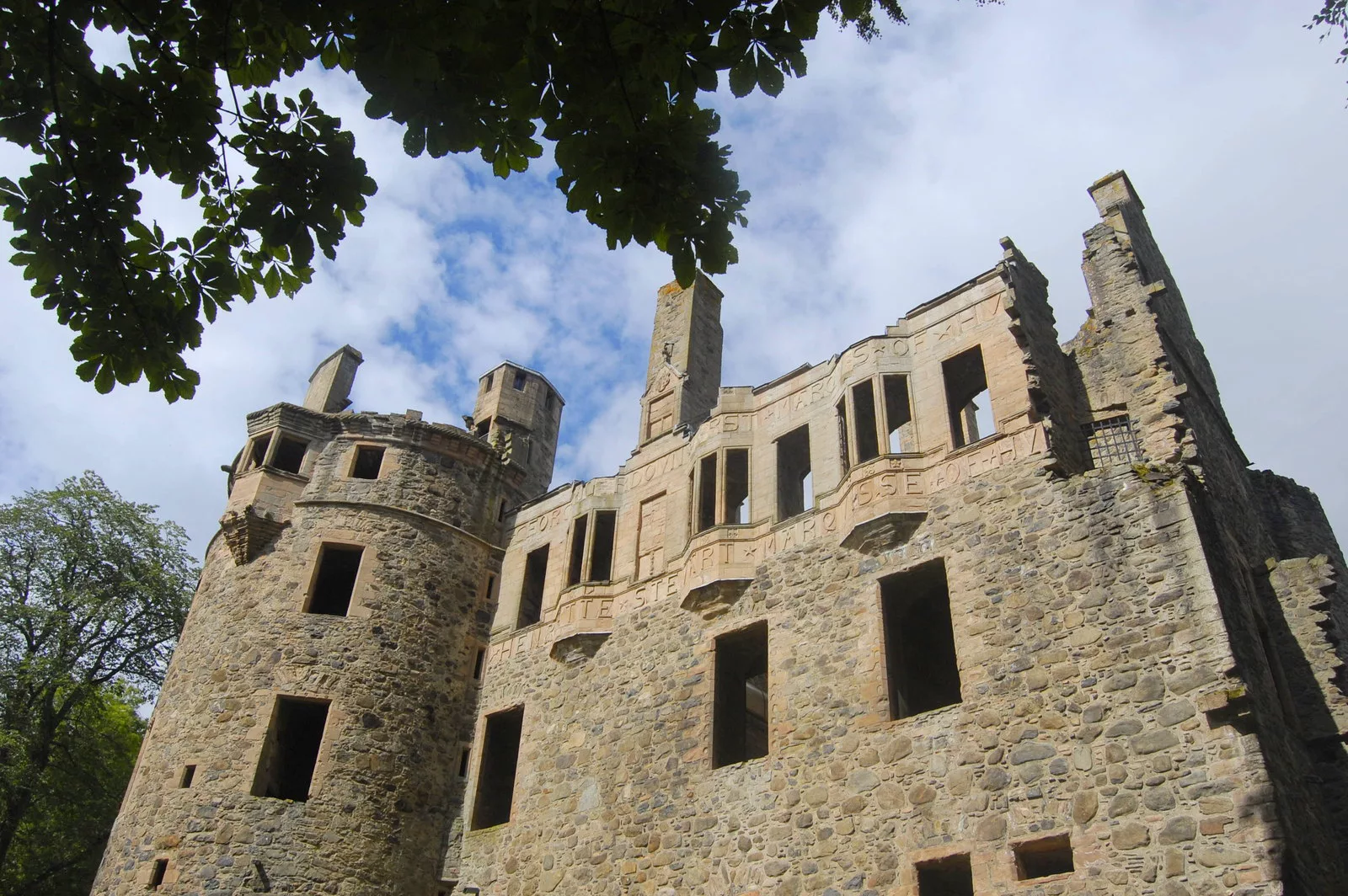
- Huntly Castle
- Motto
- Bydand
- Linked tartans
- 2
- Linked surnames
- 1
- Evidence level
- C
Overview
The Gordons are a north-east clan whose chief is the Marquess of Huntly. Huntly Castle in Aberdeenshire is the historic seat and Aboyne Castle is listed as the present one. The family name comes from the Berwickshire barony of Gordon, in the Borders, and not from the north-east. They reached Aberdeenshire through a royal grant in the early fourteenth century.
The clan's tartan has a documented military start. The Scottish Register of Tartans ties the Gordon sett to the 92nd (Gordon) Highlanders of 1794, while the House of Gordon USA adds an earlier step: a pattern the 4th Duke chose in 1793, which it says the Gordon Fencibles wore first.
The register says the Gordon tartan was designed for the 92nd (Gordon) Highlanders on their raising in 1794 and later adopted as the clan tartan.
Origins
The House of Gordon USA traces the family to Adam de Gordon, who about 1130 gave lands to the newly founded Kelso Abbey for a church at Gordon in Berwickshire. Richard de Gordon is said to have held the barony between 1150 and 1160. Wikipedia repeats a traditional story of an ancestor who slew a monstrous creature in the Merse; it reads as legend and no source here supports it.
The move north came with Strathbogie. Historic Environment Scotland says Robert the Bruce granted it to Sir Adam Gordon about 1314, after Bannockburn. Wikipedia reports Adam's death at Halidon Hill in 1333; the society says his son inherited and Strathbogie was renamed Huntly.
Development
The direct Gordon line ran out in the early fifteenth century. The House of Gordon USA says it ended with Elizabeth Gordon, whose son by Alexander de Seton took the Gordon name and became Earl of Huntly in 1449. Historic Environment Scotland gives about 1445. Either way, the chiefly name passed through a marriage, not an unbroken male line.
The earls built and rebuilt Huntly Castle. The 1st Earl began the palace about 1450, the 4th Earl remodelled it in the 1550s, and the 6th Earl, made Marquis of Huntly in 1599, added the heraldic frontispieces. Wikipedia reports the Forbes feud, the Battle of Tillieangus in 1571 and Glenlivet in 1594. The earl of Huntly became Duke of Gordon in 1684; the dukedom ended with the 5th Duke in 1836 and the marquessate went to a collateral line, so the present chiefs descend from a collateral line.
The sequence from Glenlivet shows how the house survived its own politics. Wikipedia dates the battle to 3 October 1594, between the 6th Earl of Huntly with the Earl of Erroll, who had perhaps 1,500 to 2,000 mostly mounted men, and the young Earl of Argyll, whose force it puts at 10,000 to 12,000. The cause was the Catholic earls' letters to Philip II of Spain. Huntly won the field and still lost the campaign: the king marched north without opposition, the earl went abroad in early 1595, his castles were razed, and Parliament restored him in November 1597. Two years after that he was made a marquis. A numerical account of a battle from a level D source should be read with that in mind, but the order of events is not in dispute between the sources used here.
The site is older than the family. Historic Environment Scotland says the earls of Fife built the Peel of Strathbogie about 1190 to guard a river crossing, so the Gordons inherited a fortified place and then replaced it, beginning the palace about 1450 and adding the heraldic work under the 6th Earl. What stands at Huntly is therefore a record of the earls' own rise, in three building phases, and not of the clan as a whole.
The Scottish Register of Tartans records Gordon Dress (Original) as dated 1906 and says it is the oldest version of the dress Gordon tartan, first appearing in W. and A. K. Johnston's The Tartans of the Clans.
Tartans
The Register lists Gordon as a military tartan, dated 1794 and made for the 92nd (Gordon) Highlanders, later adopted as the clan tartan. The House of Gordon USA gives a longer account: in 1793 Alexander, 4th Duke of Gordon, commissioned three Black Watch-based patterns from William Forsyth of Huntly and kept the one with a single yellow overcheck, and the Gordon Fencibles wore it first. The society itself says the Highlanders made it famous. The two accounts agree on the sett and differ only on which unit was first.
Gordon Dress (Original) is a separate record. The Register dates it to 1906 and says it first appeared in W. and A. K. Johnston's The Tartans of the Clans. The society also names Gordon Red, Gordon of Esslemont, Gordon of Abergeldie and district tartans for Huntly and Aberdeen, which are not on this site. It dates an early reference to the Gordons' plaids to 1618, when Sir Robert Gordon of Gordonstoun asked that red and white lines be removed to harmonise with the other septs, a single claim from the society that was not independently checked.
The regiment that carried the tartan has its own, better-attested dates. Wikipedia gives the 92nd (Gordon Highlanders) Regiment of Foot as established in 1794, the Gordon Highlanders proper as formed in 1881 when the 75th and 92nd were amalgamated, and the regiment as ending in 1994 in the merger that made The Highlanders (Seaforth, Gordons and Camerons). The article does not say who raised the 92nd or how, so the often repeated recruiting stories are not supported by anything read here. What the dates do establish is that the tartan was in military use for two centuries after 1794, which is a likelier reason for its spread than any clan custom. A buyer choosing between the Register's Gordon and Gordon Dress (Original) is choosing between a regimental-origin sett of 1794 and a pattern first published in 1906, not between a modern and an ancient clan cloth.
Check before repeating
Misconceptions
It is often assumed that the Gordon Highlanders were the first to wear the Gordon tartan. The society says the Gordon Fencibles wore it a year earlier, though the Register's own note names the 92nd. It is also common to assume every Gordon descends from the chiefs. The chiefly name entered the Huntly line through the Seton marriage, and Wikipedia notes that some Gordons are Romani families with no link to the Scottish clan.
Not established
What the record does not show
No source used here gives a sept list for Clan Gordon, so none is recorded. The chief's Lyon Court record was not seen, the Register's threadcounts are behind a login, and the clan society's reading of the 1618 plaid request is unconfirmed. The crest is not described here because no checked source gave it. The sources also give no account of who recruited the 92nd or of any chiefly decision about its tartan beyond the House of Gordon USA's story of 1793, and the casualty and strength figures for Glenlivet come from a single level D article.
Surnames and septs
The Gordon surname page is at /surnames/gordon/. The link to the clan is rated probable. The name comes from the Berwickshire barony, the chiefly line took it through the Seton marriage of the early fifteenth century, and Wikipedia adds that Gordon is also a British Romani surname with no connection to the Berwickshire family. The surname therefore does not prove membership of Clan Gordon, and no sept list is recorded on this page because none of the sources read gives one.
Historical notes
The register says the Gordon tartan was designed for the 92nd (Gordon) Highlanders on their raising in 1794 and later adopted as the clan tartan.
Evidence level A. Sources: [1]
The House of Gordon USA says the family took its name from the barony of Gordon in Berwickshire, that about 1130 Adam de Gordon granted lands to Kelso Abbey (founded 1126) for the church of St Michael of Gordun, and that Richard de Gordon held the barony between 1150 and 1160.
Evidence level C. Sources: [2]
Historic Environment Scotland says Robert the Bruce granted Strathbogie, later Huntly, to Sir Adam Gordon about 1314 as a reward after Bannockburn, and that north-eastern Scotland became known as Gordon country. The House of Gordon USA says Adam died at Halidon Hill in 1333 and that Strathbogie was renamed Huntly.
The House of Gordon USA says the main Gordon line ended with Elizabeth Gordon, who married Alexander de Seton, and that their son Alexander took the Gordon name and was created Earl of Huntly by James II in 1449. Historic Environment Scotland dates the earldom to about 1445, so the sources differ by a few years.
Historic Environment Scotland says the 4th Earl, George Gordon, called Cock o' the North, remodelled Huntly Castle in the 1550s and that the 6th Earl was made 1st Marquis of Huntly in 1599. Wikipedia attaches the Cock o' the North nickname to the 1st Earl, so sources disagree on which earl carried it.
Wikipedia reports that the Marquess of Huntly was made Duke of Gordon in 1684, that the dukedom became extinct in 1836 and the marquessate passed to a collateral line, and that the present chief is Granville Charles Gordon, 13th Marquess of Huntly. A castle gazetteer lists Aboyne Castle as the seat of the Gordon Marquises of Huntly. The Lyon Court record was not seen.
Wikipedia reports a long feud between the Gordons and Clan Forbes in the sixteenth century, ending in the Battle of Tillieangus in 1571, and says the 6th Earl of Huntly defeated the Earl of Argyll at Glenlivet in 1594.
Evidence level D. Sources: [4]
The House of Gordon USA says Alexander, 4th Duke of Gordon, commissioned three patterns based on the Black Watch tartan from William Forsyth of Huntly in 1793 and chose the one with a single yellow overcheck, and that the Gordon Fencibles wore it before the Gordon Highlanders of 1794.
Evidence level C. Sources: [6]
The Scottish Register of Tartans records Gordon Dress (Original) as dated 1906 and says it is the oldest version of the dress Gordon tartan, first appearing in W. and A. K. Johnston's The Tartans of the Clans.
Evidence level A. Sources: [7]
Historic Environment Scotland says the earls of Fife built the first castle on the Huntly site, the Peel of Strathbogie, about 1190 to guard the river crossing, so the Gordons took over an existing fortified place and did not found it.
Evidence level B. Sources: [8]
Wikipedia dates the battle of Glenlivet to 3 October 1594. George Gordon, 6th Earl of Huntly, and Francis Hay, 9th Earl of Erroll, with about 1,500 to 2,000 mostly mounted men, beat the 19-year-old Earl of Argyll, whose force it puts at 10,000 to 12,000. It says the cause was the northern Catholic earls' correspondence with Philip II of Spain.
Evidence level D. Sources: [9]
Wikipedia says the victory was followed by the king marching north unopposed, Huntly and Erroll leaving for the Continent in early 1595, their castles being razed, restoration by Parliament in November 1597 and the marquessate in 1599.
Evidence level D. Sources: [9]
Wikipedia gives the 92nd (Gordon Highlanders) Regiment of Foot as established in 1794, the Gordon Highlanders proper as formed in 1881 by amalgamation of the 75th and the 92nd, and the merger into The Highlanders (Seaforth, Gordons and Camerons) in 1994.
Evidence level D. Sources: [10]
Dates named in the notes
Each line is the opening sentence of a historical note above that names a single year. The year is the one the source gives; it has not been checked independently here.
Historic Environment Scotland says the earls of Fife built the first castle on the Huntly site, the Peel of Strathbogie, about 1190 to guard the river crossing, so the Gordons took over an existing fortified place and did not found it.
Evidence level B. Sources: [8]
Historic Environment Scotland says Robert the Bruce granted Strathbogie, later Huntly, to Sir Adam Gordon about 1314 as a reward after Bannockburn, and that north-eastern Scotland became known as Gordon country.
The House of Gordon USA says the main Gordon line ended with Elizabeth Gordon, who married Alexander de Seton, and that their son Alexander took the Gordon name and was created Earl of Huntly by James II in 1449.
Wikipedia dates the battle of Glenlivet to 3 October 1594.
Evidence level D. Sources: [9]
The register says the Gordon tartan was designed for the 92nd (Gordon) Highlanders on their raising in 1794 and later adopted as the clan tartan.
Evidence level A. Sources: [1]
The Scottish Register of Tartans records Gordon Dress (Original) as dated 1906 and says it is the oldest version of the dress Gordon tartan, first appearing in W. and A. K. Johnston's The Tartans of the Clans.
Evidence level A. Sources: [7]
Tartans linked to Gordon
A clan and a tartan are linked by a sourced claim, not by the name alone. Open a tartan to see the evidence for the link.
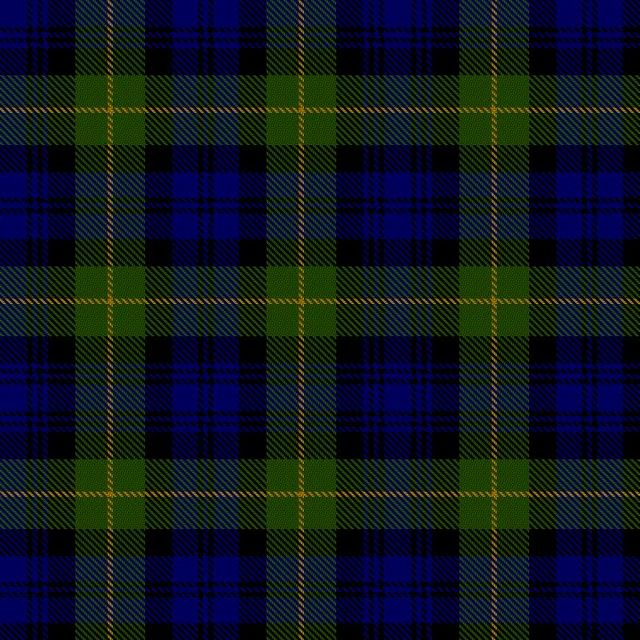 Clan tartanGordonEarliest known record The Gordon tartan is a blue, green and black sett with a single yellow stripe. The Scottish Register of Tartans says it was designed for the 92nd (Gordon) Highlanders on their raising in 1794 and later adopted as the clan tartan.
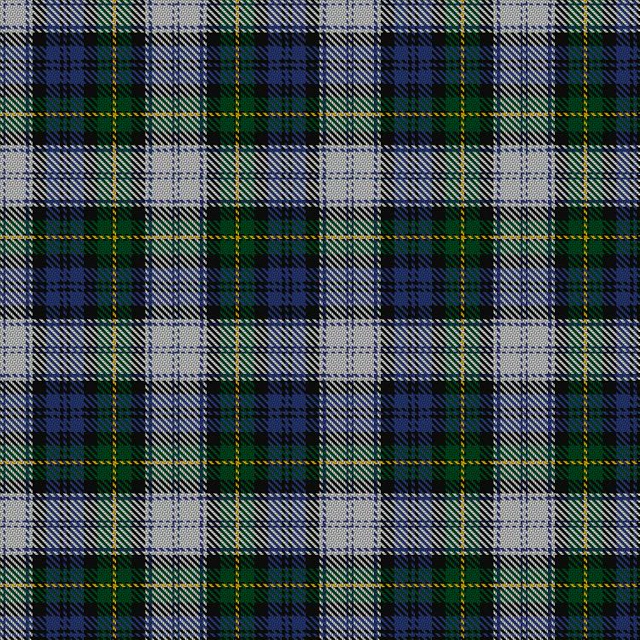 Clan tartanGordon Dress (Original)Earliest known record The oldest of the Gordon Dress tartans in the Scottish Register of Tartans, first printed in W. and A.K. Johnston's The Tartans of the Clans and Septs of Scotland in 1906.
Image: Scottish Register of Tartans, rendered from the registered threadcount. Crown copyright, National Records of Scotland.
Surnames linked to this clan
A surname's link to a clan is a claim about history, not a statement about any person's ancestry.
- Probable
- Supported by a credible source, not independently confirmed.
Fields missing from this record
Sources
- Scottish Register of Tartans: Gordon
- History of the Gordons
- Huntly Castle: History
- Clan Gordon
- Aboyne Castle
- Gordon tartans
- Scottish Register of Tartans: Gordon Dress (Original)
- Huntly Castle: History
- Battle of Glenlivet
- Gordon Highlanders
- Clan articles (Mackenzie, Buchanan, Donald, Wallace, Campbell, Fraser of Lovat, Stewart, Gordon, Douglas)