Surname
Gordon surname
Also spelled Gordin, Gordone, Gordun, Gordune, Gordyn, Gourdon
Gordon is a place-name surname.
- Places
- Berwickshire, Aberdeenshire, Scottish Borders
- Linked clan
- Clan Gordon
- Linked tartans
- Gordon, Gordon Dress (Original)
- Evidence claims
- 29
- Sources
- 18
- Entry status
- Partial
Origin of the name
Gordon is a place-name surname.
The place is Gordon, a village and parish in Berwickshire, in the Merse. The meaning of the place-name is not settled. The Scots Peerage (1907) lists the old forms Gordin, Gordone, Gordun, Gordune, Gordyn and Gourdon, notes that the name also occurs as a place-name in France, and offers two readings from J. B. Johnstone's Place-names of Scotland: in Welsh a spacious hill, or in Gaelic a goat hill. The House of Gordon USA gives a hill fort, and Wikipedia gives Gaelic gor, large or spacious, plus dun, fort. Forebears adds a three-cornered piece of land from Old English and a Celtic round hill. These readings differ in both language and sense, and none has been checked here against Black's Surnames of Scotland, the Oxford Dictionary of Family Names in Britain and Ireland or the Dictionary of American Family Names, which could not be read for this page. The name is also not one family. Wikipedia lists English, Irish, Jewish and Spanish Gordons with separate origins, and a Border Romani line. Within the Scottish surname, the Scots Peerage says Gordon does not appear as a surname on record before 1171 at the earliest, and was probably taken by the owners of the lands of Gordon, who may have held them for a long time under the Earls of Dunbar. It treats the stories of a Gordon at the Battle of the Standard in 1138 and of a foreign ancestor as unsubstantiated tradition. The chiefly line later passed through Elizabeth Gordon to her husband Alexander Seton, so the Gordon chiefs of the north are Setons by male descent, and the Gordon name has been carried by other families with no recorded link to them. A person named Gordon is therefore not shown by the name alone to descend from the Berwickshire barons, belong to Clan Gordon or be entitled to a tartan, which is the question the sections below take claim by claim.
Places associated with the name
- Berwickshire
- Aberdeenshire
- Scottish Borders
Clan
A surname and a clan can share a name without every bearer of the name belonging to the clan. This is the link the sources support.
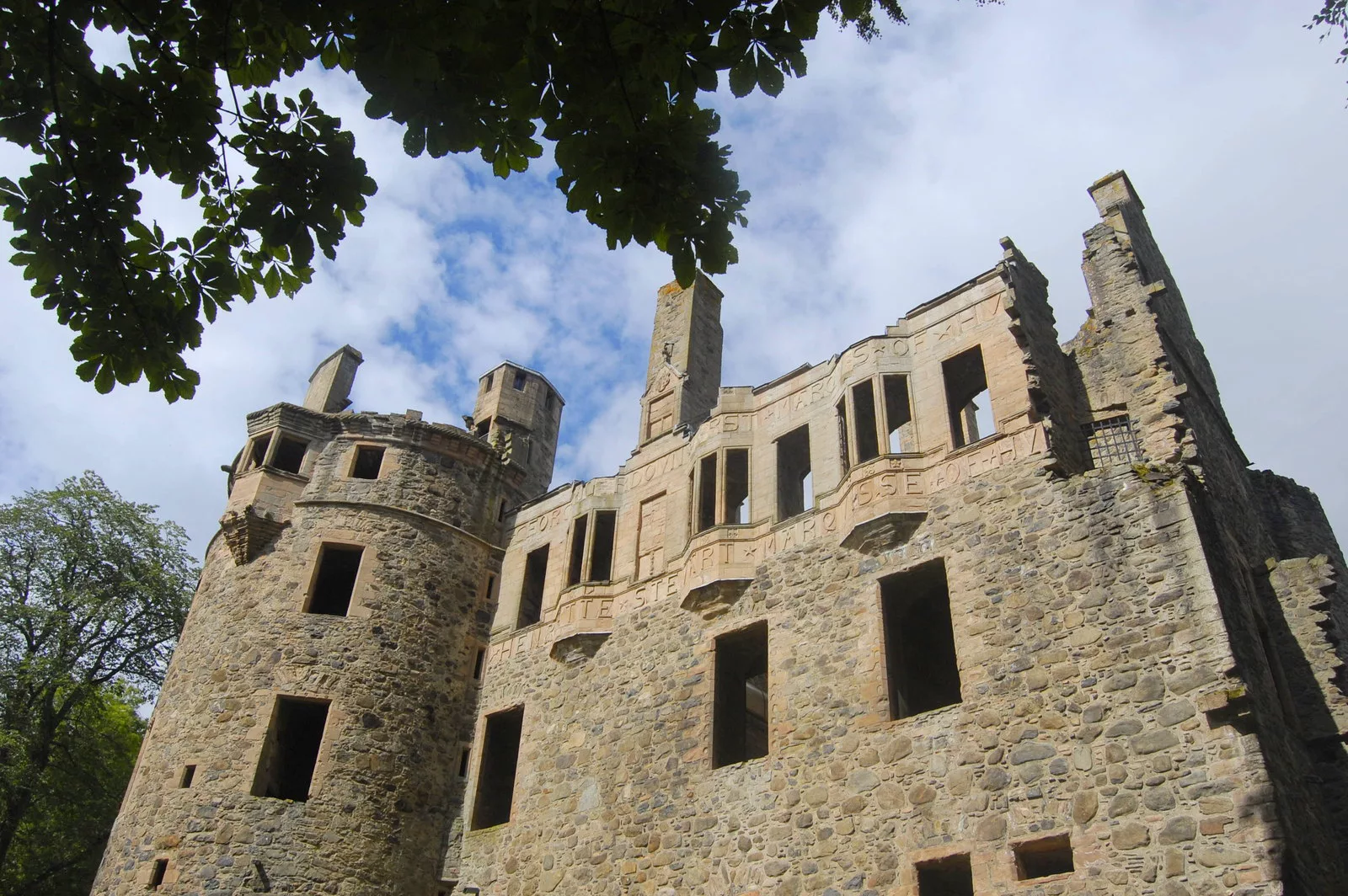
Huntly Castle in Aberdeenshire, the historic seat of the Gordons according to Historic Environment Scotland and clan sources. The photo shows the ruin, not the clan.Photo: Bill Harrison, CC BY-SA 2.0 (source) Linked clan · Aberdeenshire, North-east Scotland
Clan Gordon
Probable Supported by a credible source, not independently confirmed.
Clan Gordon takes its name from the barony of Gordon in Berwickshire, and the earls of Huntly descend from Alexander Seton and Elizabeth Gordon, whose son was made Earl of Huntly in or about 1445. ScotlandsPeople warns that bearing a clan surname does not guarantee descent from the chief. Which Gordons the clan covers is a matter for the chief, and this page has not read a Gordon chief's statement. A Gordon whose name comes from the Romani, Jewish, Irish, English or Spanish lines has no stated link to the clan unless a record joins them to the family.

Tartan
Tartans linked to the name, each with the strength of the link. The link is to the name's history, not to any individual's family.
Clan tartan
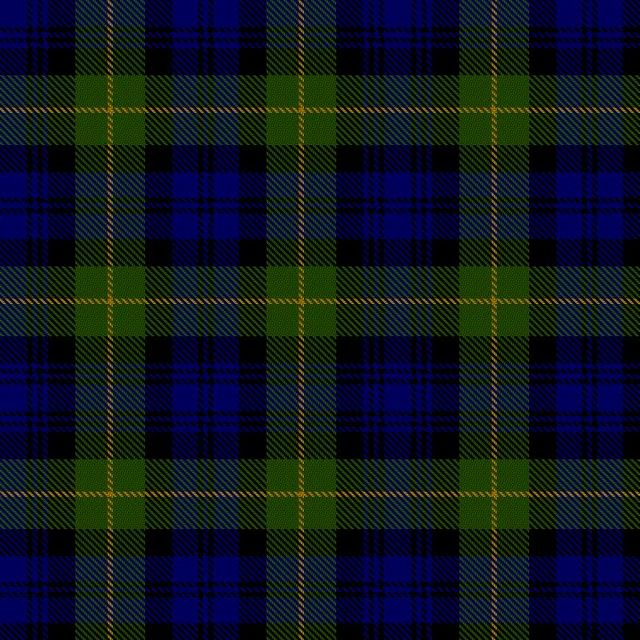
Gordon
Probable Supported by a credible source, not independently confirmed.
The Scottish Register of Tartans records Gordon as SRT 214, a Military tartan dated 1794 and made for the 92nd (Gordon) Highlanders, later adopted as the clan tartan. The register gives no date for the clan's adoption. The association with the surname runs through the clan, so it is not proof of descent.
Clan tartan
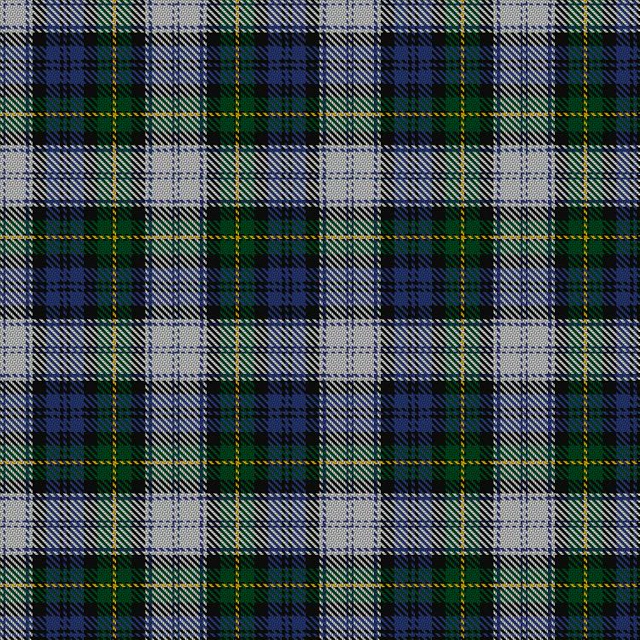
Gordon Dress (Original)
Uncertain Reported, but the sources are weak or disagree.
Gordon Dress (Original) is SRT 1782, dated 1906 and classed Clan/Family, a published pattern first printed by the Johnstons. The register does not say a chief approved it or when it was first worn. Its link to the surname is by custom only.
Sources: [6]
Image: Scottish Register of Tartans, rendered from the registered threadcount. Crown copyright, National Records of Scotland.
From the evidence
Where the sources disagree
Sentences from the evidence below in which the record says its sources do not agree. Each is quoted as written; follow the claim number for the context.
The sources therefore disagree by a generation or more on the earliest documented bearer.
It says the family historians identified him with the Sir Adam Gurdon who fought Prince Edward in 1266, but that the dates and marriages do not agree, since a papal dispensation of 30 September 1255 licensed the marriage of Adam de Gurdun and Constance Vernuz, which lasted until about 1292.
The two attributions conflict, and neither source says when the phrase was first recorded.
The register and the society differ on the year, and the register's note does not say a surname gives a right to the cloth.
Evidence
29 claims, numbered in the order the record lists them. Consecutive claims that cite the same source are set together under that source. Each claim carries its own evidence level.
- APrimary or official5 claims
- BInstitutional5 claims
- CSpecialist secondary14 claims
- DCommercial5 claims
Claims 1 to 3
- CSpecialist secondary
The Scots Peerage says the name, with the forms Gordin, Gordone, Gordun, Gordune, Gordyn and Gourdon, appears as a place-name in France as well as in Scotland, and 'means in Welsh Gordin, a spacious hill, or in Gaelic goat hill', citing Johnstone's Place-names of Scotland. It says the description fits the village and parish of Gordon, which once covered a larger area than it does now.
Evidence level C. Sources: [2]
- DCommercial
The House of Gordon USA gives the derivation as 'Gor dun, meaning hill fort', and adds that a French origin has been proposed, from the Gourdon family known from the time of Charlemagne. Wikipedia reads the Berwickshire name as Old Gaelic gor, large or spacious, and dun, fort, and gives a separate English surname from French places called Gourdon, most probably the one in Saone-et-Loire. These are one clan society's and one encyclopedia's statements, not an etymological finding.
- DCommercial
Forebears summarises the proposed origins as a spacious hill, a three-cornered piece of land from Old English gara plus dun, French place-names, or a Celtic round hill. It does not name the scholars behind each reading, so the list shows that opinion is split and does not rank the options.
Evidence level D. Sources: [8]
Claims 4 to 15
All cite The Scots Peerage, volume IV: Gordon, Earl and Marquess of Huntly, and Duke of Gordon [2]
- CSpecialist secondary
The Scots Peerage says the name Gordon 'does not occur as a surname on record till after 1171 at the earliest', and was probably assumed by the then owners of the lands, who may have held them for a long time under the Earls of Dunbar. It adds that the tradition of a Gordon following Malcolm Canmore in 1093 cannot be right as stated because surnames were not then known, and that the contemporary account of the Battle of the Standard on 22 August 1138 does not mention a Laird of Gordon falling there.
Evidence level C. Sources: [2]
- CSpecialist secondary
The Scots Peerage records that family historians have called the Gordons foreign settlers, and says a family named Gurdon or Gordun certainly existed in the south of England, but that it does not follow the Scottish family were foreign. It reports a suggestion that they were cadets of the Swinton family, because both bear the same arms, a descent it says is not proved and is not disproved by their long feud. The editor leaves the question open.
Evidence level C. Sources: [2]
- DCommercial
The Scots Peerage names Richard or Richer Gordon as the earliest of the name found on record in Scotland, first noticed in his own charter to the monks of Kelso and the church of St Michael in his town of Gordon. A recent work had dated the charter to 1160, but the Peerage points out that the chapel of Gordon came to Kelso only in 1171, in an exchange with the monks of Durham, so the charter was probably granted some years after 1171. The House of Gordon USA instead places an earlier Adam de Gordun's gift to Kelso about 1130 and Richard's tenure between 1150 and 1160, and Forebears gives Richer de Gordun at Kelso between 1150 and 1160. The sources therefore disagree by a generation or more on the earliest documented bearer.
- CSpecialist secondary
The Scots Peerage says Richard Gordon is said to have died about 1170, but that he and an Adam of Gordon, perhaps a brother, witness an undated writ of Patrick, fifth Earl of Dunbar, to the monks of Durham that must date after 1182 and most probably from 1189 to 1199. It places the first appearance of the name Adam Gordon in that writ, between 1189 and 1199, and notes that two later generations, Sir Thomas of Gordon and his son Sir Thomas the younger, left charters to Kelso and the nuns of Coldstream that are mostly undated.
Evidence level C. Sources: [2]
- CSpecialist secondary
The House of Gordon USA says Adam 'Filius Adae de Gordun' granted lands to Kelso for the church of St Michael of Gordun about 1130, that Adam died at the Battle of the Standard in 1138, and that the spelling Gordon is first recorded in an official document in a charter of King Robert II to Joannes de Gordon on 13 July 1376. The Scots Peerage does not accept the 1138 story as evidenced, so the society's earliest dates rest on tradition and are weaker than the Peerage's reading of the Kelso records.
- CSpecialist secondary
The Scots Peerage says the heiress Alicia of Gordon, daughter of Sir Thomas the younger and described as daughter and heir, married Sir Adam Gordon, usually called her cousin, whose parentage is uncertain. It says the family historians identified him with the Sir Adam Gurdon who fought Prince Edward in 1266, but that the dates and marriages do not agree, since a papal dispensation of 30 September 1255 licensed the marriage of Adam de Gurdun and Constance Vernuz, which lasted until about 1292. The crusade of 1270 attributed to this Adam it calls a statement with no authentic record behind it.
Evidence level C. Sources: [2]
- CSpecialist secondary
The Scots Peerage says the Sir Adam Gordon of the generation after Alicia first appears on record doing homage to Edward I at Elgin on 28 July 1296, was Warden of the East March in 1300, surrendered with John Comyn in February 1303-4, and held the castle of Inverkip for the English in 1306. It says he did not forsake his allegiance to England until the end of 1313, after Edward II answered a petition from the English adherents in the south of Scotland, and that he received a new charter of the lands of Stichel from the Earl of Moray on 28 June 1315, confirmed by King Robert.
Evidence level C. Sources: [2]
- CSpecialist secondary
The Scots Peerage says Sir Adam carried the Scottish barons' letter to Pope John XXII in 1320 and 'probably it was on his return that he received the grant of Strathbogie, the first land held by his family in the North'. It says the writ is not extant and is known only from a charter of David II, that Ferrerius' statement of a grant at Perth on 16 June 1311 is refuted by the 1313 date, and that the grant was probably made later than 1319.
Evidence level C. Sources: [2]
- BInstitutional
Historic Environment Scotland says Sir Adam Gordon of Huntly, in Berwickshire, received Strathbogie from Robert the Bruce after the Earl of Fife's family lost it following the 1314 Battle of Bannockburn, and that north-eastern Scotland became known as Gordon country. The Scots Peerage puts the grant later and says it cannot be dated exactly.
- CSpecialist secondary
The Scots Peerage records that on 14 December 1406 Elizabeth Gordon, widow of Sir Nicholas Erskine, leased her terce lands of Gordon, Fogo and Strathbogie to her son John, who died without issue before 7 March 1407-8, and that she succeeded him. Her ward was bought by Sir William Seton, and on 20 July 1408 she and her husband Alexander Seton, Sir William's second son, received a charter from the Regent Albany of the lands of Gordon, Fogo, Strathbogie and others. The editor writes: 'The chief line of the Gordons thus merged in the family of Seton'.
Evidence level C. Sources: [2]
- CSpecialist secondary
The Scots Peerage says Alexander Seton was styled Lord of Gordon, never Lord Gordon, and that the first Earl of Huntly, his son, was in or about 1445 raised to the peerage, between 30 October 1444 and July 1445, with Bower stating 1445. The House of Gordon USA gives 1449, and Wikipedia gives 1449 and adds that he changed the family name from Seton to Gordon about 1457. Historic Environment Scotland says around 1445, and calls Alexander 'Lord Gordon' before the earldom, which the Peerage doubts. Which year to use, and when the name Gordon replaced Seton in use, are not settled by these sources.
- CSpecialist secondary
The Scots Peerage dates the creation of George Gordon as Marquess of Huntly to 17 April 1599, at the baptism of the king's daughter, and the creation of the fourth Marquess as Duke of Gordon to a patent dated at Whitehall on 1 November 1684. It says the dukedom expired with George, fifth Duke and eighth Marquess, on 20 May 1836. Wikipedia reports that the marquessate passed to a collateral line and names the present chief as Granville Charles Gordon, 13th Marquess of Huntly, a point that depends on a Lyon Court record not seen here.
The Scottish Register of Tartans records Gordon as SRT 214, dated 1794, category Military, designer unknown, with the note 'Designed for the 92nd (Gordon) Highlanders regiment when it was raise in 1794.
Claims 16 to 19
- BInstitutional
Historic Environment Scotland says the 4th Earl, George Gordon, earned the nickname Cock o' the North and remodelled Huntly Castle in the 1550s. Wikipedia instead says the nickname was bestowed on Alexander Gordon, the 1st Earl, and has since been given to the heads of the clan. The two attributions conflict, and neither source says when the phrase was first recorded.
- BInstitutional
The National Army Museum says the 92nd Regiment was raised at Brae Lochaber in Inverness-shire by Alexander Gordon, 4th Duke of Gordon, in 1794, was embodied at Aberdeen soon afterwards and merged with the 75th (Stirlingshire) Regiment in 1881 to form The Gordon Highlanders. The House of Gordon USA's history page lists the fifth Duke as having raised the regiment, and the Scots Peerage lists the fifth Duke as colonel of the 92nd from 1796. The museum's attribution to the fourth Duke is the more specific, and the discrepancy is unresolved here.
- APrimary or official
The Scottish Register of Tartans records Gordon as SRT 214, dated 1794, category Military, designer unknown, with the note 'Designed for the 92nd (Gordon) Highlanders regiment when it was raise in 1794. It was later adopted as the clan tartan.' The House of Gordon USA says the Duke commissioned three patterns from William Forsythe of Huntly in 1793 and that the Gordon Fencibles wore it first. The register and the society differ on the year, and the register's note does not say a surname gives a right to the cloth.
- APrimary or official
The register lists Gordon #2 as SRT 223, dated 1883, credited to W. and A.K. Johnston and called 'an incorrect version of the original Gordon' with black guards added to the yellow stripe. Its note says various Gordon branches took different versions, some with three yellow lines and some with two. Gordon Dress (Original) is SRT 1782, dated 1906, designer not specified, category Clan/Family, called the oldest version of the Dress Gordon tartan and first appearing in W and A.K. Johnston's The Tartans of the Clans and Septs of Scotland. Threadcounts were not read for any of these records.
Claims 20 to 23
- DCommercial
Wikipedia says the given name Gordon is a transferred use of the Scottish surname and is thought to have been used in honour of Major-General Charles George Gordon (1833-85), who was killed at Khartoum. A forename Gordon therefore reflects fashion after the mid nineteenth century in this account, and a person called Gordon as a first name has no inherited link to the family.
Evidence level D. Sources: [13]
- CSpecialist secondary
Wikipedia says Gordon is also a British Romany surname with origins on the Scottish-English Border, adopted when Gypsy families in the seventeenth and eighteenth centuries feared persecution and took names that let them blend in. A history article by Alastair Redpath lists Gordon among the more recognisably Scottish surnames Border Romanichal families adopted, with Young, Douglas, Baillie, Ruthven, Shaw, Tait and Gordon, and names Jean Gordon, wife of Auld Rob Tait, in its account of the 1772-1773 fight at Teviot Bridge. The name alone cannot tell a Romani Gordon family from a Berwickshire one without records.
- DCommercial
Forebears estimates about 397,042 people with the surname worldwide, ranked 1,364th. By country it gives the United States 214,990, England 30,897, Jamaica 25,335 (about 1 in 113 people, its highest density), Australia 23,346, Canada 21,279 and Scotland 11,791 (1 in 454). On those figures Scotland is sixth in raw numbers, so most people called Gordon live outside Scotland. The counting method is commercial and unchecked.
Evidence level D. Sources: [8]
- CSpecialist secondary
An article in the Journal of Irish and Scottish Studies by Alan Wilson Short describes the Gordons of Cairness and the Gordons of Cluny in north-east Scotland. It says Charles Gordon inherited Jamaican assets in the 1760s and went to Jamaica in 1772, that one sugar crop from the Georgia estate in Trelawny netted 5,762 pounds sterling in 1791, that Cairness House was built from 1791 to 1797, and that in 1834 Thomas Gordon received 5,296 pounds in compensation for 266 enslaved people. It covers two landed families and does not trace how the surname reached other Jamaicans, so it does not explain the Jamaican count above.
Evidence level C. Sources: [15]
Claim 24
- BInstitutional
The Gordon Schools in Huntly were founded in 1839 by the Duchess of Gordon as a memorial to her husband, in a building designed by Archibald Simpson, and she invited the four main local schools to use it. The page does not name the duke. The school bears the name of the ducal family and is a local memorial, not evidence about the surname in general. The Scots Peerage records the death of George, fifth Duke, on 20 May 1836, when the dukedom expired.
The register lists Gordon #2 as SRT 223, dated 1883, credited to W. and A.K. Johnston and called 'an incorrect version of the original Gordon' with black guards added to the yellow stripe.
Claims 25 to 26
All cite Surnames (ScotlandsPeople guide) [3]
- APrimary or official
ScotlandsPeople says that bearing a clan surname does not guarantee descent from the clan chief, because followers took clan names for protection or because a more powerful neighbour took their lands. The Court of the Lord Lyon says there is no such thing in Scotland as a family coat of arms, that a chief's arms belong to the chief and cannot be used by anyone else, and that clan members may use a badge made of the chief's crest within a belt and buckle. A Gordon may wear the badge or the tartan by custom, and neither shows descent.
- APrimary or official
The ScotlandsPeople surnames guide says spelling in Scottish records varies for reasons that include clerks' phonetic spellings, indexing errors and later anglicisation, and gives final e added to names (Robertsone) and u and w swapped as common older patterns. For Gordon, the Scots Peerage's list of forms (Gordin, Gordone, Gordun, Gordune, Gordyn, Gourdon) shows the range a searcher should try in older records.
Claims 27 to 28
All cite Old Parish Registers [18]
- APrimary or official
The National Records of Scotland says Old Parish Registers of baptisms, banns, marriages and burials run from 27 December 1553 to civil registration in 1855, that about 3,500 volumes survive, and that they are far from complete and give much less than the statutory registers. A Gordon family can usually be traced back through the parish registers only until the point where a register begins or has gaps, and the registers say nothing of clan.
Evidence level A. Sources: [18]
- BInstitutional
A Gordon line can be followed from the statutory registers that begin in 1855 back into the Old Parish Registers of the parish concerned. For the landed families, the Scots Peerage's own sources are the Kelso cartulary (Liber de Calchou), the Coldstream cartulary, the Records of Aboyne (New Spalding Club, 1894) and the Gray and Gordon charter-chests. A chiefly or Berwickshire connection should be shown by documents of that kind. This page has no source on Gordon DNA and makes no claim about what a DNA match would show.
Claim 29
- CSpecialist secondary
A common misreading is that every Gordon descends from the dukes or the earls of Huntly. The sources above show otherwise. The earls descend from the Setons in the male line, the Berwickshire barons of Gordon are a separate and earlier family whose records are mostly undated, a Romani Gordon line is documented on the Border, the English, Irish, Jewish and Spanish Gordons are unrelated, and Gordon is also used as a forename.
What this page does not say
Sources
- History of the Gordons
- The Scots Peerage, volume IV: Gordon, Earl and Marquess of Huntly, and Duke of Gordon
- Surnames (ScotlandsPeople guide)
- Scottish Register of Tartans: Gordon
- Gordon tartans
- Scottish Register of Tartans: Gordon Dress (Original)
- Gordon (surname)
- Gordon surname meaning and distribution
- Huntly Castle: History
- Clan Gordon
- 92nd (Gordon Highlanders) Regiment of Foot
- Scottish Register of Tartans: Gordon #2
- Gordon (given name)
- The Border Romanichal
- The Gordons of Cairness and the Gordons of Cluny: Some Legacies of Caribbean Slavery in North East Scotland
- School history
- Frequently asked questions
- Old Parish Registers