
Clan tartan

Gordon

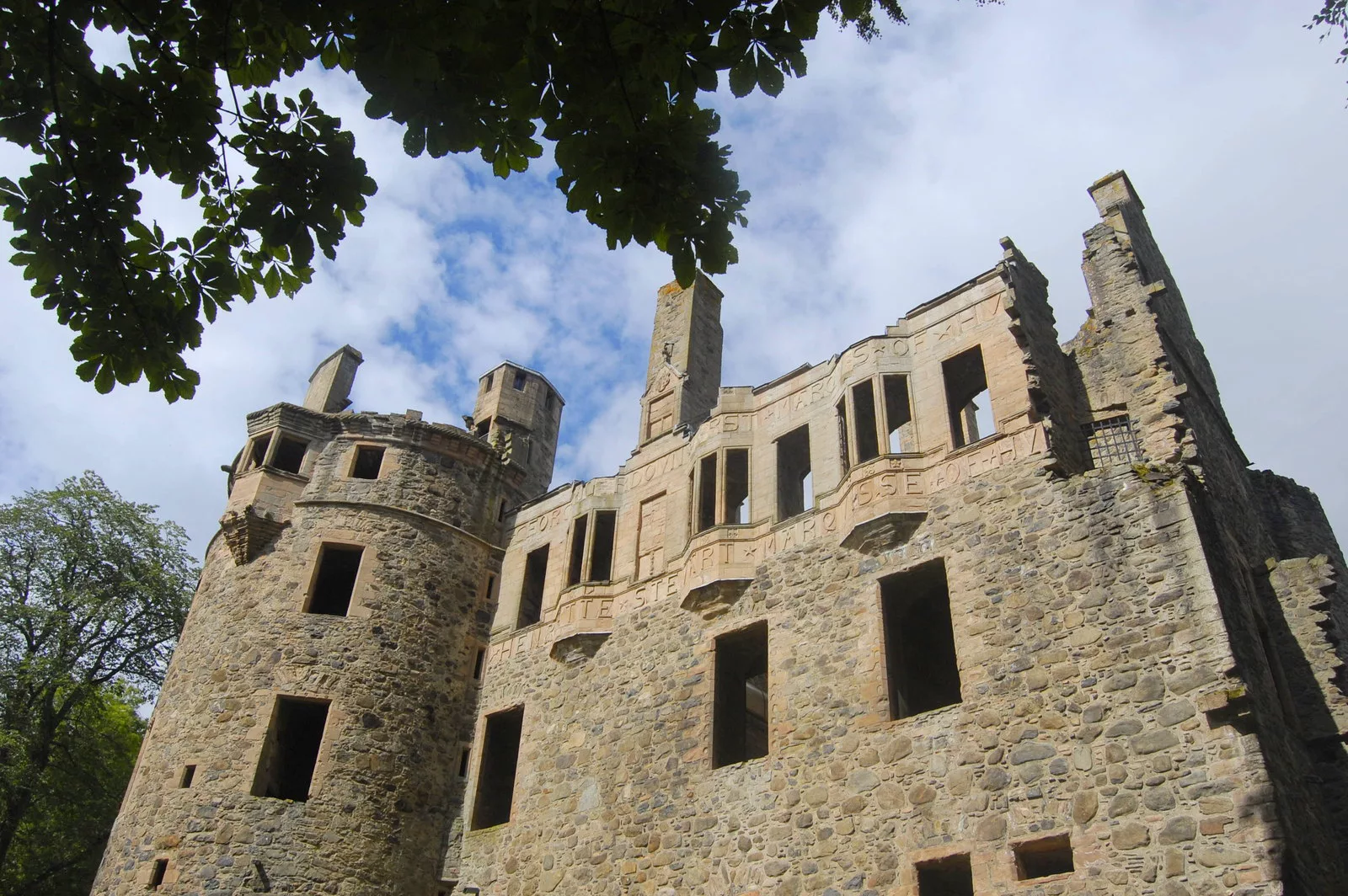
The Gordon tartan is a blue, green and black sett with a single yellow stripe. The Scottish Register of Tartans says it was designed for the 92nd (Gordon) Highlanders on their raising in 1794 and later adopted as the clan tartan.

  • Clan/Family (register category: Military)
  • No restriction recorded
  • Evidence level A
The Gordon sett as rendered by the Scottish Register of Tartans from the registered threadcount.
Image: Scottish Register of Tartans, rendered from the registered threadcount. Crown copyright, National Records of Scotland.Image source: the record this swatch comes from. Licence: Crown copyright, National Records of Scotland (Scottish Register of Tartans). Re-use beyond fair dealing needs NRS permission.
Type
Clan tartan
Classification
Clan/Family (register category: Military)
Earliest known date
1794
Registered
Not recorded
Associated clan
Gordon
Who can wear it
No restriction recorded
Evidence level
A

Also known as

  • Gordon Modern
  • Gordon Highlanders

Overview

The Gordon tartan is a dark blue, green and black sett with one yellow line, built on the pattern of the Government tartan worn by the Black Watch. The Scottish Register of Tartans lists it as SRT 214, dated 1794, in the Military category, and says it was designed for the 92nd (Gordon) Highlanders when the regiment was raised and later adopted as the clan tartan.

So the cloth belongs to a regiment first and to a family second. Both uses are recorded, and the register does not say when the clan took it up.

The register records Gordon (SRT 214) with a date of 1794, category Military and designer unknown, and notes: designed for the 92nd (Gordon) Highlanders when it was raised in 1794, and later adopted as the clan tartan.

From the historical notes. Evidence level A. Sources: [1]

Pattern

The record gives four colours: dark blue, green, black and yellow. The yellow appears as a single line over the blue and green check, which is what separates Gordon from Black Watch, whose sett has no yellow. The colours on this page are approximations, not thread specifications.

The Scottish Register of Tartans holds a threadcount for Gordon but shows it only to logged-in users, so this site has not read it and does not draw the sett. The swatch image on the page is the register's own rendering of the registered sett, credited to the Scottish Register of Tartans.

Origins

The register's note is short: designed for the 92nd (Gordon) Highlanders when it was raised in 1794, and later adopted as the clan tartan. It names no designer.

House of Gordon USA, a clan organisation, gives a fuller story. It says Alexander, 4th Duke of Gordon, commissioned three patterns from William Forsythe of Huntly in 1793, all derived from the Government tartan, and picked the one with a single yellow line for himself and his new regiment. The other two, with a double and a triple yellow line, went to branches and cadet families. It also says the Gordon Fencibles, raised in 1793, wore the tartan before the Highlanders did. That account is a society's statement at evidence level C and the page does not cite an archive document, so the 1793 date and the Forsythe commission stay probable, not established.

The National Army Museum confirms the regiment: the Duke raised the 92nd at Brae Lochaber in 1794. Its page does not describe the uniform cloth, so the museum evidence covers the regiment and not the tartan.

The register lists Gordon #2 (SRT 223, 1883, W. and A.K. Johnston) and calls it an incorrect version of the original Gordon (SRT 214) with black guards added to the yellow stripe.

From the historical notes. Evidence level A. Sources: [4]

Development

The register lists a second Gordon sett, Gordon #2 (SRT 223), dated 1883 and credited to W. and A.K. Johnston. Its note calls it an incorrect version of the original Gordon with black guards added to the yellow stripe, and says its origins may go back to 1798 in Wilsons of Bannockburn correspondence. That is the register's own judgement of a variant, not a second clan tartan with equal standing.

The regiment changed over time. In 1881 the 92nd merged with the 75th (Stirlingshire) Regiment to form The Gordon Highlanders, which lasted until it was merged into The Highlanders in 1994, according to the National Army Museum. The museum page does not say what happened to the tartan in those changes.

The register also lists a set of Dress Gordon setts, covered on the Gordon Dress page, and the clan society mentions triple-line versions linked to Gordons of Hallhead and Esslemont.

Name and variants

Weavers sell Gordon as Modern, Ancient and sometimes Weathered. House of Gordon USA says modern tartans are not newer and ancient tartans are not older: the labels refer to colour standards set after the First World War, when lighter shades were chosen to suggest faded vegetable dyes. The register has no entries under "Gordon Modern" or "Gordon Ancient", so these are commercial colourways of the same sett, not separate registered tartans.

Clan relationship

The register says the tartan was later adopted as the clan tartan. Nothing in the sources read here gives a date, a chief's decision or a document for that step, so the date of adoption is not established.

The clan record for the Gordons is on its own page. A surname of Gordon is not required to wear the tartan, and the tartan is not itself proof of descent.

Check before repeating

Misconceptions

"Ancient" does not mean older. The terms describe a colour treatment applied after the First World War.

The dates 1793 and 1794 are not a contradiction in the way they first look. The register dates the raising of the regiment, while the clan society dates the pattern commission and the Fencibles. They record different events.

Gordon #2 is not an older or more correct clan version. The register calls it incorrect and later than the original, with an 1883 publication date.

Not established

What the record does not show

The sources read for this page do not show who wove the first Gordon cloth, whether Forsythe's pattern books survive, or when the Gordon clan formally took the tartan. They do not give the registered threadcount in a form this site can read. They also do not say whether the 1793 Fencibles used exactly this sett or an early version of it. Those points stay open until an archive or registry record is read.

Colours

  • dark blue#2C2C80Approximate
  • green#006818Approximate
  • black#101010Approximate
  • yellow#E8C000Approximate

Approximate hex values estimate the thread colour; they are not specified by a registry.

Dates in the record

The dates this record holds, and the opening sentence of each historical note that names a single year. A year is the one the source gives; it has not been checked independently here.

  1. House of Gordon USA says the 4th Duke of Gordon commissioned three patterns based on the Government (Black Watch) tartan from William Forsythe of Huntly in 1793, chose the one with a single yellow line for himself and his new regiment, and offered the double and triple versions to cadet branches.

    Evidence level C. Sources: [2]

  2. Earliest known date held in this record.

  3. The register records Gordon (SRT 214) with a date of 1794, category Military and designer unknown, and notes: designed for the 92nd (Gordon) Highlanders when it was raised in 1794, and later adopted as the clan tartan.

    Evidence level A. Sources: [1]

  4. The register lists Gordon #2 (SRT 223, 1883, W. and A.K. Johnston) and calls it an incorrect version of the original Gordon (SRT 214) with black guards added to the yellow stripe.

    Evidence level A. Sources: [4]

Historical notes

  1. The register records Gordon (SRT 214) with a date of 1794, category Military and designer unknown, and notes: designed for the 92nd (Gordon) Highlanders when it was raised in 1794, and later adopted as the clan tartan.

    Evidence level A. Sources: [1]

  2. House of Gordon USA says the 4th Duke of Gordon commissioned three patterns based on the Government (Black Watch) tartan from William Forsythe of Huntly in 1793, chose the one with a single yellow line for himself and his new regiment, and offered the double and triple versions to cadet branches. It adds that the Gordon Fencibles of 1793 wore it before the Highlanders. This gives 1793 against the register's 1794.

    Evidence level C. Sources: [2]

  3. The National Army Museum records that the 92nd was raised at Brae Lochaber in Inverness-shire by Alexander Gordon, 4th Duke of Gordon, in 1794, and that it merged with the 75th (Stirlingshire) Regiment in 1881 to form The Gordon Highlanders. The page does not mention tartan.

    Evidence level B. Sources: [3]

  4. The register lists Gordon #2 (SRT 223, 1883, W. and A.K. Johnston) and calls it an incorrect version of the original Gordon (SRT 214) with black guards added to the yellow stripe. It says the origins may go back to 1798 in correspondence from Wilsons of Bannockburn.

    Evidence level A. Sources: [4]

Wearing

Who can wear it

No restriction recorded

No restriction is recorded for this tartan. It is not recorded as a universal tartan.

No law restricts it. The register says there are no laws about which tartan a person may wear. Custom links it to the Gordon surname and family and to the regiment raised in 1794.

No law restricts the Gordon tartan. The Scottish Register of Tartans states there are no laws about which tartan a person may wear, only traditions, and suggests choosing a design you like. The register's notes tie the cloth to both the clan and the regiment, so it carries both associations; the sources read do not describe a custom for who wears it.

Who can wear which tartan?

Fields missing from this record

Similar tartans

Black Watch is the starting point, because the clan society says the Duke's three patterns were derived from it. The difference is the yellow line.

Gordon Dress and its numbered variants are listed separately in the register. Gordon #2 is the register's flagged variant with black guards. The two multi-line Forsythe versions mentioned by the clan society are not separately identified in the sources read here.

Gordon compared with related tartans
TartanTypeColoursAssociated clanEarliest known datePeriodUniversal status
GordonClan tartandark blue, green, black, yellowGordon1794—Not universal
Gordon Dress (Original)Clan tartandark blue, green, black, yellowGordon1906—Not universal
Black WatchMilitary tartandark blue, green, blackCampbell—18th century; adoption date uncertainUniversal

Associated clan

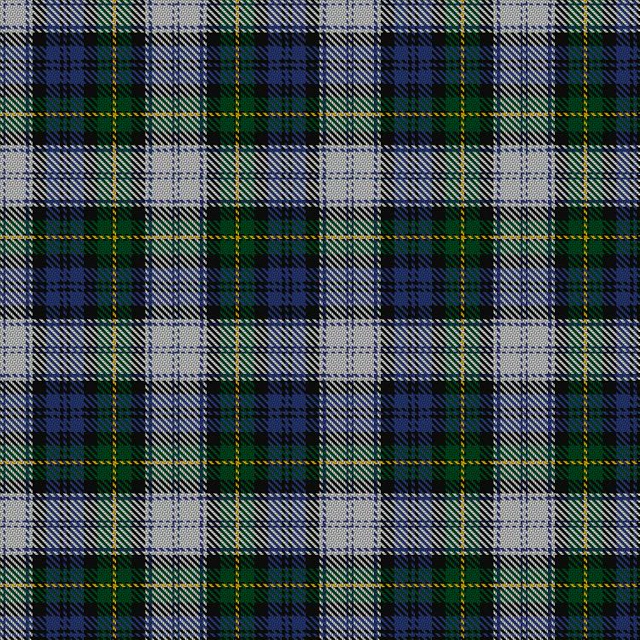
  • The roofless stone ruin of Huntly Castle seen from below, with a round tower at left and carved lettering along the upper wall.

    Aberdeenshire · North-east Scotland

    Gordon

    Na Gòrdanaich

    A clan of Aberdeenshire and the north-east, whose chief is the Marquess of Huntly. The family took its name from the barony of Gordon in Berwickshire and moved north when Robert the Bruce granted Strathbogie, later Huntly, to Sir Adam Gordon. The Gordon tartan is registered as a military tartan designed for the 92nd (Gordon) Highlanders in 1794 and later adopted by the clan.

    Photo: Bill Harrison, CC BY-SA 2.0
An association between a tartan and a clan is a claim with its own sources. It does not mean every bearer of the clan name has a right to the tartan, or the reverse.

Sources

  1. Scottish Register of Tartans: GordonScottish Register of Tartans (National Records of Scotland) · accessed · evidence level A
  2. Gordon tartansHouse of Gordon USA · accessed · evidence level C
  3. 92nd (Gordon Highlanders) Regiment of FootNational Army Museum · accessed · evidence level B
  4. Scottish Register of Tartans: Gordon #2Scottish Register of Tartans (National Records of Scotland) · accessed · evidence level A
  5. Scottish Register of Tartans: frequently asked questionsScottish Register of Tartans (National Records of Scotland) · accessed · evidence level A
  6. Scottish Register of Tartans: search results for "gordon dress"Scottish Register of Tartans (National Records of Scotland) · accessed · evidence level A

Sources (6)

Evidence levels run from A (primary or official) to E (unverified). How levels are assigned

  1. Scottish Register of Tartans: Gordon (opens in a new tab)

    Scottish Register of Tartans (National Records of Scotland)

    Registry · accessed

    Evidence level APrimary or official

    Official registry, archive or primary source.

    Cited for

    • The register records Gordon (SRT 214) with a date of 1794, category Military and designer unknown, and notes: designed for the 92nd…
  2. Gordon tartans (opens in a new tab)

    House of Gordon USA

    Clan organisation · accessed

    Evidence level CSpecialist secondary

    Established specialist secondary source.

    Cited for

    • House of Gordon USA says the 4th Duke of Gordon commissioned three patterns based on the Government (Black Watch) tartan from William…
  3. 92nd (Gordon Highlanders) Regiment of Foot (opens in a new tab)

    National Army Museum

    Museum · accessed

    Evidence level BInstitutional

    Respected museum, institution, historical society or clan organisation.

    Cited for

    • The National Army Museum records that the 92nd was raised at Brae Lochaber in Inverness-shire by Alexander Gordon, 4th Duke of Gordon, in…
  4. Scottish Register of Tartans: Gordon #2 (opens in a new tab)

    Scottish Register of Tartans (National Records of Scotland)

    Registry · accessed

    Evidence level APrimary or official

    Official registry, archive or primary source.

    Cited for

    • The register lists Gordon #2 (SRT 223, 1883, W. and A.K. Johnston) and calls it an incorrect version of the original Gordon (SRT 214) with…
  5. Scottish Register of Tartans: frequently asked questions (opens in a new tab)

    Scottish Register of Tartans (National Records of Scotland)

    Registry · accessed

    Evidence level APrimary or official

    Official registry, archive or primary source.

  6. Scottish Register of Tartans: search results for "gordon dress" (opens in a new tab)

    Scottish Register of Tartans (National Records of Scotland)

    Registry · accessed

    Evidence level APrimary or official

    Official registry, archive or primary source.