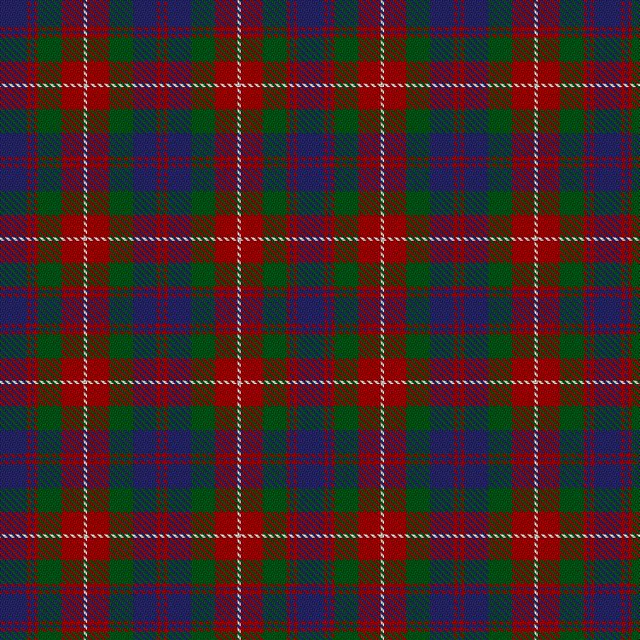
The Scottish Register of Tartans lists several Fraser clan setts: Fraser of Lovat (1893, from a printed book), Fraser (1800) by Wilsons of Bannockburn, and Fraser (1842) from the Vestiarium Scoticum. Colours given here are dark blue, red, green and white. No Register record shows a Fraser clan sett in use before 1745.
Clan/Family
No restriction recorded
Evidence level B
Image: Scottish Register of Tartans, rendered from the registered threadcount. Crown copyright, National Records of Scotland.Image source: the record this swatch comes from. Licence: Crown copyright, National Records of Scotland (Scottish Register of Tartans). Re-use beyond fair dealing needs NRS permission.
Type
Clan tartan
Classification
Clan/Family
Earliest known date
Not recorded
Registered
Not recorded
Associated clan
Fraser
Who can wear it
No restriction recorded
Evidence level
B
Also known as
Fraser of Lovat
Overview
The Scottish Register of Tartans holds several Fraser records, not one. The record filed here as Fraser of Lovat is dated 1893 because D.W. Stewart's Old and Rare Scottish Tartans illustrated it that year, not because it was made then. The register's other Fraser clan entries are later or earlier by its own notes: one by Wilsons of Bannockburn about 1800, and one that first appeared in the Vestiarium Scoticum of 1842.
Whether any Fraser clan sett was worn before 1745 is not established by the sources read here. The only register record carrying a 1745 date is a separate plaid from the Fraser of Struy line.
The register lists Fraser of Lovat (legacy STA and STWR reference 391) as a Clan/Family tartan dated 1893, saying it was illustrated in D.W. Stewart's Old and Rare Scottish Tartans (1893), with a sample in the Scottish Tartans Society's Scarlett Collection.
From the historical notes. Evidence level A. Sources: [1]
Pattern
The register's public pages do not show threadcounts for any Fraser record, and this site does not give one. The colours listed here, dark blue, red, green and white, are approximate and come from this site's earlier record, not from a published sett. The register describes the Hunting variants as the clan sett with brown in place of red.
Origins
The register's Fraser (1800) record is the plainest statement of early evidence. It says the sett is almost certainly a Wilsons of Bannockburn design from about 1800, with a piece of Wilsons cloth in the Cockburn Collection of 1810 to 1815, and it rejects the claim that the 78th Fraser Highlanders wore it about 1757.
The Smith Art Gallery and Museum in Stirling holds a woven Fraser tartan by Messrs Wilson, dated early nineteenth century, with no threadcount published. It shows that Wilsons sold cloth under the Fraser name then, but the record does not say which sett it is, so it cannot be matched to the 1800 or 1893 entries.
The register lists Fraser (1800) as a Clan/Family tartan designed by Wilsons of Bannockburn.
From the historical notes. Evidence level A. Sources: [3]
Development
The register's Fraser (1842) record is attributed to the Sobieski Stewarts and first appeared in their Vestiarium Scoticum. The register calls it the most widely recognised Fraser design. It notes an 1850 account by W. and A. Smith in which Lord Lovat claimed to have researched the authentic historical version, and adds that there is no evidence of the design before the brothers' unpublished draft. The Vestiarium itself is regarded as unreliable: it is generally accepted that neither the book nor its authors were what they claimed.
The Hunting versions came after the clan sett. Fraser Hunting #1 is described as the clan sett with brown replacing red and red replacing each alternate white, worn by the Lovat Scouts and by the Elgin Company of 2/51, a Territorial Army unit. A Tartan Dictionary entry says the Sobieski Stuarts designed Fraser Hunting in 1842 for Lord Lovat's Inverness and Nairn militia, but it names no source and the register records read do not repeat it, so this site treats it as unverified.
Name and variants
The register lists these Fraser records, among others. Fraser Dress is noted in Selfridge's of London in 1938 as the modern dress sett. Fraser Hunting Dress was designed by Pringles of Inverness in 1976, with the note that it may be a dancers' fancy. Fraser Red Dress uses reproduction shades, usually with brown for green. Fraser Hunting #2 is a trade tartan found in a shop window in Streatham, London, in 1943 and accredited by the Scottish Tartans Society in 1989, listed under the Name category rather than Clan/Family. Fraser Gathering (1997) was made for a Castle Fraser gathering in Aberdeenshire.
"Ancient", "modern" and "weathered" versions are colour treatments by mills. The Clan Fraser Society says each mill uses slightly different colours.
Clan relationship
The register reserves its Clan/Family category for historic clans and families recognised by the Court of the Lord Lyon. Fraser of Lovat, Fraser (1800), Fraser (1842) and Fraser Dress are filed there. The Clan Fraser Society says the chief and family mostly wear Modern Fraser Dress.
The 1997 Castle Fraser tartan was made for use by all Frasers and is based on Clan Fraser and Buchan District tartans, which reflects Frasers in Aberdeenshire as well as the Lovat line. A surname alone does not establish which clan a person belongs to, so this site does not treat every Fraser as a member of the Lovat clan.
Check before repeating
Misconceptions
What the record does not show. The 1893 date is a book illustration date, not a design date. The claim that the 78th Fraser Highlanders wore the Fraser tartan about 1757 is rejected by the register's own note. A pre-1745 Fraser clan sett is not documented in the records read. The register does not say whether the 1893 Fraser of Lovat entry matches the 1800 or the 1842 sett, and it lists no related tartans for it. Threadcounts for all of these are held behind the register's login and were not checked.
Modern uses
The register notes Fraser Hunting #1 as worn by the Lovat Scouts and by an Elgin Territorial Army company. The Clan Fraser Society describes dress and hunting versions in current use for kilts and chief's dress. No other modern uses are documented in the sources read.
Hunting sett
Fraser Hunting #1 is the register's record for the hunting version of the clan sett, and it describes the pattern only by its difference: brown replaces the red of the clan sett, and red replaces each alternate white. It gives no date and no designer.
The clan sett it refers to is the register's Fraser (1842), which the register attributes to the Sobieski Stewarts and says first appeared in the Vestiarium Scoticum with no evidence of the design before it. Hunting #1 therefore inherits that uncertainty: it is defined against a design whose recorded history begins in the 1842 book, and nothing in the register text dates the variant earlier. The register records one use, by the Lovat Scouts (MOD No 19) and the Elgin Company of 2/51, a Territorial Army unit; it gives no dates for either.
A Tartan Dictionary entry dates Fraser Hunting to 1842 and says the Sobieski Stuarts designed it for Lord Lovat's Inverness and Nairn militia. That entry names no source, and the register records read do not repeat it. It is level D here and not treated as established.
Three other records carry Fraser and hunting in their names, and they are different patterns. Fraser Hunting #2 is a trade tartan found in a London shop window in 1943. Fraser Hunting Dress was designed by Pringles of Inverness in 1976. The Clan Fraser Society groups Fraser tartans as dress (mostly red-based) and hunting (mostly greens and browns) and says mills use slightly different colours, so a cloth labelled Hunting by one mill can differ from another's. Threadcounts are behind the register login and were not read.
Struy sett
Fraser of Struy is not a clan sett. The register records it as taken from the remains of a plaid said to have belonged to Captain Thomas Fraser, 7th of Struy (1709 to 1758), "who is said to have worn it at Culloden", and gives it a date of 1745.
The wording separates tradition from record. The register passes on the Culloden account as something said, and its date of 1745 follows that tradition; it does not describe a documented battlefield find. The plaid's own date, its present location, the date of the copy and the weaver are not stated. Without those, the pattern is best read as a family-linked sett with a tradition attached, not as a dated battle artefact.
The register adds a practical warning: some weavers mistakenly omit one of the fine blue lines. A cloth sold as Struy may therefore be incomplete, and the buyer should ask the weaver for the count and compare it against the register's.
The pattern is unconnected, on the register's text, to the Fraser sett recorded by Wilsons about 1800 or to the Vestiarium design of 1842, so it is an alternative for a person who can name a Struy line, not a variant of the clan tartan. The register's general statement applies: no law governs which tartan anyone wears. Threadcounts are behind the login and were not read, so no colours are listed.
Colours
dark blue#2C2C80Approximate
red#C80000Approximate
green#006818Approximate
white#F0F0F0Approximate
Approximate hex values estimate the thread colour; they are not specified by a registry.
Dates in the record
The dates this record holds, and the opening sentence of each historical note that names a single year. A year is the one the source gives; it has not been checked independently here.
The register lists Fraser (1800) as a Clan/Family tartan designed by Wilsons of Bannockburn.
The register lists Fraser (1842), attributed to the Sobieski Stewarts, as first appearing in the Vestiarium Scoticum of 1842 and as the most widely recognised Fraser design.
The register lists Fraser of Lovat (legacy STA and STWR reference 391) as a Clan/Family tartan dated 1893, saying it was illustrated in D.W. Stewart's Old and Rare Scottish Tartans (1893), with a sample in the Scottish Tartans Society's Scarlett Collection.
The register lists Fraser Dress as a Clan/Family tartan dated 1938, with the note that it was described as the modern dress sett and was noted in Selfridge's department store in London that year.
The register lists Fraser Gathering, Green (1997), designed by Polly Wittering of the Macnaughton Group and Lady Saltoun for the Castle Fraser Gathering in Aberdeenshire in July 1997 for use by all Frasers, based on the tartans of Clan Fraser and Buchan District.
The register lists Fraser of Lovat (legacy STA and STWR reference 391) as a Clan/Family tartan dated 1893, saying it was illustrated in D.W. Stewart's Old and Rare Scottish Tartans (1893), with a sample in the Scottish Tartans Society's Scarlett Collection.
The Smith Art Gallery and Museum in Stirling holds a woven wool Fraser Tartan by Messrs Wilson, early nineteenth century (object 05962.50). The record gives no threadcount.
The register lists Fraser (1800) as a Clan/Family tartan designed by Wilsons of Bannockburn. Its note says that despite claims the sett was worn by the 78th Fraser Highlanders about 1757 there is no evidence for it, that it was almost certainly designed by Wilsons about 1800, and that a piece of their cloth is in the Cockburn Collection (1810 to 1815).
The register lists Fraser (1842), attributed to the Sobieski Stewarts, as first appearing in the Vestiarium Scoticum of 1842 and as the most widely recognised Fraser design. It says an 1850 account by W. and A. Smith reports Lord Lovat claiming to have researched the authentic version, and that there is no evidence of the design before the Sobieski Stuarts' unpublished draft.
The Vestiarium Scoticum was published in Edinburgh in 1842 under the name of John Sobieski Stuart. It is generally accepted that neither the brothers nor the book were what they claimed.
The register lists Fraser Dress as a Clan/Family tartan dated 1938, with the note that it was described as the modern dress sett and was noted in Selfridge's department store in London that year.
The register lists Fraser Red Dress with the note that it uses reproduction shades, usually with brown for green, from the Selkirk weaving firm D.C. Dalgliesh. No date is given.
The register lists Fraser Gathering, Green (1997), designed by Polly Wittering of the Macnaughton Group and Lady Saltoun for the Castle Fraser Gathering in Aberdeenshire in July 1997 for use by all Frasers, based on the tartans of Clan Fraser and Buchan District.
The Clan Fraser Society says Fraser tartans fall into dress (mostly red-based) and hunting (mostly greens and browns), that mills use slightly different colours, and that Lord Lovat and his family mostly wear Modern Fraser Dress. The page gives no dates or sources.
No restriction is recorded for this tartan. Whether it counts as a universal tartan is not established.
The Scottish Register of Tartans says there are no laws about which tartan a person may wear, only traditions, and that people traditionally wear the tartan that relates to their surname. Its Clan/Family category is reserved for historic clans and families recognised by the Court of the Lord Lyon.
The register says there are no laws about which tartan a person may wear, only traditions, and that people traditionally wear the tartan that relates to their surname. It lists no restriction on the Fraser clan records read for this page.
Where a status is not established, treat it as unknown rather than as permission or prohibition. Clan societies and chiefs may state their own preferences.
Fraser Hunting is the closest relative: the register describes it as the clan sett with brown for red. Fraser of Struy is a separate plaid pattern from a branch of the family and is not a variant of the clan sett. The Fraser Dress, Hunting Dress and Red Dress entries are recorded separately and the register lists no related tartans for them.
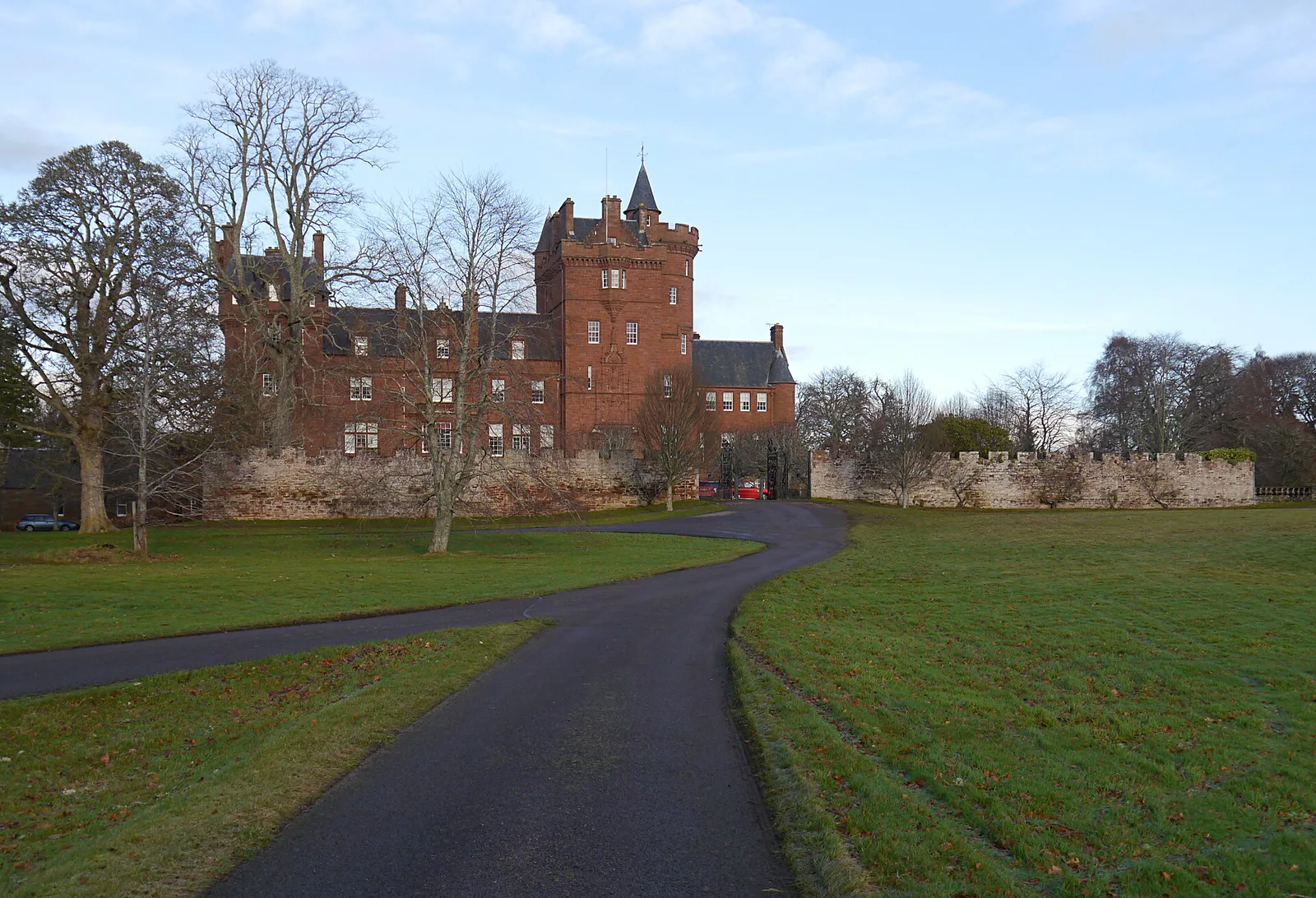
A Highland clan of Beauly and the Aird west of Inverness, whose chiefs hold the title Lord Lovat. The Fraser name is French in origin, and the clan society treats the Aberdeenshire Frasers of Philorth, the senior Lowland line, as a separate family. The Fraser company was one of the independent Highland companies of 1725, and the register dates the Fraser of Lovat tartan only to 1893.
Photo: Craig Wallace, CC BY-SA 2.0
An association between a tartan and a clan is a claim with its own sources. It does not mean every bearer of the clan name has a right to the tartan, or the reverse.