
Clan tartan

Douglas, Grey

A black and grey Douglas tartan that the Scottish Register of Tartans dates to 1842 and attributes to the Sobieski Stewarts' Vestiarium Scoticum, a work that the register says added spurious documentation.

  • Clan/Family (Vestiarium Scoticum)
  • No restriction recorded
  • Evidence level A
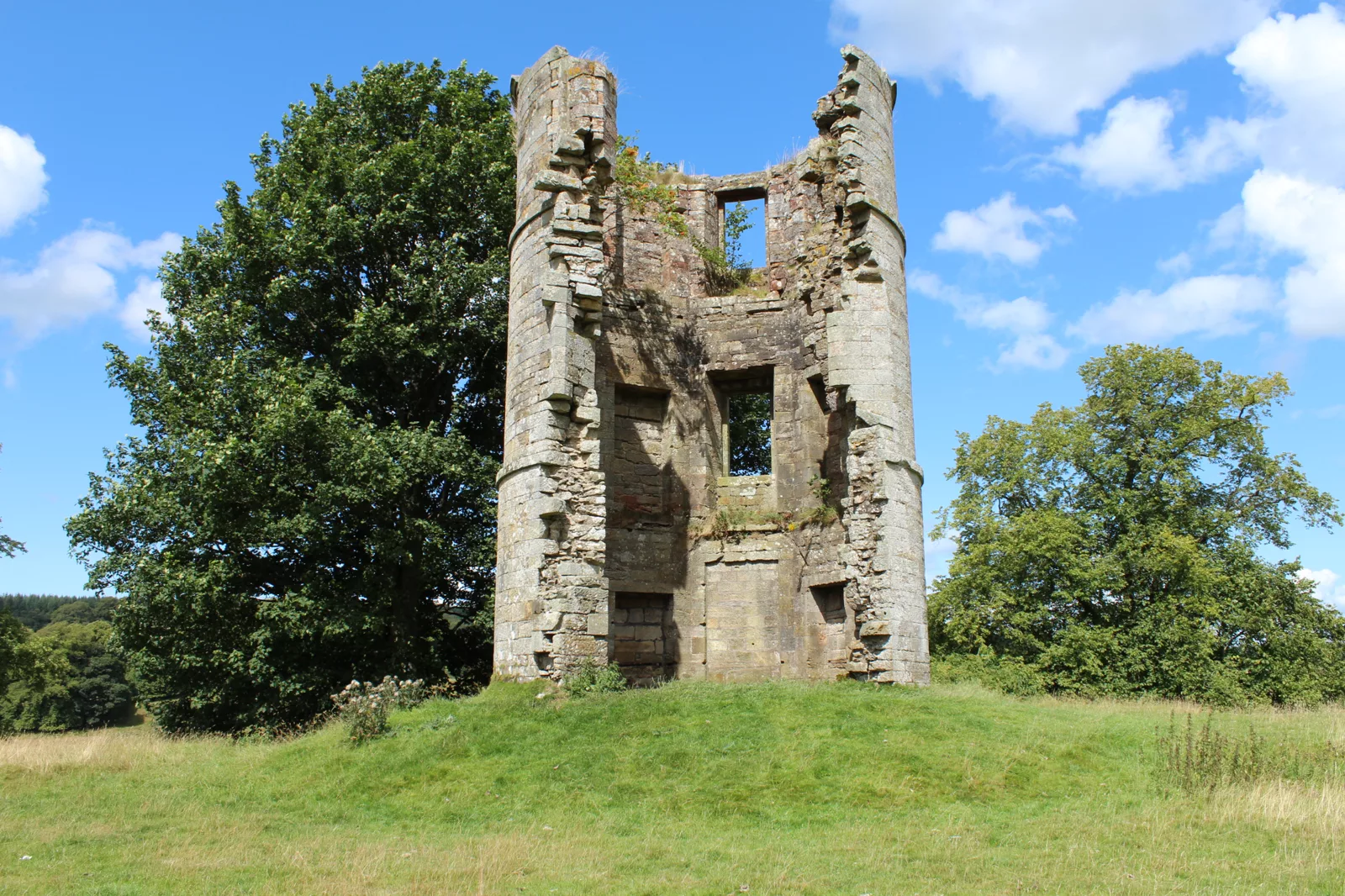
The Douglas, Grey sett as rendered by the Scottish Register of Tartans from the registered threadcount.
Image: Scottish Register of Tartans, rendered from the registered threadcount. Crown copyright, National Records of Scotland.Image source: the record this swatch comes from. Licence: Crown copyright, National Records of Scotland (Scottish Register of Tartans). Re-use beyond fair dealing needs NRS permission.
Type
Clan tartan
Classification
Clan/Family (Vestiarium Scoticum)
Earliest known date
1842
Registered
Not recorded
Associated clan
Douglas
Who can wear it
No restriction recorded
Evidence level
A

Also known as

  • Douglas Grey (Vestiarium Scoticum)

Overview

Douglas Grey is a black and grey Douglas tartan from the Vestiarium Scoticum of 1842. The Scottish Register of Tartans lists it as Douglas, Grey (Vestiarium Scoticum), SRT 1127, designed by the Sobieski Stewarts, and gives the date 1842.

It is not evidence of an older Douglas record, and the register's own notes say why: the authors added mystery, romance and some spurious historical documentation to their work.

The register lists Douglas, Grey (Vestiarium Scoticum) (SRT 1127) as 1842, designed by the Sobieski Stewarts, and says the authors, who enjoyed a popular following among the Scottish gentry in the early Victorian era, added mystery, romance and some spurious historical documentation to the subject of tartan.

From the historical notes. Evidence level A. Sources: [1]

Pattern

Only two colours are recorded, black and grey. The register's threadcount is not shown without a login, so this site has not read it and does not draw the sett. The two colours here are approximations.

The record gives no reason for these colours and no earlier cloth to match.

Origins

The Vestiarium Scoticum was produced by the brothers who called themselves the Sobieski Stuarts. The register says they were popular among the Scottish gentry in the early Victorian era. Wikipedia, as a pointer, says the book appeared in 1842 from William Tait of Edinburgh and claimed to copy a fifteenth-century manuscript, and that it was soon denounced as a forgery.

Nothing in the sources read produces that manuscript, and the register itself describes the documentation as spurious. So the design has an 1842 date and a named source, but no earlier trace.

The register lists Gordon of Esselmont (STA 215, Sobieski Stewarts, 1842) and notes the Vestiarium Scoticum prints it simply as Gordon.

From the historical notes. Evidence level A. Sources: [4]

Development

The register notes the book gives minor variations on well-known tartans, yet it remains the only documented source for many tartans still in use. Douglas Grey is one of those. It sits next to the accepted Douglas from Wilsons of Bannockburn, which has a commercial record from 1819 and so is the better documented of the two.

The sources read do not show whether Douglas Grey was woven in quantity, or when weavers began to carry it.

Clan relationship

The register classes it as Clan/Family, but the claim to the Douglas name comes from the Vestiarium alone. That is a thinner basis than the register gives the main Douglas tartan, and it does not show a Douglas chief using it.

Check before repeating

Misconceptions

The Vestiarium's claim to a fifteenth-century source does not hold in the sources read. The register's wording about spurious documentation applies to this book's claims in general.

Not established

What the record does not show

The sources read do not give the sett, do not say whether any cloth was woven from it in the nineteenth century, and do not show any Douglas family use. They also do not say why the Sobieski Stewarts chose black and grey.

The book and its claims

The Vestiarium Scoticum was published in 1842 by William Tait of Edinburgh in a limited edition. It presented itself as a reproduction, with colour plates, of a fifteenth-century manuscript of clan tartans. Wikipedia, as a pointer, says the author, John Sobieski Stuart, claimed the work copied a manuscript from the Scots College at Douay, dated 1571, and that the brothers had already presented an intermediate copy of 1721 (the Cromarty manuscript) to Sir Thomas Dick Lauder in the late 1820s.

The brothers' own identity was part of the claim. Their real names were John Carter Allen (1795 to 1872) and Charles Manning Allen (1802 to 1880). Around 1839 they began to say that their father, Thomas Allen, a naval lieutenant, was the son of Prince Charles Edward Stuart, which made them heirs to a royal line. The Douglas, Grey entry in the register is credited to "the Sobieski Stewarts", and the name used there is the name they gave themselves.

How the book was challenged

Doubt began early. Wikipedia reports that Sir Walter Scott answered Lauder's 1829 letter about the manuscript with scepticism, remarking on "false Latin" and writing that the idea of distinguishing clans by their tartans was "but a fashion of modern date". A long article in the Quarterly Review of June 1847, by Professor George Skene and the Rev. Dr Mackay, set out the case against the book and against the brothers, and is described as calling the work an absolute fabrication. In 1895 the chemist Stevenson Macadam tested the 1721 manuscript and concluded it showed signs of having been treated with chemical agents to look old.

These are reported secondary accounts, and the primary documents have not been read for this record. Taken together they show what kind of doubt exists: not a single refutation, but objections to the manuscript's age, language and materials spread over several decades. John Telfer Dunbar, a tartan historian, is quoted by Wikipedia as calling it probably the most controversial costume book ever written. The historian Hugh Trevor-Roper is quoted describing the brothers' works as shot through with fantasy and forgery.

The register entry in context

The register does not hide this. Its note on Douglas, Grey says the authors added "mystery, romance and some spurious historical documentation" and that the book gives minor variations on well-known tartans while being the sole documented source for many tartans now in use. Both statements can be true: the manuscript can be a fiction while the patterns it printed went on to be woven and worn.

Several other register records show the same route into the modern record:

  • Gordon of Esselmont (STA 215) is credited to the Sobieski Stewarts, 1842. The register notes that the Vestiarium prints it simply as "Gordon" and that the origin of the Esselmont label is not documented.
  • Stewart, Dress #1 (SRT 1765) is estimated at c. 1850 and said to appear to derive from the Vestiarium.
  • Hay Stewart (SRT 1850) is dated 1838 and noted as probably designed by or for the brothers.

Douglas Grey is therefore one of a group of records whose only source is the Vestiarium or a pattern close to it. Wikipedia says more than seventy Vestiarium tartans are still worn by clans. That figure is secondary and was not checked, but the register's own wording supports the general point.

A nineteenth century design with a douglas name

What the record supports is narrow. A black and grey sett was published under the Douglas name in 1842. It was credited to the Sobieski Stewarts, was entered in the register as Clan/Family, and is listed in a search of twenty-four Douglas results beside the accepted Douglas of 1819.

It does not support any of the following, and the sources read give no evidence for them: that the sett was worn by a Douglas lord or by the Earls of Angus or Douglas, or that the Douglas chief has ever used it. The register's threadcount is not shown without a login, and this site has not read it.

The Vestiarium's Douglas is also separate from the later Douglas, Black (1920), which the register says is unconnected with the historical Black Douglas. Between them the Douglas name in the register covers a weaver's pattern of 1819, a forged manuscript's design of 1842 and a museum sample matched to a different pattern entirely.

Choosing between them

For someone deciding which Douglas tartan to wear or buy, the evidence ranks the entries in this way.

  • The best-documented Douglas is the accepted pattern, SRT 1034, from Wilsons of Bannockburn in 1819. It has a commercial record and a threadcount checked in 1950.
  • Douglas Grey is the choice if you want the Vestiarium design and understand what that book is. It is a legitimate registered tartan with a known source, but the source is a work the register itself calls spurious in its documentation.
  • The black and grey colours make it easy to confuse with other dark Douglas cloths. Ask for SRT 1127 by number.

Nothing here forbids Douglas Grey. The register says no law governs what tartan a person may wear. The honest description is a nineteenth-century design, and a seller who calls it an ancient Douglas cloth is repeating a claim the register does not support.

Colours

  • black#101010Approximate
  • grey#808080Approximate

Approximate hex values estimate the thread colour; they are not specified by a registry.

Dates in the record

The dates this record holds, and the opening sentence of each historical note that names a single year. A year is the one the source gives; it has not been checked independently here.

  1. Earliest known date held in this record.

  2. Wikipedia, as a pointer, says the Vestiarium Scoticum was published in 1842 by William Tait of Edinburgh and described as a copy of a fifteenth-century manuscript, and that it was soon denounced as a forgery.

    Evidence level D. Sources: [2]

  3. The register lists Gordon of Esselmont (STA 215, Sobieski Stewarts, 1842) and notes the Vestiarium Scoticum prints it simply as Gordon.

    Evidence level A. Sources: [4]

Historical notes

  1. The register lists Douglas, Grey (Vestiarium Scoticum) (SRT 1127) as 1842, designed by the Sobieski Stewarts, and says the authors, who enjoyed a popular following among the Scottish gentry in the early Victorian era, added mystery, romance and some spurious historical documentation to the subject of tartan.

    Evidence level A. Sources: [1]

  2. The register adds that the book gives minor variations on well-known tartans and is the sole documented source for many tartans now in use.

    Evidence level A. Sources: [1]

  3. Wikipedia, as a pointer, says the Vestiarium Scoticum was published in 1842 by William Tait of Edinburgh and described as a copy of a fifteenth-century manuscript, and that it was soon denounced as a forgery. This is secondary, and it rests on works the page cites.

    Evidence level D. Sources: [2]

  4. Wikipedia, as a pointer, says the brothers' real names were John Carter Allen (1795 to 1872) and Charles Manning Allen (1802 to 1880), that around 1839 they began claiming descent from Prince Charles Edward Stuart, and that a Quarterly Review article of 1847 attributed to George Skene called the Vestiarium an absolute fabrication.

    Evidence level D. Sources: [3]

  5. Wikipedia, as a pointer, says the Vestiarium was claimed to copy a fifteenth-century manuscript from the Scots College at Douay dated 1571, that Sir Walter Scott answered Lauder in 1829 noting "false Latin", and that in 1895 the chemist Stevenson Macadam concluded the 1721 manuscript had been treated with chemical agents to appear aged.

    Evidence level D. Sources: [2]

  6. The register lists Gordon of Esselmont (STA 215, Sobieski Stewarts, 1842) and notes the Vestiarium Scoticum prints it simply as Gordon.

    Evidence level A. Sources: [4]

Wearing

Who can wear it

No restriction recorded

No restriction is recorded for this tartan. It is not recorded as a universal tartan.

No law restricts it. The register says there are no laws about which tartan a person may wear. It is a nineteenth-century design from the Vestiarium Scoticum, not a documented older Douglas cloth.

No law restricts Douglas Grey. The Scottish Register of Tartans states there are no laws about which tartan a person may wear, only traditions. Anyone choosing it should know it is a nineteenth-century design with no demonstrated older use.

Who can wear which tartan?

Fields missing from this record

Similar tartans

The main Douglas tartan is the pattern the register treats as accepted. The Black Douglas tartan is a separate twentieth-century entry. The two should not be confused with each other or with this one.

Douglas, Grey compared with related tartans
TartanTypeColoursAssociated clanEarliest known dateUniversal status
Douglas, GreyClan tartanblack, greyDouglas1842Not universal
DouglasClan tartanblack, light blue, green, dark blue, whiteDouglas1819Not universal

Associated clan

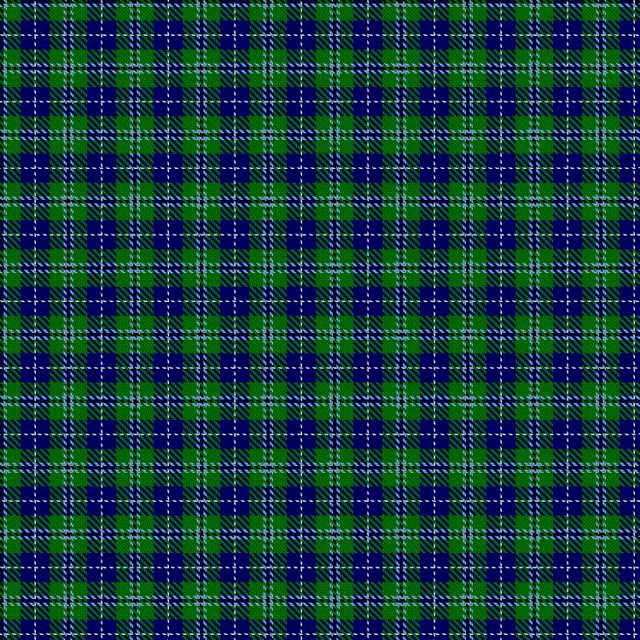
  • The remains of a round-cornered stone tower on a grassy mound, with trees on either side and a blue sky behind.

    Lanarkshire · Douglasdale · Borders

    Douglas

    Dùbhghlas

    A Lowland family named for Douglasdale in Lanarkshire, which produced the Black Douglas Earls of Douglas, ended in 1455, and the Red Douglas Earls of Angus, who outlasted them. Secondary sources say the name has no chief recognised by the Lord Lyon, so the register's accepted Douglas tartan, a Wilsons of Bannockburn sett of 1819, rests on custom rather than on a chief's approval.

    Photo: Billy McCrorie, CC BY-SA 2.0
An association between a tartan and a clan is a claim with its own sources. It does not mean every bearer of the clan name has a right to the tartan, or the reverse.

Sources

  1. Scottish Register of Tartans: Douglas, Grey (Vestiarium Scoticum)Scottish Register of Tartans (National Records of Scotland) · accessed · evidence level A
  2. Vestiarium ScoticumWikipedia · accessed · evidence level D
  3. Sobieski StuartsWikipedia · accessed · evidence level D
  4. Gordon of EsselmontScottish Register of Tartans (National Records of Scotland) · accessed · evidence level A
  5. Scottish Register of Tartans: DouglasScottish Register of Tartans (National Records of Scotland) · accessed · evidence level A
  6. Scottish Register of Tartans: frequently asked questionsScottish Register of Tartans (National Records of Scotland) · accessed · evidence level A
  7. Hay Stewart, SRT 1850Scottish Register of Tartans (National Records of Scotland) · accessed · evidence level A
  8. Scottish Register of Tartans: Stewart, Dress #1Scottish Register of Tartans (National Records of Scotland) · accessed · evidence level A
  9. Scottish Register of Tartans: Douglas, BlackScottish Register of Tartans (National Records of Scotland) · accessed · evidence level A

Sources (9)

Evidence levels run from A (primary or official) to E (unverified). How levels are assigned

  1. Scottish Register of Tartans: Douglas, Grey (Vestiarium Scoticum) (opens in a new tab)

    Scottish Register of Tartans (National Records of Scotland)

    Registry · accessed

    Evidence level APrimary or official

    Official registry, archive or primary source.

    Cited for

    • The register lists Douglas, Grey (Vestiarium Scoticum) (SRT 1127) as 1842, designed by the Sobieski Stewarts, and says the authors, who…
    • The register adds that the book gives minor variations on well-known tartans and is the sole documented source for many tartans now in use.
  2. Vestiarium Scoticum (opens in a new tab)

    Wikipedia

    Web page · accessed

    Evidence level DCommercial

    Commercial source; not used as the basis of a historical claim.

    Cited for

    • Wikipedia, as a pointer, says the Vestiarium Scoticum was published in 1842 by William Tait of Edinburgh and described as a copy of a…
    • Wikipedia, as a pointer, says the Vestiarium was claimed to copy a fifteenth-century manuscript from the Scots College at Douay dated 1571…
  3. Sobieski Stuarts (opens in a new tab)

    Wikipedia

    Web page · accessed

    Evidence level DCommercial

    Commercial source; not used as the basis of a historical claim.

    Cited for

    • Wikipedia, as a pointer, says the brothers' real names were John Carter Allen (1795 to 1872) and Charles Manning Allen (1802 to 1880), that…
  4. Gordon of Esselmont (opens in a new tab)

    Scottish Register of Tartans (National Records of Scotland)

    Registry · accessed

    Evidence level APrimary or official

    Official registry, archive or primary source.

    Cited for

    • The register lists Gordon of Esselmont (STA 215, Sobieski Stewarts, 1842) and notes the Vestiarium Scoticum prints it simply as Gordon.
  5. Scottish Register of Tartans: Douglas (opens in a new tab)

    Scottish Register of Tartans (National Records of Scotland)

    Registry · accessed

    Evidence level APrimary or official

    Official registry, archive or primary source.

  6. Scottish Register of Tartans: frequently asked questions (opens in a new tab)

    Scottish Register of Tartans (National Records of Scotland)

    Registry · accessed

    Evidence level APrimary or official

    Official registry, archive or primary source.

  7. Hay Stewart, SRT 1850 (opens in a new tab)

    Scottish Register of Tartans (National Records of Scotland)

    Registry · accessed

    Evidence level APrimary or official

    Official registry, archive or primary source.

  8. Scottish Register of Tartans: Stewart, Dress #1 (opens in a new tab)

    Scottish Register of Tartans (National Records of Scotland)

    Registry · accessed

    Evidence level APrimary or official

    Official registry, archive or primary source.

  9. Scottish Register of Tartans: Douglas, Black (opens in a new tab)

    Scottish Register of Tartans (National Records of Scotland)

    Registry · accessed

    Evidence level APrimary or official

    Official registry, archive or primary source.