Surname
Douglas surname
Also spelled Douglass
Douglas is a place name before it is a family name.
- Places
- Lanarkshire, Douglasdale, Borders, Argyllshire
- Linked clan
- Clan Douglas
- Linked tartans
- Douglas, Douglas, Grey
- Evidence claims
- 28
- Sources
- 20
- Entry status
- Partial
Origin of the name
Douglas is a place name before it is a family name.
The sources I could open translate it from Scottish Gaelic dubh glas, with dubh meaning dark or black and glas rendered as stream or water, so the usual gloss is black stream or dark water. Most accounts tie the surname to Douglas in South Lanarkshire, on the Douglas Water in Douglasdale, where Douglas Castle was the family's stronghold. The surname is therefore territorial: it began as 'of Douglas', and many unrelated families could take a name from the same place. The earliest bearer is William de Douglas, and the sources do not agree on the date or the span. Britannica of 1911 has him in charters from 1175 to 1213. A Wikipedia article on him says he first appears in 1174 as a witness to a charter of Bishop Jocelin of Glasgow and died about 1214. The Wikipedia article on the clan has him as Lord of Douglas in 1179, and Forebears gives 1175 to 1199 for a charter witness it spells William de Duglas. I could not open the charters themselves, which sit in the Kelso abbey records, so every one of these dates is second-hand and the Latin spelling of his name in the original is unconfirmed here. Who stood behind William is open. One tradition names Theobald the Fleming, said to have received land near the Douglas Water in 1147 from the Abbot of Kelso. Wikipedia says that Flemish origin is disputed and that some argue the land Theobald held was not the land the Douglases later held. A University of St Andrews project post calls Theobald the probable father of William, and a Wikipedia article says the link lacks confirmation. A second tradition links William by marriage to Freskin of Moray, but the sources give the wife as either Freskin's daughter or his sister. A third story, a Sholto of 767, is described as historically unreliable. I found no source that settles any of this, and I treat the Flemish and Freskin links as unproven. The sources I could open follow the family through its main branches, and the surname spread through them. Sir James Douglas, called the Good Sir James, died in Spain in 1330 carrying Robert Bruce's heart. The Black Douglas Earls were broken between 1440 and 1455. The Red Douglas Earls of Angus took the lordship of Douglas and later became Marquesses of Douglas, and through marriage the Douglas titles reached the Dukes of Hamilton. The Earls of Morton descend from the Douglases of Dalkeith and the Marquesses of Queensberry from the Douglases of Drumlanrig. Each of these is a different line carrying the same name. The name also has origins outside Lanarkshire. The Manx town of Douglas is named for its river, and an 1881 directory says it has no connection with the Scottish family. George Fraser Black, as reported by Wikipedia, recorded that in southern Argyllshire the surname stands for MacLucas or MacLugash. Douglas also became a given name, so a person called Douglas may carry it as a first name only. What this page does not establish: that anyone surnamed Douglas descends from the Lords of Douglas, that a Douglas belongs to a clan whose chief the Lord Lyon recognises, or that any one tartan belongs to a particular Douglas household. I did not open Black's Surnames of Scotland, the Dictionary of American Family Names or the Oxford Dictionary of Surnames, so where scholars disagree on the meaning I can only report what the secondary sources give.
Places associated with the name
- Lanarkshire
- Douglasdale
- Borders
- Argyllshire
Clan
A surname and a clan can share a name without every bearer of the name belonging to the clan. This is the link the sources support.
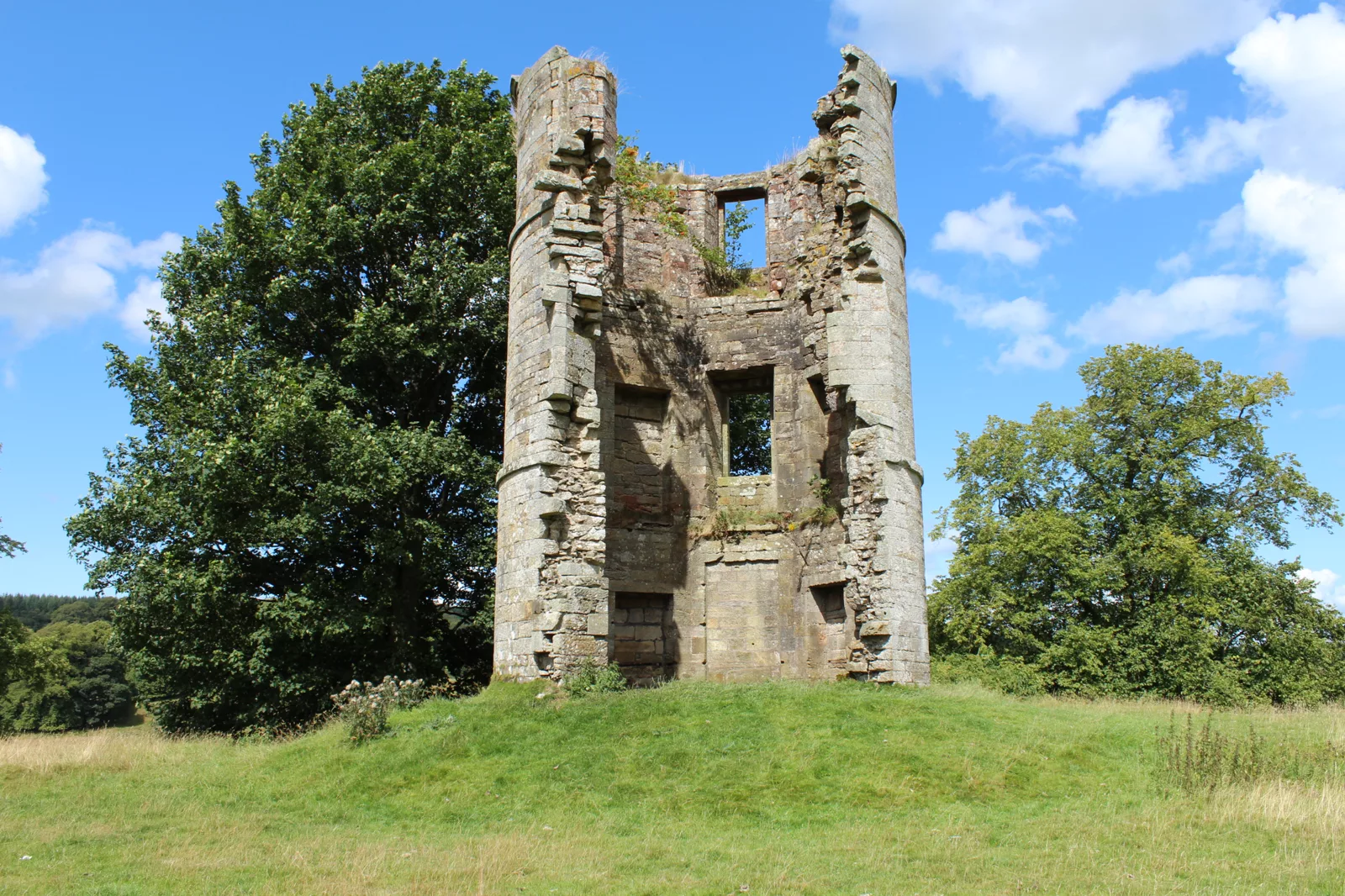
The surviving tower of Douglas Castle in Lanarkshire, which secondary sources name as the historic seat of the Douglases. The photo shows the ruin, not the clan.Photo: Billy McCrorie, CC BY-SA 2.0 (source) Linked clan · Lanarkshire, Douglasdale, Borders
Clan Douglas
Probable Supported by a credible source, not independently confirmed.
The surname and the family of the Earls of Douglas and Angus share a name and a place of origin, which is why the association is probable. Secondary sources report no chief recognised by the Lord Lyon, and the Black Douglas line was forfeited in 1455 while the Red Douglas, Hamilton, Morton and Queensberry lines each descend by their own path. A Douglas surname in Argyll can be a form of MacLucas, and a given-name Douglas has no clan link. The association is a naming link for the Lanarkshire-derived bearers only, and it does not prove that any one person descends from the Lords of Douglas.

Tartan
Tartans linked to the name, each with the strength of the link. The link is to the name's history, not to any individual's family.
Clan tartan
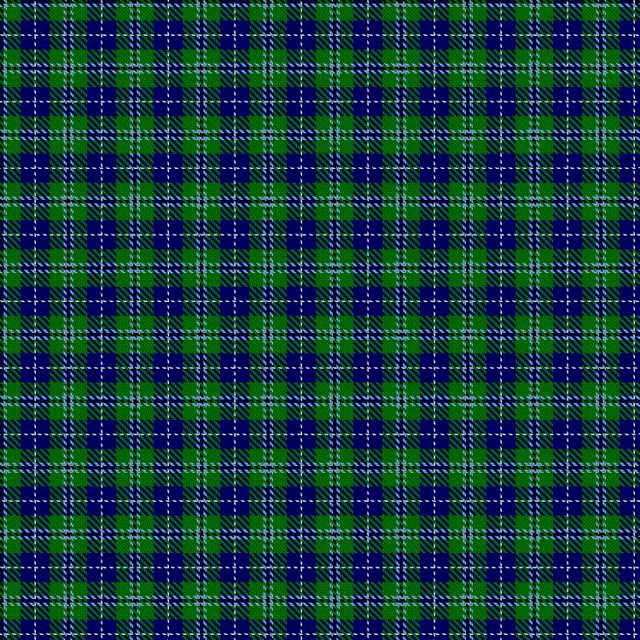
Douglas
Probable Supported by a credible source, not independently confirmed.
The register records the accepted Douglas clan or family tartan, a Wilsons of Bannockburn design of 1819, listed as Wilson's No. 148 and tied to the name by 1880. A register record shows the tartan was accepted for the family, and it does not show that every person named Douglas belongs to that family. The association is therefore probable and rests on custom.
Sources: [4]
Clan tartan
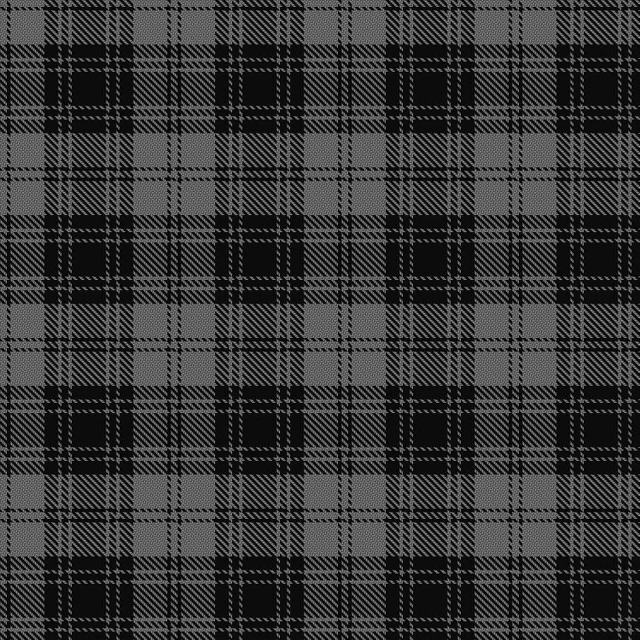
Douglas, Grey
Uncertain Reported, but the sources are weak or disagree.
Douglas, Grey comes from the Vestiarium Scoticum of 1842 by the Sobieski Stuarts, which the register says added spurious historical documentation. The association is uncertain: it records that a tartan carries the Douglas name in that book, and it does not date the pattern to any Douglas household.
Sources: [5]
Image: Scottish Register of Tartans, rendered from the registered threadcount. Crown copyright, National Records of Scotland.
Evidence
28 claims, numbered in the order the record lists them. Consecutive claims that cite the same source are set together under that source. Each claim carries its own evidence level.
- APrimary or official5 claims
- BInstitutional2 claims
- CSpecialist secondary8 claims
- DCommercial10 claims
- EUnverified3 claims
Claims 1 to 2
All cite Douglas (family), Encyclopaedia Britannica, 11th edition, 1911 [1]
- DCommercial
Wikipedia's surname article gives the origin as Scottish Gaelic dubh glas, black stream, and calls the name habitational, referring to several places in Scotland, most often Douglas in South Lanarkshire, the site of Douglas Castle. The 1911 Britannica gives the same elements as dark water. The two glosses differ only in whether glas is read as stream or as water.
- CSpecialist secondary
The 1911 Britannica entry names William de Douglas as the first member of note, with his name on charters between 1175 and 1213, and says his eldest son was Sir Archibald, who died about 1240. Other secondary sources move the start to 1174 or 1179, so the first-appearance date is not settled by these sources.
Evidence level C. Sources: [1]
Claims 3 to 4
All cite William I, Lord of Douglas [6]
- DCommercial
A Wikipedia article on William I of Douglas says he is the first of the name on record, appearing in 1174 as a witness to a charter of Bishop Jocelin of Glasgow, that he died about 1214, and that his background is uncertain. It says some scholars propose he was a son of Theobald le Fleming but that this lacks confirmation. It lists seven children, including Bricius, Bishop of Moray, and Hugh, Archdeacon of Moray.
Evidence level D. Sources: [6]
- DCommercial
The same article says William probably married a daughter or sister of Freskin de Kersdale, also called Freskin of Moray, and describes a story that gives the Douglas lands to a Sholto in 767 as historically unreliable.
Evidence level D. Sources: [6]
The Scottish Register of Tartans describes the Wilsons of Bannockburn Douglas tartan, dated 1819, as the accepted Douglas Clan/Family tartan, catalogued as Wilson's No. 148 and listed in their 1819 list as number 184.
Claims 5 to 6
- CSpecialist secondary
A University of St Andrews Flemish settlers project post of November 2014 calls Theobald the Fleming the probable father of William de Douglas, and credits Sir Robert Douglas with saying categorically that William married a sister of Freskin of Moray. Its authors rest the Freskin line on Moncrieffe's Highland Clans and on English pipe rolls. The post is a project blog, so it counts as a lead and not as proof.
Evidence level C. Sources: [7]
- DCommercial
The Wikipedia article on Clan Douglas says the true ancestor may have been Theobald the Fleming, who received land near the Douglas Water in 1147 in return for services to the Abbot of Kelso, and that William Douglas was Lord of Douglas in 1179. It reports that the Flemish origin is disputed, on the argument that Theobald's lands were not the lands the Douglas family later held.
Evidence level D. Sources: [2]
Claims 7 to 8
All cite Douglas family (genetic genealogy of Scottish clans and families) [8]
- BInstitutional
The University of Strathclyde genetic genealogy page reports that tested Black Douglas descendants carry Y-chromosome haplogroup R1a and tested Red Douglas descendants carry R1b, and concludes they do not descend from one male-line ancestor. Its Black Douglas testers were two documented descendants of William Douglas, 1st Earl of Queensberry, who died in 1640. Its Red Douglas testers were two documented descendants of John Douglas, 1756 to 1818. That is four men in total.
Evidence level B. Sources: [8]
- BInstitutional
The same page says the Red Douglases may share a 12th-century male-line ancestor with Clan Sutherland, possibly Freskin, who was granted Strathbrock and Duffus by David I around the middle of the 12th century. It calls the conclusion fairly speculative and says the dating of the common ancestor is not yet sufficiently refined. It does not mention a Flemish origin for either line.
Evidence level B. Sources: [8]
Claims 9 to 10
- CSpecialist secondary
The 1911 Britannica entry says Sir James Douglas, born in 1286, was educated in Paris and became Robert Bruce's supporter. It records the Douglas Larder of Palm Sunday 1307, the capture of Roxburgh Castle by men disguised as black oxen, and his death fighting the Moors in Spain in 1330 while carrying Bruce's heart in fulfilment of a crusade vow. It places the name Black Douglas on him through his border raids.
Evidence level C. Sources: [1]
- DCommercial
Wikipedia's Clan Douglas article gives James Douglas, Lord of Douglas, about 1286 to 1330, as the Good Sir James or the Black Douglas, and says he died at the siege of Teba in 1330 while taking Bruce's heart toward the Holy Land.
Evidence level D. Sources: [2]
The register says Douglas, Grey (Vestiarium Scoticum) comes from the 1842 Vestiarium Scoticum of the Sobieski Stuarts, whose books the register says added mystery, romance and some spurious historical documentation.
Claims 11 to 13
All cite Douglas (family), Encyclopaedia Britannica, 11th edition, 1911 [1]
- CSpecialist secondary
The 1911 Britannica entry says Archibald the Grim, about 1328 to 1400, was a natural son of Sir James, became lord of Galloway in 1369 and bought the earldom of Wigtown in 1372. It dates the Black Dinner to 24 November 1440, when the young 6th Earl and his brother David were beheaded in the courtyard of Edinburgh Castle after a mock trial.
Evidence level C. Sources: [1]
- CSpecialist secondary
The same entry says James II killed the 8th Earl with his own hands at Stirling Castle on 22 February 1452 after a safe-conduct. The 9th Earl's brothers were defeated by Angus at Arkinholm on the Esk in 1455, Moray was killed and Ormond was taken and executed, and the Douglas lands were declared forfeit and divided among rivals.
Evidence level C. Sources: [1]
- CSpecialist secondary
The same entry says George Douglas, 4th Earl of Angus, sided with the king against his Black Douglas kinsmen and received the lordship of Douglas. It says William, 11th Earl of Angus, became the 1st Marquess of Douglas in 1633, that a dukedom created in 1703 became extinct in 1761, and that the House of Lords decided the Douglas Cause for Archibald James Edward Steuart in 1769.
Evidence level C. Sources: [1]
Claims 14 to 17
- CSpecialist secondary
The Gazetteer for Scotland dates the original Douglas Castle to the years before 1300. It says Archibald, Duke of Douglas, had John Adam build a mansion there from 1751, that it was demolished in 1938 after a coal seam opened beneath it, and that the Douglas Cause was fought between the Duke's nephew and the Duke of Hamilton. The estate later passed to the Douglas-Home family, Earls of Home.
Evidence level C. Sources: [9]
- DCommercial
A Wikipedia article says the Queensberry titles come from the Douglases of Drumlanrig: William Douglas, 9th of Drumlanrig, became Earl of Queensberry in 1633, and the same family held the marquessate from 1682 and the dukedom from 1684. It names Sholto Francis Guy Douglas as the 13th Marquess.
Evidence level D. Sources: [10]
- DCommercial
A Wikipedia article says the Douglases of Dalkeith, later the Earls of Morton, descend from Andrew Douglas of Hermiston, who died in 1277 and was a younger son of Archibald I, Lord of Douglas. It says William Douglas, Lord of Liddesdale, obtained the barony of Dalkeith in 1341.
Evidence level D. Sources: [11]
- DCommercial
Wikipedia's Clan Douglas article says the clan has no chief recognised by the Lord Lyon, and gives the reason that the principal Douglas, the Duke of Hamilton, has the compound surname Douglas-Hamilton, which the Lyon Court does not accept for a chiefship of the name.
Evidence level D. Sources: [2]
Claims 18 to 21
- DCommercial
Wikipedia notes the spelling Douglass as an occasional variant of the surname. Attributing the point to George Fraser Black, it also says that in southern Argyllshire Douglas is an anglicised form of MacLucas and MacLugash, from Gaelic Mac Lucais. A Douglas from Argyll may therefore have no Lanarkshire ancestry at all.
Evidence level D. Sources: [3]
- CSpecialist secondary
An 1881 directory entry for Douglas on the Isle of Man says the town takes its name from the river Douglas and not from any connection with the Scottish family or place. It says the river is formed by the Glas, glossed as the gray river, and the Dhoo, the dark river, which meet about a mile west of the town. The Glas and Dhoo glosses parallel the dubh glas elements of the Lanarkshire name, but the directory treats the Manx place as unrelated to it.
Evidence level C. Sources: [12]
- EUnverified
Forebears lists 73 bearers of the surname on the Isle of Man, one in 1,176. The town's name is not evidence about who those people are or where their families came from.
Evidence level E. Sources: [13]
- DCommercial
Wikipedia says Douglas began as a surname and became a given name, almost always for boys now but used for women in the north of England in the 17th and 18th centuries. It adds that three wives of Members of Parliament named Douglas sat in the reign of Elizabeth I. A forename Douglas shows fashion and perhaps an admired family, not descent.
Evidence level D. Sources: [14]
Claims 22 to 25
- EUnverified
Name Census, using 1881 census data, counts 14,546 people named Douglas in 1881, ranking 277th, and 25,979 in 2016, ranking 217th. It names Hawick Central, Northumberland and Selkirk as modern clusters, and London parishes, the Govan Combination and Gateshead as the strongest historical links. This points to a Borders and north of England presence beside the Lanarkshire core, and the method is the site's own.
Evidence level E. Sources: [15]
- EUnverified
Forebears gives about 253,791 bearers worldwide, with 130,759 in the United States. Its country figures are Scotland 8,814 (1 in 607), England 24,453 (1 in 2,279), Canada 13,725 (1 in 2,685) and Australia 17,058 (1 in 1,583). The densest figure among those four is Scotland's, but counts from different sources and years are not comparable.
Evidence level E. Sources: [13]
- APrimary or official
The Scottish Register of Tartans describes the Wilsons of Bannockburn Douglas tartan, dated 1819, as the accepted Douglas Clan/Family tartan, catalogued as Wilson's No. 148 and listed in their 1819 list as number 184. It says the name was attached to it by 1880 in Clans Originaux as Douglas Hunting, and that D. C. Stewart verified its threadcount in 1950.
Evidence level A. Sources: [4]
- APrimary or official
The register says Douglas, Grey (Vestiarium Scoticum) comes from the 1842 Vestiarium Scoticum of the Sobieski Stuarts, whose books the register says added mystery, romance and some spurious historical documentation. It records Douglas, Black as dated 1920 from the Inverness Museum through Ross-Craven research, and says the historical Black Douglas had no connection with it.
Claims 26 to 28
- APrimary or official
The register also lists Douglas Ancient Red, made by Edinburgh Woollen Mill in 2002 with the note 'No details', and Douglas of Roxburgh, by Jack Dalgety in 1984, which it says is not a stock item for any weaver. None of these records links a tartan to a surname bearer, so no one tartan can be called the Douglas tartan from the register alone.
- APrimary or official
The National Records of Scotland says the Old Parish Registers begin with a baptism at Errol on 27 December 1553 and that about 3,500 volumes survive, far from complete. It warns that surnames vary in spelling, with Johnston, Johnstone and Johnstoun as its example, so a search for Douglas should also try Douglass and local variants.
Evidence level A. Sources: [19]
- APrimary or official
ScotlandsPeople says civil registration began on 1 January 1855, and lists censuses from 1841 to 1921, valuation rolls from 1855 to 1940, wills from 1513 to 1925 and coats of arms from 1672 to 1916. It advises starting with a birth, death or marriage in a direct line and working back, which is the sound route for a Douglas in Scotland.
Evidence level A. Sources: [20]
What this page does not say
Sources
- Douglas (family), Encyclopaedia Britannica, 11th edition, 1911
- Clan Douglas
- Douglas (surname)
- Scottish Register of Tartans: Douglas
- Scottish Register of Tartans: Douglas, Grey (Vestiarium Scoticum)
- William I, Lord of Douglas
- Exploring the Relationships Among Some Key Flemish Families
- Douglas family (genetic genealogy of Scottish clans and families)
- Douglas Castle, Gazetteer for Scotland
- Marquess of Queensberry
- Earl of Morton
- Douglas entry, Brown's Directory (1881), in the Manx Note Book
- Douglas surname meaning and distribution
- Douglas (given name)
- Douglas surname popularity
- Scottish Register of Tartans: Douglas, Black
- Scottish Register of Tartans: Douglas Ancient Red
- Scottish Register of Tartans: Douglas of Roxburgh
- Old Parish Registers
- Family History guide