Surname
Fraser surname
Also spelled Frazer, Fraiser, Frasier, Frashier, Frazier, Fresel, Friseal
Nobody has established what Fraser means, and the sources read for this page disagree.
- Places
- East Lothian, Tweeddale, Beauly, Inverness-shire, Aberdeenshire
- Linked clan
- Clan Fraser
- Linked tartan
- Fraser
- Evidence claims
- 36
- Sources
- 30
- Entry status
- Partial
Origin of the name
Nobody has established what Fraser means, and the sources read for this page disagree.
The Clan Fraser Society states flatly that the name, however spelt, is French. The Oxford history of family names, as Wikipedia reports it, finds no place in France matching the earliest spellings, de Fresel, de Friselle and de Freseliere, and floats the idea that the name could be a Gaelic one corrupted beyond recognition by Anglo-French scribes. The strawberry explanation, from French fraise, is the popular one and is tied to the three strawberry flowers in the Fraser arms. It is a tradition and a reading of the arms, not a documented derivation. Another French line points to the Frezeliere family of Anjou, and a third private site proposes a Roman-Gaulish tribe, the Friselii. This page has not seen Black's Surnames of Scotland, whose Fraser entry is held on a lending copy at the Internet Archive that could not be opened, so it reports what the secondary sources attribute to scholars and does not claim to settle the point. Whatever its meaning, the name is attached to a particular family from the middle of the twelfth century. It spread into Tweeddale, then to Stirling, Angus, Inverness and Aberdeen, and by the fourteenth century the northern Frasers formed two groups, one in each of the last two counties. The Highland group became the Frasers of Lovat and the Aberdeenshire group the Frasers of Philorth, now Lords Saltoun. The society says only the Lovat family belongs to the Gaelic, Highland clan. A person called Fraser may descend from either family, from a third family, or from someone who took the name for another reason, so the surname alone proves neither a clan nor a tartan.
Places associated with the name
- East Lothian
- Tweeddale
- Beauly
- Inverness-shire
- Aberdeenshire
Clan
A surname and a clan can share a name without every bearer of the name belonging to the clan. This is the link the sources support.
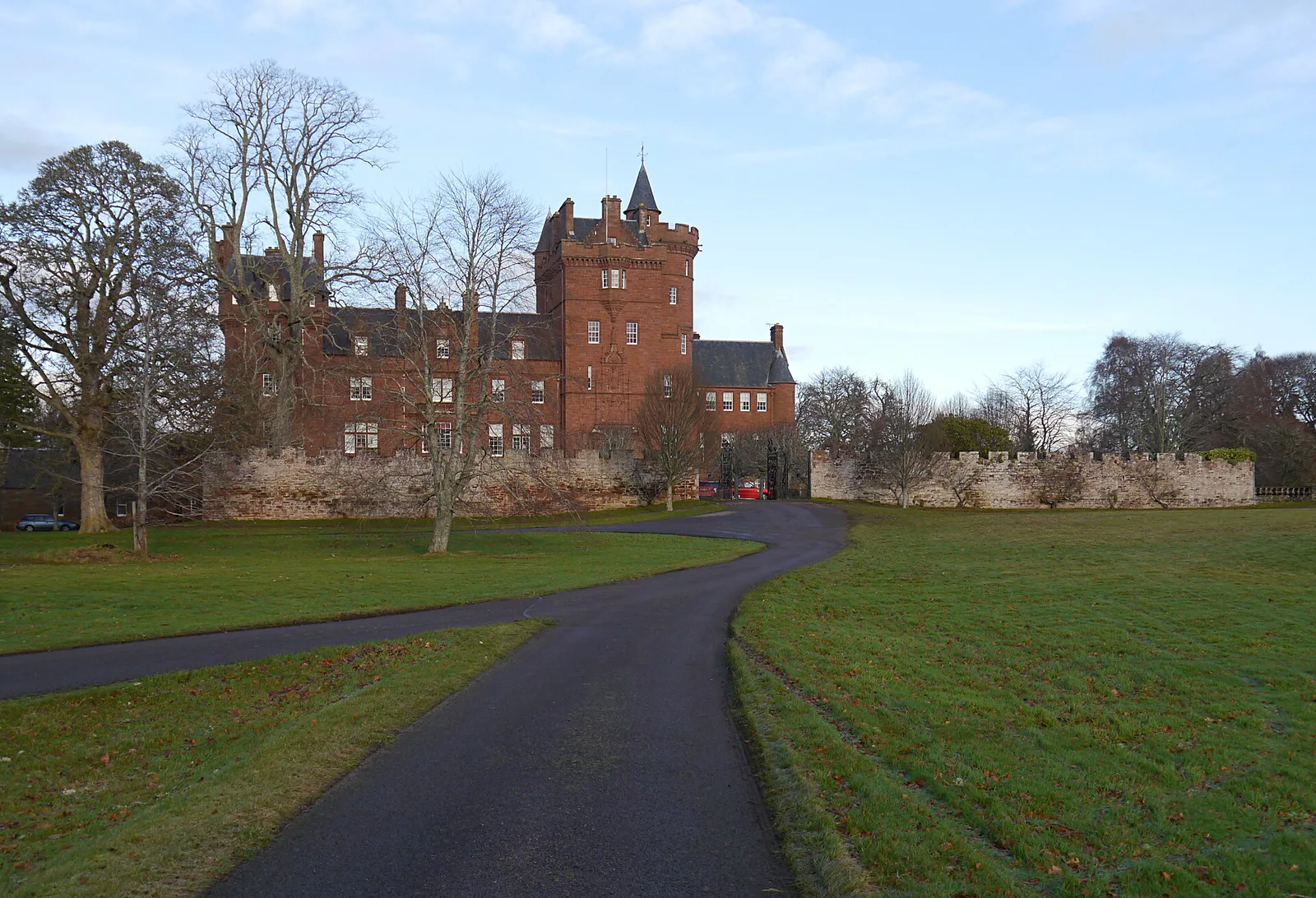
Beaufort Castle near Beauly, which the Clan Fraser Society names as the historic seat of the Frasers of Lovat. The photo shows the castle, not the clan.Photo: Craig Wallace, CC BY-SA 2.0 (source) Linked clan · Beauly, Aird, Strathglass, Stratherrick
Clan Fraser
Probable Supported by a credible source, not independently confirmed.
The clan page is the Lovat clan, the Highland Frasers with their seat at Beaufort Castle near Beauly. The Clan Fraser Society says the Frasers of Philorth, the Lowland line now holding the title Lord Saltoun, never belonged to that Gaelic clan, although it calls them chiefs of the name of Fraser. Wikipedia reports that on 1 May 1984 Flora Fraser, 21st Lady Saltoun, was decreed chief of the name and arms of the whole Clan Fraser, and that the Lord Lyon has no power over the chief of a Highland clan. Those two framings do not match, and this page does not resolve them. The confidence is probable, not verified, because the surname is a shared label across at least two families and the sources give no test for deciding which one a given Fraser belongs to.

Tartan
Tartans linked to the name, each with the strength of the link. The link is to the name's history, not to any individual's family.
Clan tartan
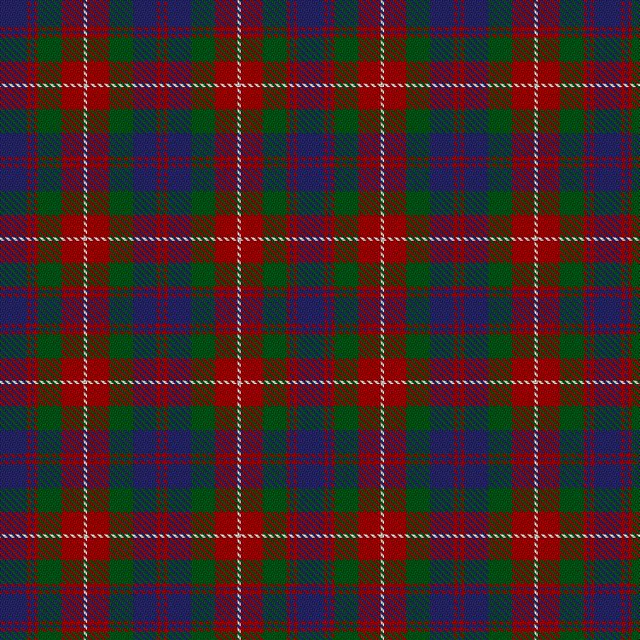
Fraser
Probable Supported by a credible source, not independently confirmed.
The Scottish Register of Tartans files several Fraser clan setts under one record family: Fraser of Lovat, dated 1893 from a book illustration, Fraser by Wilsons of Bannockburn about 1800, and Fraser from the Vestiarium Scoticum of 1842. The register says the claim that the 78th Fraser Highlanders wore the 1800 sett about 1757 has no evidence behind it. The clan society says the chief and family mostly wear Modern Fraser Dress. The register states that no law governs who may wear a tartan. The register's Fraser Hunting number 1 is described by its difference from the clan sett: brown replaces the red and red replaces each alternate white. It records use by the Lovat Scouts and by an Elgin Territorial Army company, with no design date and no designer. A database entry that credits the Sobieski Stuarts with a hunting design for Lord Lovat's militia names no source and is not repeated by the register. The register's Fraser of Struy, dated 1745, is taken from the remains of a plaid that belonged to Captain Thomas Fraser, 7th of Struy, who is said to have worn it at Culloden. That is a family tradition passed on in the register note. It ties the pattern to one branch of the Lovat Frasers, not to everyone named Fraser.
Image: Scottish Register of Tartans, rendered from the registered threadcount. Crown copyright, National Records of Scotland.
From the evidence
Where the sources disagree
Sentences from the evidence below in which the record says its sources do not agree. Each is quoted as written; follow the claim number for the context.
Evidence
36 claims, numbered in the order the record lists them. Consecutive claims that cite the same source are set together under that source. Each claim carries its own evidence level.
- APrimary or official6 claims
- BInstitutional3 claims
- CSpecialist secondary5 claims
- DCommercial19 claims
- EUnverified3 claims
Claims 1 to 4
- CSpecialist secondary
The Clan Fraser Society says that although the name Fraser, however spelt, is French, it is now 800 years since the first bearer. It gives the earliest written record as 1160, when a Simon Fraser held lands at Keith in East Lothian and gave a church to Kelso Abbey.
Evidence level C. Sources: [2]
- DCommercial
Wikipedia, citing the Oxford history of family names (Hanks, Coates and McClure, 2016), says there is no place name in France corresponding with the earliest spellings of the surname, de Fresel, de Friselle and de Freseliere, and that the name might be a Gaelic one corrupted beyond recognition by Anglo-French scribes. The Oxford volume itself was not opened for this page.
Evidence level D. Sources: [3]
- DCommercial
The Surname Database says the exact origin is undetermined and that the early forms de Fresel, de Friselle and de Freseliere suggest a French place name, although no matching French location is known. It mentions the heraldic term fraisse for a strawberry, and offers the idea that the early family lands at Neidpath grew strawberries in quantity, which is an explanation by the site and not a record.
Evidence level D. Sources: [12]
- DCommercial
Forebears calls the name Norman-French and says its roots are debated. It lists two theories: a form like de Frisselle or de Fresel linked to Frisia, and a link to the strawberry. The Frisia suggestion appears in none of the other sources read here and is given no support on the page.
Evidence level D. Sources: [13]
Claims 5 to 6
- DCommercial
Wikipedia reports that the French surname Frezeliere exists in Anjou, that in 1702 Simon Fraser, called the 11th Lord Lovat, entered a league of amity with the Marquis de la Frezeliere on a claimed common origin from the seigneurs de la Frezeliere at Loigne-sur-Mayenne, and that an eighteenth-century Dictionnaire de la noblesse says a Simon Frezel of an Anjou knightly family settled in Scotland some time after 1030. These are claims of descent made in 1702 and in an 1700s reference work, and the page gives no documents for the 1030 date.
Evidence level D. Sources: [3]
- EUnverified
A private family site, graemefraser.net, lists the idea that the Frasers descend from the Friselii of Roman Gaul, whose badge was a strawberry plant, and says the name seems to come from Anjou and possibly Normandy. The page cites no academic source such as Black or the Oxford dictionary, so this is recorded as a tradition only.
Evidence level E. Sources: [14]
ScotlandsPeople says surname spelling varied through indexing errors, phonetic spelling by registrars and clerks, and changes after emigration, that in early records a final e was commonly added and quh and wh are interchangeable, and that Mac and Mc names are indexed separately.
Claims 7 to 8
All cite Clan Fraser of Lovat [3]
- DCommercial
The same strawberry tradition appears in Wikipedia's account of a fable that Julius de Berry served strawberries to King Charles the Simple, was knighted, and took the name Fraiseux or Frezeliere. The article presents it as a fable.
Evidence level D. Sources: [3]
- EUnverified
Wikipedia gives the arms of Lord Lovat as quarterly, first and fourth azure three fraises argent, second and third argent three antique crowns gules, and says the plain Fraser arms granted to Lady Saltoun are three strawberry flowers on blue. Whether the arms came from the name or the name from the arms is not settled by these sources. The private site ajbhope.net, which gives no citations, says the family probably used the cinquefoil before it held Neidpath.
Claims 9 to 12
- DCommercial
The Surname Database lists early recordings of the name as Sir Simon Frasee about 1160, Symon Ffraser in the late twelfth century, and George Freser in 1210. The page does not say which charters hold them, so the dates and spellings are not checked against the Kelso register or the other sources.
Evidence level D. Sources: [12]
- CSpecialist secondary
The Clan Fraser Society says the Frasers moved into Tweeddale in the twelfth and thirteenth centuries and from there into Stirling, Angus, Inverness and Aberdeen counties, and that by the fourteenth century the northern Frasers formed two groups, in Aberdeen and Inverness.
Evidence level C. Sources: [2]
- EUnverified
The private site ajbhope.net says Oliver Fraser, called Olifurd, witnessed documents in the reign of Malcolm IV (1153 to 1165) and built Fruid and Oliver castles, that Gilbert Fraser as sheriff of Peebles obtained Jedderfield, later called Neidpath, and that fourteen Frasers appear on the Ragman Roll of 1296. It admits there is no archaeological evidence for the Oliver Castle site and cites no charters, so none of these details is adopted here.
Evidence level E. Sources: [15]
- DCommercial
The clan society says Sir Simon Fraser fought against the English at Dunbar in 1296 and was put to death in London after capture at Methven. Wikipedia adds that he defeated the English at Roslin in 1303 and was executed in 1306, and that a younger brother, another Sir Simon, was ancestor of the Lovat chiefs and died at Halidon Hill in 1333.
Claims 13 to 14
- DCommercial
The Lordship of Saltoun was created on 28 June 1445 for Sir Lawrence Abernethy, according to Wikipedia, and passed to the Frasers of Philorth about 1669 when Alexander Fraser became the 11th Lord. Katharine Fraser, born 1957, is named as the 22nd Lady Saltoun, succeeding in 2024, with seats at Cairnbulg Castle near Fraserburgh and Inverey House near Braemar.
Evidence level D. Sources: [16]
- CSpecialist secondary
The clan society says the Frasers of Philorth never belonged to the Gaelic, Highland Clan Fraser and calls them chiefs of the name of Fraser although a Lowland family, while Lord Lovat is chief of the Highland Clan Fraser of Lovat based in Inverness-shire.
Evidence level C. Sources: [1]
The National Records of Scotland says the Old Parish Registers begin with an entry of 27 December 1553, that about 3,500 volumes survive, that they are far from complete, and that civil registration began in 1855.
Claims 15 to 16
All cite Lords Lovat (1458) [17]
- DCommercial
The peerage list on irvinemclean.com gives 1458 for the creation of the Lovat peerage, while the clan society says it was granted about 1460 and that the precise date is not known. The two are close but not the same, and neither is checked against the Scots Peerage here.
- DCommercial
The peerage list on irvinemclean.com numbers Simon Fraser (about 1667 to 1747) as the 11th Lord Lovat, attainted, and says the attainder was reversed in 1854 for Thomas Alexander Fraser (1802 to 1875), numbered 12th. The 1911 Britannica calls the same Simon the 12th Baron and says the title was not restored until 1837. The clan society also numbers him 11th. The numbering and the restoration date are therefore in dispute between these sources and are left unresolved here.
Claim 17
- CSpecialist secondary
The 1911 Britannica says Simon Fraser, Lord Lovat, born about 1667, took the title in 1699, fled to France in 1702, was held in Angouleme from about 1704 to 1714, and spent about twenty-five years recovering his estates. In 1745 he told Jacobites his age kept him at home while assuring the government of his loyalty, and his son led the Frasers into battle against his stated wishes. After Culloden he was arrested on an island in Loch Morar, was sentenced on 19 March 1747 and executed on 9 April 1747.
Evidence level C. Sources: [18]
Claims 18 to 20
All cite Clan Fraser of Lovat [3]
- DCommercial
Wikipedia says the Frasers were in the front line of the Jacobite army at Culloden, that Castle Dounie was burnt after the battle, that Lovat's estates and titles were forfeited, and that in 1774 some of the forfeited estates were granted back by Act of Parliament to his son Simon, Master of Lovat (1726 to 1782), a major general. It also says Lovat lost his Independent Company captaincy in 1740. The Black Watch Museum independently lists Simon, Lord Lovat among the commanders named for the independent companies of 1725.
- DCommercial
Wikipedia gives the Gaelic name of the clan as Clann Friseal and says the title of the chief is Mac Shimidh Mor. Mac means son in Gaelic surnames, according to ScotlandsPeople. The sources read here do not say which Simon the patronymic is taken from, so this page does not repeat any derivation.
- DCommercial
Wikipedia says Beaufort Castle near Beauly was built in 1882 to replace the destroyed Castle Dounie and sold in 1994 by the 15th Lord Lovat to Ann Gloag. The clan society calls Beaufort the historic seat and the Lovat chief current in the sources as Simon Fraser, born 1977, who succeeded his grandfather aged 18.
Claims 21 to 22
- DCommercial
Forebears lists about 167,004 bearers of Fraser worldwide. Counts by country are United States 37,219, Canada 34,669 (rank 65), Australia 25,709 (rank 101), England 21,052, Scotland 19,314 (one in 277 people, rank 22) and New Zealand 4,634. It gives Guyana the highest density, one in 226. These are estimates of unstated method and date, and they show Scotland has the highest share of Frasers among the six countries tabulated, not the highest number.
Evidence level D. Sources: [13]
- BInstitutional
BC Geographical Names records that the Fraser River was named about 1808 by officers of the North West Company after Simon Fraser (1776 to 1862), superintendent of the district of New Caledonia, who had explored it that year, and that the name was adopted by the Geographic Board of Canada on 30 June 1910.
Evidence level B. Sources: [21]
Claims 23 to 24
All cite Fraser, Simon (Dictionary of Canadian Biography) [22]
- BInstitutional
The Dictionary of Canadian Biography says Simon Fraser was born in 1776 at Mapletown near Bennington, Vermont, to Loyalist parents, his father descended from the Frasers of Culbokie and Guisachan, a cadet branch of the Frasers of Lovat. He was apprenticed to the North West Company in 1792, led the descent of the river from 28 May 1808, and died on 18 August 1862 near St Andrews. The biography does not say who named the river.
Evidence level B. Sources: [22]
- CSpecialist secondary
The Canadian Encyclopedia gives Mapletown, New York, as the birthplace of Simon Fraser, born 20 May 1776, where the Dictionary of Canadian Biography says near Bennington, Vermont. It says David Thompson named the river, where BC Geographical Names says officers of the North West Company did so. The sources disagree and none of the three gives its basis for the naming.
Claims 25 to 28
- DCommercial
Wikipedia says the 78th Fraser Highlanders, about fourteen hundred men, were raised in 1757 and served against the French in Canada until 1759, and that the 71st Fraser Highlanders were raised in 1775 for North America. The register's note on the 1800 sett rejects the claim that the 78th wore it about 1757.
- DCommercial
Wikipedia's surname page gives the variants Fraiser, Frasier, Frashier, Frazer and Frazier and lists the languages as English, French, Gaelic and Scots. Variant spellings are not evidence of separate families, and the page says nothing about which variants belong with the Lovat or Philorth lines.
Evidence level D. Sources: [24]
- APrimary or official
ScotlandsPeople says surname spelling varied through indexing errors, phonetic spelling by registrars and clerks, and changes after emigration, that in early records a final e was commonly added and quh and wh are interchangeable, and that Mac and Mc names are indexed separately. Its search offers fuzzy, phonetic and wildcard matching, so Fraser, Frazer and Fresel can be searched together.
- APrimary or official
The National Records of Scotland says the Old Parish Registers begin with an entry of 27 December 1553, that about 3,500 volumes survive, that they are far from complete, and that civil registration began in 1855. A Fraser line that cannot be followed past a gap is therefore a record gap and not a sign of origin.
Evidence level A. Sources: [26]
Claims 29 to 30
- BInstitutional
ScotlandsPeople calls it a common misconception that anyone with a clan surname descends from a clan chief, and says followers could take a clan name for favour, solidarity or protection. The Standing Council of Scottish Chiefs treats holders of a chief's surname as clan members by its own rule, which concerns membership and not ancestry.
- APrimary or official
The Scottish Register of Tartans records Fraser of Lovat as a Clan/Family tartan dated 1893 from D.W. Stewart's Old and Rare Scottish Tartans, with a sample in the Scottish Tartans Society's Scarlett Collection. The 1893 date is that of the illustration and not of any design.
Evidence level A. Sources: [4]
Claims 31 to 32
All cite Scottish Register of Tartans: Fraser (1842) [7]
- APrimary or official
The register records Fraser (1800) as a Wilsons of Bannockburn design, almost certainly from about 1800, with their cloth in the Cockburn Collection of 1810 to 1815. It records Fraser (1842), attributed to the Sobieski Stewarts, as first appearing in the Vestiarium Scoticum, with no evidence of the design before their unpublished draft, and notes an 1850 account in which Lord Lovat claimed to have researched the authentic version.
- DCommercial
Wikipedia says the Vestiarium Scoticum was published in Edinburgh in 1842 under the name John Sobieski Stuart and that it is generally accepted neither the brothers nor the book were what they claimed. The Fraser sett most widely recognised today is the one the register traces to that book, so its authority rests on later acceptance and not on early use.
Claim 33
- APrimary or official
The register dates Fraser of Struy to 1745 from a plaid said to have been worn at Culloden by Captain Thomas Fraser, 7th of Struy (1709 to 1758), and lists a Fraser Gathering tartan of 1997 made by Polly Wittering and Lady Saltoun for Frasers at the Castle Fraser gathering in Aberdeenshire, based on Clan Fraser and Buchan District tartans.
Claims 34 to 35
All cite Court of the Lord Lyon [30]
- APrimary or official
The register says there are no laws about which tartan a person may wear and that its Clan/Family category is reserved for historic clans and families recognised by the Court of the Lord Lyon. The Lyon Court site describes its Public Register of All Armorial Bearings, begun in 1672, and says unregistered arms may not be used. The site makes no statement about clan surnames.
- DCommercial
To research a Fraser line, start from known records and work back: civil registers from 1855, then census returns and Old Parish Registers on ScotlandsPeople, searching spelling variants together. For gentry lines, the Lyon Court register and printed histories such as Alexander Mackenzie's History of the Frasers of Lovat (1896) and John Anderson's account of 1825, both listed by Wikipedia and not opened here, are the usual next steps. Genetic testing has not been sourced for this page and its limits are not stated here.
Claim 36
- DCommercial
The name does not prove descent from the chiefs of Lovat, membership of the Lovat clan, a French noble ancestor, a strawberry origin, or a right to any Fraser tartan. Nor do the counts show that Frasers in Canada, Australia or New Zealand belong to any Scottish line, since they only record how many people carry the name.
What this page does not say
Sources
- Clan chiefs (Clan Fraser Society)
- Early Frasers (timeline introduction)
- Clan Fraser of Lovat
- Scottish Register of Tartans: Fraser of Lovat
- Fraser Tartans
- Scottish Register of Tartans: Fraser (1800)
- Scottish Register of Tartans: Fraser (1842)
- Scottish Register of Tartans: frequently asked questions
- Scottish Register of Tartans: Fraser Hunting #1
- Scottish Register of Tartans: Fraser of Struy
- Fraser Hunting
- Fraser surname: origin and history
- Fraser surname meaning and distribution
- Clan Fraser history
- The Frasers of Oliver
- Lord Saltoun
- Lords Lovat (1458)
- Lovat, Simon Fraser, 12th Baron (Encyclopaedia Britannica, 11th edition)
- Am Freiceadan Dubh: the Independent Highland Companies 1725-1740
- Surnames (ScotlandsPeople guide)
- Fraser River (BC Geographical Names)
- Fraser, Simon (Dictionary of Canadian Biography)
- Simon Fraser
- Fraser (surname)
- ScotlandsPeople home page
- Old Parish Registers
- Who is a member of a Clan?
- Vestiarium Scoticum
- Scottish Register of Tartans: Fraser Gathering, Green (1997)
- Court of the Lord Lyon