Foundations
Hunting, dress and ancient tartans: what the labels mean
Hunting, dress, modern, ancient and weathered are names for colour schemes, not for use or age. What each one describes, where the evidence for it is thin, and how to read a listing that uses them.
Hunting, dress, modern, ancient and weathered are labels for colour schemes. They do not say what a tartan is for, how old it is or who may wear it. The Scottish Tartans Museum puts it plainly for hunting tartans: the name “has nothing to do with the actual usage of the tartan”. This guide sorts the labels into two groups and says what each one does and does not tell you.
Palettes: modern, ancient, weathered and muted
One tartan, meaning one sett and one thread count, is often woven in several sets of dye shades. The Scottish Tartans Museum glossary describes them like this:
- Modern means the standard colours of that tartan, not new ones.
- Ancient is the same tartan “in lighter tones”, meant to suggest fading with age.
- Weathered is a heavier fading, usually reducing the colours to browns, greys and muted reds. The glossary notes it is sometimes called “reproduction”.
- Muted and antique are other shade names it lists.
Wikipedia, a level D source, gives roughly the same set and adds a date for each. It says the ancient palette originated in the first half of the 20th century, weathered in the late 1940s and muted in the early 1970s, and that the terms refer only to relative dye saturation and “do not represent distinct tartans”. The museum puts the multiple-shade idea in the early to mid 20th century. The two sources agree on the period, and neither dates a particular tartan’s palettes.
So “ancient” does not mean the pattern is old, and “modern” does not mean it is new. A name such as “ancient Campbell” can also be a separate tartan whose name contains the word, which Wikipedia notes is a different use from the palette. For the sett and thread count that stay the same across palettes, see what is tartan.
Hunting tartans
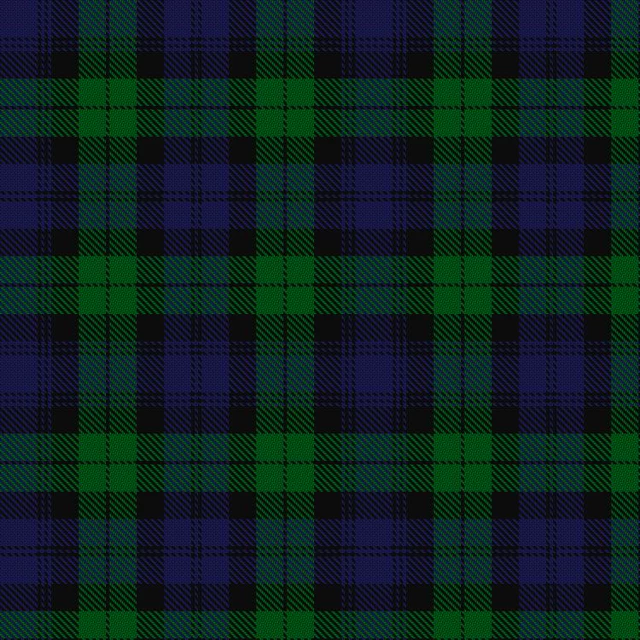
The museum describes a hunting tartan as generally based on greens, blues or browns, and says the label refers to those more muted colours. It names MacLean and MacKinnon as clans with red-based main tartans and a hunting alternative. It gives the opposite case too: Armstrong and Campbell have no hunting tartan because the ordinary tartan is already muted.
Two cautions come from Wikipedia. One is that some hunting-named setts are variants of another pattern: it mentions Black Watch-based setts sold as “hunting Grant” and “hunting Munro”. The other is that the label is not tied to a period. It dates the Shaw hunting and dress tartans to 1969, adopted by the chief in 1971, and a Lumsden hunting sett to 1996. A hunting tartan can therefore be recent, and its name does not show that it was worn hunting.
Dress tartans
The museum’s definition is short: “a dress tartan is simply a tartan using white as one of the primary colors”. It says dress tartans are not limited to women, and it gives Dress MacLeod, which is yellow, as an exception to the white rule. Wikipedia mentions a black-less Mar design from the 18th century that is now the Mar dress tartan, and a MacTavish dress tartan approved in 1998.
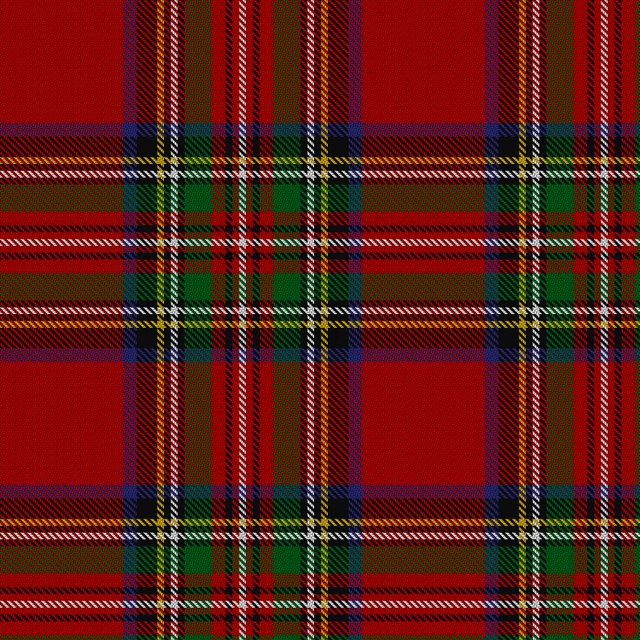
Wikipedia also records a royal use of both labels: Victoria and Albert used the hunting Stewart (green) for carpets at Balmoral and the dress Stewart (red and white) for curtains and upholstery. The royal red design on this site is Royal Stewart. That is a household choice, not a rule that hunting is for floors and dress for curtains.
Dance tartans
The museum describes dance, or dancers’, tartans as dress tartans worn by Highland dancers, and says the name “generally implies that the design was created specifically for dancing”. It does not say dancers are required to wear them.
Mourning tartans
The museum’s glossary does not mention mourning tartans. Wikipedia, in a passage on 20th-century clan tartans, says some clan tartans are “at least ostensibly” for purposes such as hunting, mourning, formal dress or dance competition. The “at least ostensibly” is the article’s own hedge. No definition of a mourning tartan was found in the sources read, so none is given here.
What the labels do not tell you
- Not the occasion. The museum says what makes a Highland outfit formal or casual is the accessories, not the tartan of the kilt. A hunting tartan is not casual by its name, and a dress tartan is not formal by its name.
- Not the age. Ancient, modern and weathered are dye strengths. The age of a design comes from a dated record, as set out in the checks in what is tartan.
- Not who may wear it. Whether a variant belongs to a family is a separate question. The Standing Council of Scottish Chiefs says clan membership follows surname or allegiance, and the question of wearing is covered in who can wear which tartan.
- Not a fixed standard. Wikipedia says there is no set of exact colour standards for tartan hues, so two mills’ “ancient” versions of one tartan can differ.
Reading a listing
When a listing says “hunting”, “dress” or “ancient”, three checks cover most of it:
- Is there a tartan name beyond the label? “Ancient” on its own names no tartan. “Hunting MacLean” does, and can be looked up.
- Is it a palette or a separate tartan? Ask whether the same thread count comes in other shades. If it does, the label is a palette. If the thread count differs, it is a different tartan.
- Does the seller claim an age or an occasion? Neither follows from the label. A claim needs its own source.
To find which tartans are linked to a surname or clan, use the tartan finder or read how to find your family tartan. For how the same tartan changes with the cloth, see tartan fabric types.
Questions people ask
What does a hunting tartan mean? It means a colour version, generally in greens, blues or browns, offered alongside a clan’s main tartan. It does not mean the tartan was made for hunting.
What is a dress tartan? A tartan with white as one of its primary colours, according to the Scottish Tartans Museum. It is not limited to women.
What is the difference between ancient and modern tartan? Ancient is a lighter set of dye shades and modern is the standard set, for the same pattern. Neither describes how old the design is.
What is a weathered tartan? A heavier fading of the same tartan, usually toward browns, greys and muted reds.
Is there a tartan for every occasion? No. Some clans have several versions and some, such as Armstrong and Campbell on the museum’s account, have no hunting version. The occasion is set by the accessories and the event, not by the tartan label.
Continue learning