Clan tartan

Mackenzie

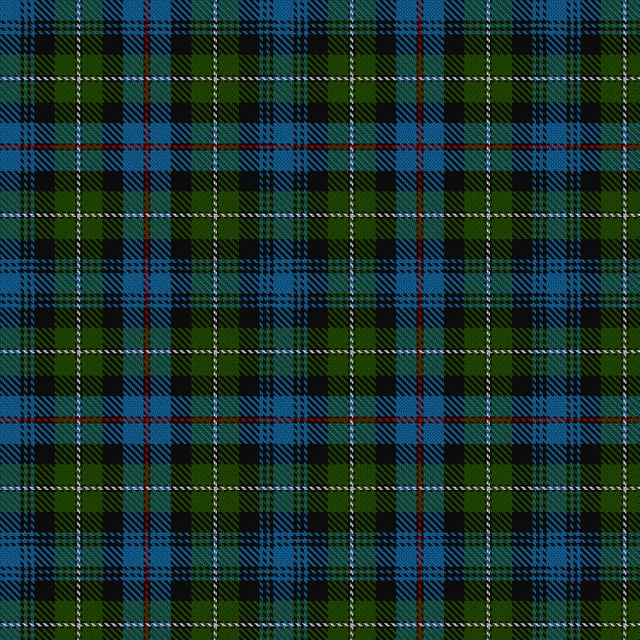
The Mackenzie clan tartan is a blue and green sett with red and white over-stripes, recorded in the Scottish Register of Tartans as the regimental tartan of the Seaforth Highlanders, raised by the Earl of Seaforth in 1778. The register lists twelve Mackenzie entries and none called Ancient or Modern.

  • Clan/Family
  • No restriction recorded
  • Evidence level A
The Mackenzie sett as rendered by the Scottish Register of Tartans from the registered threadcount.
Image: Scottish Register of Tartans, rendered from the registered threadcount. Crown copyright, National Records of Scotland.Image source: the record this swatch comes from. Licence: Crown copyright, National Records of Scotland (Scottish Register of Tartans). Re-use beyond fair dealing needs NRS permission.
Type
Clan tartan
Classification
Clan/Family
Earliest known date
1778
Registered
Not recorded
Associated clan
Mackenzie
Who can wear it
No restriction recorded
Evidence level
A

Also known as

  • MacKenzie
  • Mackenzie Hunting
  • Mackenzie Seaforth

Overview

The main Mackenzie tartan is recorded in the Scottish Register of Tartans (SRT 267) in the Clan/Family category, with a date of 1778 and no restrictions listed. That date marks the raising of the Seaforth Highlanders by the Earl of Seaforth, who was a Mackenzie, so it shows regimental use of the pattern rather than proof that it was a clan tartan from the start. The register says the designer is unknown.

The register records Mackenzie (SRT 267) as the regimental tartan of the Seaforth Highlanders, raised by Mackenzie, Earl of Seaforth, in 1778, with the date field 1 January 1778 and designer unknown.

From the historical notes. Evidence level A. Sources: [1]

Pattern

The sett is a dark blue and green ground divided by black, with red and white stripes set on it. The Clan MacKenzie Society says the Ancient, Modern and Weathered versions differ only in the shade of the blue and green. The threadcount shown in the data above comes from a secondary database (Tartan Dictionary) and has not been checked against the register, whose threadcounts are behind a login. The register itself says a threadcount was recorded in the Public Register of All Arms and Bearings in Scotland in 1949.

Origins

The register says the Mackenzie is the regimental tartan of the Seaforth Highlanders, raised by Mackenzie, Earl of Seaforth, in 1778. Wikipedia gives the same raising and says the regiment was first numbered the 78th, then renumbered the 72nd in 1786. A second Mackenzie regiment, later numbered the 78th, was raised after that, and the two merged in 1881.

The register also quotes an 1850 book saying the 71st and 78th Regiments then wore the tartan common to the MacLeods and the MacKenzies. The Seaforth regiments are numbered 72nd and 78th in the other sources read, so the 1850 reference to the 71st does not match them. This site does not resolve the difference.

A search of the register for "mackenzie" returns twelve entries, including several Dress versions and two Hunting versions.

From the historical notes. Evidence level A. Sources: [2]

Development

The earliest dated sources found are later than 1778. Wilson's 1819 pattern book, cited by the register, records cloth widths and weights for the ranks of the regiment, and the sett appears in Clans Originaux (1880). The 1949 threadcount was recorded for a Mackenzie in the Lyon Register. No pre-1800 specimen or order for the tartan was found in the sources read, so the 1778 date is the register's recorded date for the regiment, not a dated piece of cloth. Wikipedia's 72nd Foot article says the regiment first wore the Government sett, then trews in the Prince Charles Edward Stuart pattern from 1823. If that is right, the Mackenzie sett was not the regiment's first or only tartan. That is a level D statement and was not checked.

Name and variants

A register search for "mackenzie" returns twelve entries. Beyond the main sett there are three more clan or family entries (MacGregor-Hastie, Vestiarium Scoticum and Morgan), four Dress versions, and Hunting versions in brown and green attributed to Wilsons of Bannockburn. MacKenzie Blue is a fashion tartan from 2013 and one entry is a company tartan from 2025.

The register has no entry called Mackenzie Ancient or Mackenzie Modern. Those names are colour treatments used by weavers and described by the clan society. The Hunting and Dress setts were not read in detail, so this site treats them as listed entries only.

Clan relationship

The register's own note links the tartan to the Seaforth Highlanders first and to the clan second, saying the clan held lands in Ross-shire and Kintail. The Clan MacKenzie Society says all the Mackenzie tartans are variants of the regimental pattern. That supports a clan association built on the regiment, which the Mackenzie chiefs raised, but it does not show a clan tartan older than the regiment. The chiefship was recognised by the Lord Lyon in 1980 according to the clan society, and no source read ties that to the tartan.

Check before repeating

Misconceptions

The Mackenzie and MacLeod tartans are often said to be the same. The 1850 quotation in the register says the regiments wore a tartan common to both. This site has not seen the MacLeod register entries, so it does not state whether they are identical setts today.

The register records no evidence of a tartan older than 1778, and it records no dated cloth from before the 1819 pattern book. What the record does not show is how the pattern was chosen, who designed it, and whether it was in use by the clan before the regiment.

Colours

  • dark blue#2C2C80Approximate
  • black#101010Approximate
  • green#006818Approximate
  • white#F0F0F0Approximate
  • red#C80000Approximate

Approximate hex values estimate the thread colour; they are not specified by a registry.

Rendered sett (threadcount from Mackenzie (master sett, 1778))

Dates in the record

The dates this record holds, and the opening sentence of each historical note that names a single year. A year is the one the source gives; it has not been checked independently here.

  1. Earliest known date held in this record.

  2. The register records Mackenzie (SRT 267) as the regimental tartan of the Seaforth Highlanders, raised by Mackenzie, Earl of Seaforth, in 1778, with the date field 1 January 1778 and designer unknown.

    Evidence level A. Sources: [1]

  3. The register says Wilson's 1819 pattern book records various widths and weights of cloth suitable for the different ranks in the regiment.

    Evidence level A. Sources: [1]

  4. The register quotes W. and A. Smith of Mauchline, The Clan and Family Tartans of Scotland (1850): "Both the 71st and 78th Regiments now wear the Tartan common to the MacLeods and the MacKenzies." The 71st and 78th are the regiments named in 1850.

    Evidence level A. Sources: [1]

Historical notes

  1. The register records Mackenzie (SRT 267) as the regimental tartan of the Seaforth Highlanders, raised by Mackenzie, Earl of Seaforth, in 1778, with the date field 1 January 1778 and designer unknown. It was recorded before the register launched in 2009.

    Evidence level A. Sources: [1]

  2. A search of the register for "mackenzie" returns twelve entries, including several Dress versions and two Hunting versions. There is no entry named Mackenzie Ancient or Mackenzie Modern.

    Evidence level A. Sources: [2]

  3. The register notes that a threadcount was recorded by Kenneth F. Mackenzie in the Public Register of All Arms and Bearings in Scotland, 27 December 1949, and that the sett is also recorded in Clans Originaux (1880).

    Evidence level A. Sources: [1]

  4. The register quotes W. and A. Smith of Mauchline, The Clan and Family Tartans of Scotland (1850): "Both the 71st and 78th Regiments now wear the Tartan common to the MacLeods and the MacKenzies." The 71st and 78th are the regiments named in 1850. The register entry itself says only that the tartan is the Seaforth Highlanders' regimental tartan.

    Evidence level A. Sources: [1]

  5. The register says Wilson's 1819 pattern book records various widths and weights of cloth suitable for the different ranks in the regiment.

    Evidence level A. Sources: [1]

  6. Wikipedia gives the regiment raised in January 1778 by Kenneth Mackenzie, Earl of Seaforth, as the 78th (Highland) Regiment, renumbered the 72nd on 12 September 1786. A second regiment, the 78th (Ross-shire Buffs), was raised by a cousin, Francis Mackenzie, later Baron Seaforth. The two merged in 1881 as the Seaforth Highlanders. These are pointers from a level D source.

    Evidence level D. Sources: [3][4]

  7. The Clan MacKenzie Society describes four standard colourways: Ancient (lighter dyes), Modern (darker dyes), Weathered, and Dress (Modern colours with added white bands). It says the variations are in the shade of the green and blue ground, on which the red and white stripes are set.

    Evidence level C. Sources: [5]

  8. The register's search for "mackenzie" lists: Mackenzie (267), MacKenzie (MacGregor-Hastie) (1687), MacKenzie (Vestiarium Scoticum) (1959), MacKenzie Dress #1 to #4 (1362, 1565, 1786, 1981), MacKenzie Hunting (Brown) and (Green) (5905, 5906, both attributed to Wilsons of Bannockburn), MacKenzie Morgan (6068, designed by Col Wayne J. Morgan), plus MacKenzie Blue (3405, Fashion, 2013) and a corporate tartan for Mackenzie Construction Ltd (14952, 2025).

    Evidence level A. Sources: [2]

Wearing

Who can wear it

No restriction recorded

No restriction is recorded for this tartan. It is not recorded as a universal tartan.

The Scottish Register of Tartans lists no restrictions for Mackenzie and states there are no laws about which tartan a person may wear, only traditions. Whether a person has a Mackenzie connection through the surname, the clan or the regiment is a separate question for each case.

The register lists no restrictions for Mackenzie, and it states there are no laws about which tartan a person may wear, only traditions. A Mackenzie by surname or clan connection would be the usual wearer, and the Seaforth Highlanders wore it as regimental dress until the amalgamation of 1961 with the Queen's Own Cameron Highlanders, according to Wikipedia.

Who can wear which tartan?

Fields missing from this record

Similar tartans

The register's 1850 quotation names the MacLeod tartans as sharing the pattern. No MacLeod record is held on this site yet. The Dress versions add white bands to the Modern colours, according to the clan society.

Associated clan

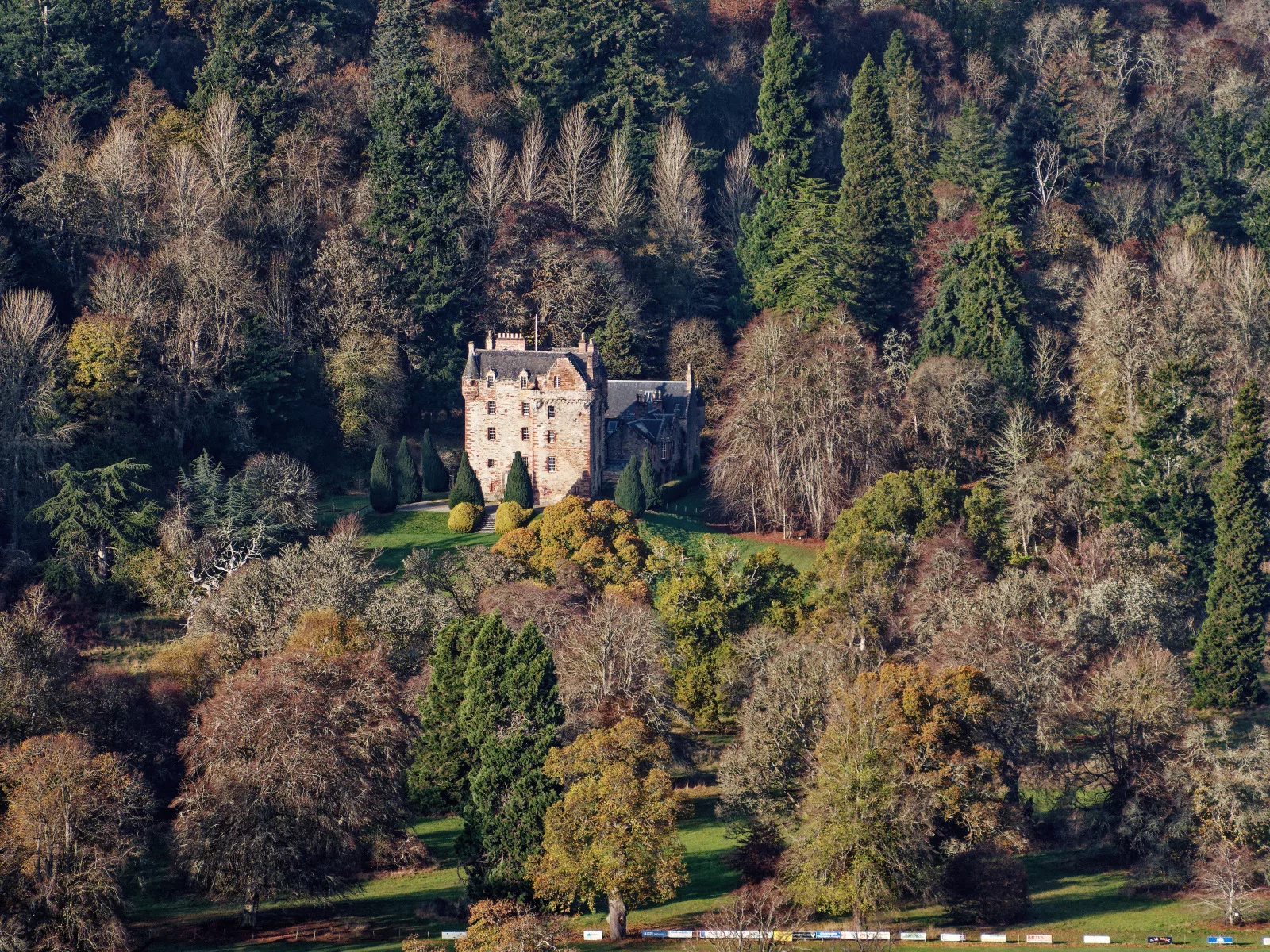
  • Castle Leod, a tall pink-stone tower house with a slate roof, seen across a lawn with clipped yews and woodland behind.

    Kintail · Ross-shire · Wester Ross

    Mackenzie

    Clann Choinnich

    A Highland clan of Kintail and Ross-shire whose chiefs became Earls of Seaforth and Earls of Cromartie. The chiefship was effectively dormant from 1907 until the Lord Lyon recognised the Earl of Cromartie in 1980, and the seat is Castle Leod near Strathpeffer. The clan tartan is dated 1778 in the Scottish Register of Tartans and shares its pattern with the MacLeod tartans.

    Photo: Julian Paren, CC BY-SA 2.0

An association between a tartan and a clan is a claim with its own sources. It does not mean every bearer of the clan name has a right to the tartan, or the reverse.

Guides that mention this

Sources

  1. Scottish Register of Tartans: MackenzieScottish Register of Tartans (National Records of Scotland) · accessed · evidence level A
  2. Scottish Register of Tartans: search results for "mackenzie"Scottish Register of Tartans (National Records of Scotland) · accessed · evidence level A
  3. 72nd Regiment, Duke of Albany's Own HighlandersWikipedia · accessed · evidence level D
  4. Seaforth HighlandersWikipedia · accessed · evidence level D
  5. MacKenzie tartanClan MacKenzie Society · 2019-07-15 · accessed · evidence level C
  6. Mackenzie (master sett, 1778)Tartan Dictionary · accessed · evidence level D
  7. Clan Mackenzie chiefClan Mackenzie Society · accessed · evidence level C

Sources (7)

Evidence levels run from A (primary or official) to E (unverified). How levels are assigned

  1. Scottish Register of Tartans: Mackenzie (opens in a new tab)

    Scottish Register of Tartans (National Records of Scotland)

    Registry · accessed

    Evidence level APrimary or official

    Official registry, archive or primary source.

    Cited for

    • The register records Mackenzie (SRT 267) as the regimental tartan of the Seaforth Highlanders, raised by Mackenzie, Earl of Seaforth, in…
    • The register notes that a threadcount was recorded by Kenneth F. Mackenzie in the Public Register of All Arms and Bearings in Scotland, 27…
    • The register quotes W. and A. Smith of Mauchline, The Clan and Family Tartans of Scotland (1850): "Both the 71st and 78th Regiments now…
    • The register says Wilson's 1819 pattern book records various widths and weights of cloth suitable for the different ranks in the regiment.
  2. Scottish Register of Tartans: search results for "mackenzie" (opens in a new tab)

    Scottish Register of Tartans (National Records of Scotland)

    Registry · accessed

    Evidence level APrimary or official

    Official registry, archive or primary source.

    Cited for

    • A search of the register for "mackenzie" returns twelve entries, including several Dress versions and two Hunting versions. There is no…
    • The register's search for "mackenzie" lists: Mackenzie (267), MacKenzie (MacGregor-Hastie) (1687), MacKenzie (Vestiarium Scoticum) (1959)…
  3. 72nd Regiment, Duke of Albany's Own Highlanders (opens in a new tab)

    Wikipedia

    Web page · accessed

    Evidence level DCommercial

    Commercial source; not used as the basis of a historical claim.

    Cited for

    • Wikipedia gives the regiment raised in January 1778 by Kenneth Mackenzie, Earl of Seaforth, as the 78th (Highland) Regiment, renumbered the…
  4. Seaforth Highlanders (opens in a new tab)

    Wikipedia

    Web page · accessed

    Evidence level DCommercial

    Commercial source; not used as the basis of a historical claim.

    Cited for

    • Wikipedia gives the regiment raised in January 1778 by Kenneth Mackenzie, Earl of Seaforth, as the 78th (Highland) Regiment, renumbered the…
  5. MacKenzie tartan (opens in a new tab)

    Clan MacKenzie Society · 2019-07-15

    Clan organisation · accessed

    Evidence level CSpecialist secondary

    Established specialist secondary source.

    Cited for

    • The Clan MacKenzie Society describes four standard colourways: Ancient (lighter dyes), Modern (darker dyes), Weathered, and Dress (Modern…
  6. Mackenzie (master sett, 1778) (opens in a new tab)

    Tartan Dictionary

    Secondary source · accessed

    Evidence level DCommercial

    Commercial source; not used as the basis of a historical claim.

  7. Clan Mackenzie chief (opens in a new tab)

    Clan Mackenzie Society

    Clan organisation · accessed

    Evidence level CSpecialist secondary

    Established specialist secondary source.